






Each year, as we near December, thousands of ovens light up around the country as bakers gear up for one of America’s favorite holiday pastimes: the cookie swap. Cookie swaps aren’t only festive — and one of the most delicious ways to build community — they are also enormously efficient, multiplying your baking efforts and leaving you with dozens of holiday classics to enjoy, gift, and serve all season long.
My own cookie swap initiation took place in the church fellowship hall, around age five. My mother and her friends arrived with their Tupperwares piled high, taking their places around a dozen linen-lined folding tables arranged as a giant cookie buffet. I remember my mouth watering as each guest decanted their container, revealing dozens of Mexican Wedding Cookies, candy cane twists, and homemade toffee Buttercrunch alongside my mom’s thin, snappy sugar cookies sprinkled with colored sugars. As we neared the Peanut Butter Blossoms, pressed with a chocolate kiss atop, I leaned into my mother’s ear. “Double up on those, please!” I begged. Wishful thinking; my mom’s crowd abided by the strict six-for-six trade law.

The tradition of swapping cookies this time of year has deep roots across Europe, particularly in Germany, Scandinavia, Hungary, Austria, and Eastern Europe, with most families large-batch baking their favorite Linzers, spritz, and pfeffernusse specially for the holidays. Cookies were a way to celebrate abundance, share blessings, and sweeten the darkest time of year. These traditions and recipes arrived in the United States via immigration and by the early 20th century, church groups, American women’s clubs, and homemaker circles organized annual bake sales and recipe exchanges as a way to forge community (and maybe show off a little). Post-WWII, magazines like Ladies' Home Journal and Good Housekeeping printed “Holiday Cookie Exchange” guides, bolstering these traditions as part social event, part practical ritual, and a way to show pride in domestic arts.
Today’s cookie swaps are taking on new modern (and sometimes digital) twists, fueled by our timeless desire for connectedness and ever-evolving recipe lists that include vegan, gluten-free, and global flavors. Even if you didn’t grow up in a community of cookie bakers, this is a fairly low-lift tradition to start. Here are a few practical steps, tricks, and tools to get you started.
Picking a date and a location first helps iron out other details, such as how many guests you can comfortably host and how to organize your swap. Any time post-December 1 is fair game — but aim for a date well before Christmas travel begins. You may want to avoid evening gatherings that compete with company parties and other holiday fêtes (unless you plan to make yours a cookies-and-cocktails affair). Late morning or afternoon hours are ideal, since you won't be expected to serve a meal, and a bonus: They bring natural light, key if your crowd wants to take photos for social posts and bragging rights.
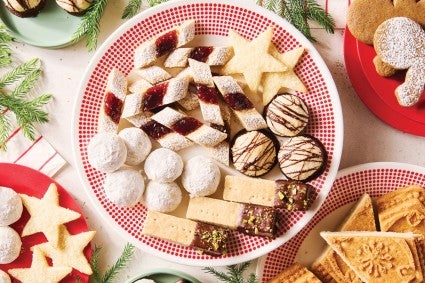
Unless you’re hosting in a community space where the more-the-merrier is part of the ethos, capping your guest list at a baker’s dozen is smart for a home-based swap, helping you hit the sweet spot for plenty of cookie variety while still leaving enough counter space to display each baker’s goods. Takeaway boxes often come in groups of 12 or 24, making it easy to divide/multiply if you stick to these numbers. If you’re craving something more intimate, a cookie swap with as few as four to six guests can be equally successful. Write your ideal guest list first, consider the swap style (see below), then finalize your list.
Assess your goals. Are you craving a social affair where swappers linger, talk, and taste? Is your crowd a group of playful show-offs (apt to bring the flashiest, prettiest, most international cookies) or a group of parents who want festive treats to pack in school lunches and make holiday hosting a little easier?
From that goal, consider whether a traditional swap (where guests can pick and choose their favorites to take home) or a pre-packaged exchange (a variety box packed and prepped by a small team in advance) feels right. Then give yourself room to get creative. Some swaps get an extra dose of healthy competition with tastings, judges, and secret ballots. Prizes could include themed cookie cookbooks (Dorie’s Cookies, Zoe Bakes Cookies, Kat Lieu's 108 Asian Cookies, or King Arthur Baking Company’s The Essential Cookie Companion) or goodie baskets full of sanding sugars, high-quality vanilla, and chocolate chips.
Another playful idea: a drop-and-dash cookie swap, where you assign participants a family to anonymously swap with, like a Secret Santa. The organizer picks a range of days for participants to drop a box of cookies at someone’s doorstep, and they can expect to receive one on their own doorstep/porch/mailbox around the same day.
Commonly, every baker brings between two and four dozen cookies and walks away with the same. Guests can bring cookies unwrapped, in a reusable container, or on a platter, allowing each guest to self-select which two to four dozen to take home. Another way to go: Ask guests to bring their cookies split into pre-packaged bags of four to six each (ideal if you're worried about passing germs or have a limited time slot for swapping).

Coffee, tea, and, depending on your crowd, a sweet drink like hot cocoa, sweetened chai, or mocha are nice add-ons for people to sip and savor while filling up their boxes. Make it easy: A self-service coffee and tea bar with stacks of mugs or takeaway cups does the trick, but don’t feel pressured if your set-up doesn’t suit drinks. A well-timed swap doesn’t intend to provide sustenance or savory food for guests. Think of it as a low-lift social gathering with an extremely delicious takeaway.
If you plan to host, you may want partners (at least two, plus you!) to arrive early, help clear and wipe down counters, lay out linens, and set up to-go boxes (see below). Bigger cookie swaps that involve moving chairs and setting up folding tables may require four to eight volunteers, depending on your crowd size. Have them come one to two hours before the swap starts to help with anything on your list, from setting up signs to steeping tea and coffee.
Once your guest list is final, consider using a sign-up app or site like SignUpGenius to keep you organized; guests can both RSVP, sign up to help, and name the recipe they plan to bring, all in one place (you can do this with a shared Google Excel doc, though it lacks some of the bells and whistles, like auto-reminders). Make sure you leave a column for any dietary restrictions, especially if your guest list includes gluten-free, vegan, or dairy-free folks, or folks with nut allergies. Next, send free or low-cost invites via Paperless Post or Partiful, and include the SignUpGenius or spreadsheet URL for all to see. Bonus: Use your spreadsheet to pre-print cookie name tags and allergen labels, so guests know what they’re taking home on swap day.
At a cookie swap, a variety of flavors and textures is ideal. You could assign recipes, but given the cookie swap’s social spirit, I recommend encouraging guests to bake the cookies they are most excited to bake.
You can still build a loose framework by making recipe choices transparent on your shared sign-up sheet (see above) minimizing cookie overlap. You can also provide a list of recommended recipes for bakers who want some direction: Aim to build a roster of cookies that includes both classics and modern cookie styles, and extra points if it crosses international borders. Classic cookies like Striped Peppermint Shortbread Cookies, Soft Chocolate Sugar Cookies, and Gingerbread Biscotti will hit the nostalgic sweet spot. Then, sprinkle in (or assign) several batches with creative flavors like Matcha Christmas Tree Cookies, Cannoli Sandwich Cookies, and Sparkling Pistachio Cookies (which could be dipped in dark chocolate to hit the Dubai Chocolate trend).
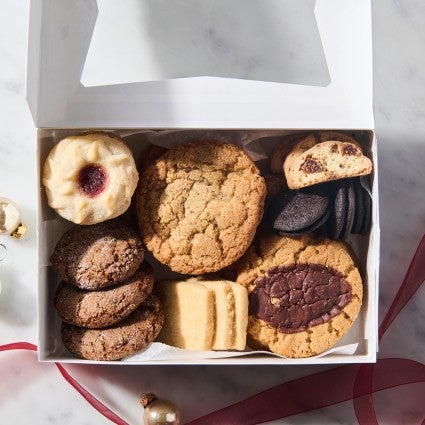
One of the linchpins of a successful cookie swap is smart take-home solutions. Flat-pack boxes are efficient and affordable, and they can be assembled day of. A caddy-style brown or white box (with a handle) works for sturdy, stackable cookies. Bakery boxes are a great all-purpose choice. Craft and hobby stores carry standard-sized bakery boxes; they are also easily available online. These small boxes hold half a dozen cookies, separated by variety, and the larger version holds about a dozen each. Offer stacks of decorative, colorful, or plain muffin liners for guests to organize cookies into sections inside their boxes, keeping iced and un-iced cookies separated and tidy. Factor these costs into your budget; if you’re hosting a larger swap (more than a dozen guests), you may feel comfortable asking for a $5 to $10 swap fee per participant to cover coffee, tea, serving ware, and any takeaway boxes you provide.
On the day of the event, plan for two hours to set up and at least one hour to clean (enlist your helpers!). Line tables or counters with washable linens, or parchment or butcher paper — a fun option if you want to write the cookie names and baker by each cookie choice, right on the buffet. Provide vintage, new, or recycled platters for display (or a small stack of just-in-case plates if you’ve asked guests to arrive presentation-ready). Create a separate packaging station stocked with pre-printed cookie name labels and allergen labels such as Gluten-Free, Dairy-Free, or Nut-Free. Blank labels and tags, plus a cup full of fresh Sharpies or fine-tip-colored markers, stand in nicely if you plan to go DIY.
Give a short opener once all your guests arrive, gently explaining your preferred swap etiquette: Note if tasting is allowed, whether you’re trading by half or whole dozens, or a take-what-you-like style up to a certain number of cookies. (Even eager adults sometimes need reminding not to over-swap or hoard favorites before everyone’s had a turn.) Finally, let go of your expectations and have some fun. The sweet takeaways are worth it!
Cover photo by Rick Holbrook; food styling by Kaitlin Wayne.