







Best flour for sourdough starter: How to choose
How do different flours affect your sourdough starter?

Date
March 12, 2026

Sourdough starter only has two ingredients: flour and water. But while water is self-explanatory, you have more options when it comes to your choice of flour. So what’s the best flour for sourdough starter?
The simplest answer: All-purpose flour is a great choice to feed your sourdough starter. It’s what many bakers choose — it’s basic, easy, and often what you already have in your pantry.
With that said, you can feed your sourdough starter with other types of flour, too — here are your options, and more details on each.
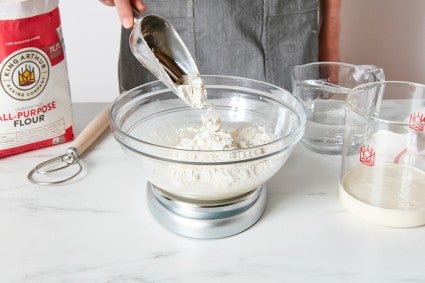
You don’t need anything special for your starter — all-purpose flour works just fine, and it’s what most bakers use for their starter. (And it’s what we call for in our Sourdough Starter recipe.) Regular feedings with all-purpose flour will keep your starter thriving and healthy, so you can settle into an easy routine.
Even if you plan to make a whole wheat sourdough bread recipe, you can still feed your starter with all-purpose flour. The flour in the starter makes up a small portion of the total flour in the recipe; the whole wheat flour in the dough will outweigh the small amount of all-purpose flour in the starter, so no need to worry about using an exclusively whole wheat starter for these recipes.
You might think you need bread flour for sourdough starter, based solely on its name. And while bread flour is great for, well, bread, you don’t need it for your starter. The thing that sets bread flour apart is its higher protein content — higher protein means more gluten development, which translates to stronger bread doughs. That makes it a great choice for bread dough, which needs a strong gluten network. But because sourdough starter doesn’t necessarily need a developed gluten network, bread flour (and its high protein percentage) is not critical.
That said, you certainly can use bread flour for your sourdough starter. And some bakers do, in fact, prefer it, claiming that it gives their starter a little extra strength and better rise. It won’t make much of a difference either way, so if you’d like to try bread flour in your sourdough starter — or maybe that’s all you have available to feed it — go right ahead.
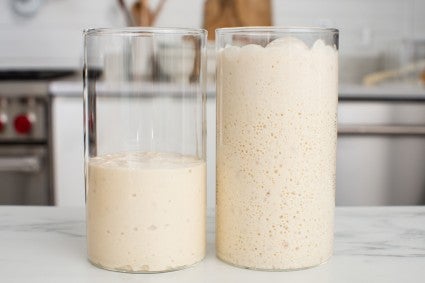
Whole wheat flour can be used in your sourdough starter in one of two ways: You can keep an entirely whole wheat sourdough starter, feeding it exclusively with whole wheat flour. Or you can keep a “regular” sourdough starter with all-purpose flour, and occasionally feed it with whole wheat flour.
Let’s begin with that first one. An exclusively whole wheat sourdough starter can be beneficial for a number of different reasons: Some bakers like to regularly make whole wheat bread, so they keep a whole wheat starter to use in their dough. (Though, as mentioned above, you can easily make whole wheat sourdough bread with a standard all-purpose flour starter!) Some bakers like the added flavors and nutrients of whole wheat flour. And some like to play around with different flours, so might keep a whole wheat starter fed with local or freshly milled whole wheat flours.
But adding whole wheat flour to a starter you typically feed with all-purpose or bread flours also has its benefits. The nutrients and minerals in whole wheat flour can boost a sluggish starter. That’s because they can accelerate fermentation of both the bacteria and the yeast present in your starter, like revving the gas. Adding some whole wheat flour to one or two feeds can help get your starter ready for use more quickly.
One additional note on whole wheat flour: We recommend using it when you are first creating a new sourdough starter, because the wild yeast that gives sourdough starter its life is more likely to be found in the mineral-rich environment of a whole grain flour than in all-purpose flour. The same is true for rye flour, below.
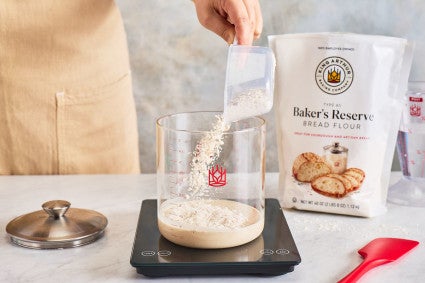
Our Baker's Reserve Bread Flour is a high-extraction flour, meaning some of the wheat bran and germ have been sifted out, but the flour still retains much of the original grain. High-extraction flour is lighter and less coarse than whole wheat flour because some of the bran has been sifted out, but it still retains more flavor, nutrients, and color than white flour, since it retains much of the original grain.
That makes it particularly well-suited to sourdough starter — the sourdough-friendly minerals present in the flour boost activity in your starter when feeding it, just like in a whole wheat flour.
Rye flour works similarly to whole wheat flour: Some bakers keep an all-rye starter, while some use it for isolated feedings.
You might keep a rye starter for specific recipes, as some rye sourdough bread recipes call for a rye flour starter. Rye flour is similar to wheat flour (it has gluten, just not as much!) but also behaves much differently, so having an entirely rye flour starter can be beneficial for these recipes. If you do a lot of rye baking, it can be nice to keep a separate rye starter going.
And just like with whole wheat flour, rye can be used to give a boost of nutrients and minerals to your standard white flour starter during one or two feeds. We recommend using about 10% to 20% of rye flour in proportion to white flour; that small amount won’t affect your starter’s flavor, and you can still use it in any recipe calling for “regular” (not rye or whole grain) starter.

If you want to make a gluten-free starter fed exclusively with gluten-free flour, you can. We actually have two different gluten-free sourdough starters developed for two different flours:
We don’t recommend using gluten-free flour to feed a standard (not gluten-free) starter. Instead, choose one of the options above.
Find more on the ins and outs of sourdough baking in our guide: How to Bake Sourdough.
Cover photo by Danielle Sykes; food styling by Liz Neily.