



What is cake cleaching, and why does it terrify our Test Kitchen?
An obscure term for a very real problem.

Date
February 11, 2026


The first time someone mentioned “cleaching” in a Test Kitchen meeting, I thought my ears had somehow malfunctioned. Surely that was not a real word.
Except … the whispered fear behind it certainly sounded real. And when one of our recipe developers held up a slice of coffee cake, I realized that not only was it real — it was a problem. (Multiple Test Kitchen members have, in fact, referred to it as a “nightmare.”)
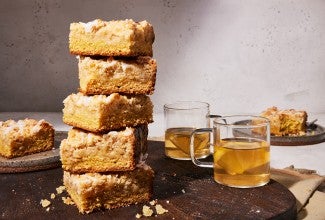
“Cleaching” refers to the dense, gummy layer that can form at the bottom of a cake. It first reared its head while our Test Kitchen was developing an iteration of our 2023 Recipe of the Year, Sweet Corn and Blueberry Coffee Cake. During cross-testing, recipe developers noticed a maddening trend: a heavy, gluey streak at the bottom of their cakes. It’s a problem that’s cropped up numerous times since — while testing this Lemon Blueberry Loaf Cake, Double Chocolate Banana Bread, and the Malted Milk Ball Sheet Cake in our recent kids’ cookbook, Sweet & Salty!.
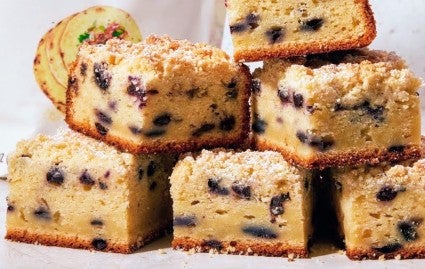
The term first came from our Research & Development kitchen, who use it to describe “an area of compressed cells, often gummy, at or near the bottom of a cake layer,” says Sue Gray, our former R&D Director. The actual origins of the term are murky — Sue first heard it from Frank Tegethoff, her R&D kitchen colleague. Frank, meanwhile, says he first learned it as an apprentice early in his career baking in St. Louis. “I think it might be an archaic regional term that morphed into a descriptor for a certain technical fault, specifically in cakes,” he theorizes. It went on to become an internal shorthand in both the King Arthur R&D and Test Kitchens.
Regardless of the actual origins of the term, cleaching is a very real problem that often pops up in cakes. And it’s not always easy to identify the cause. “As much as I've experienced it,” says Associate Test Kitchen Manager Molly Marzalek-Kelly, “I still feel like I have no clear idea what the actual cause is! It's so tricky to specify because so many things can cause it.”
Every cake is different, and while we can't always pinpoint the causes, here are some common culprits to look out for.
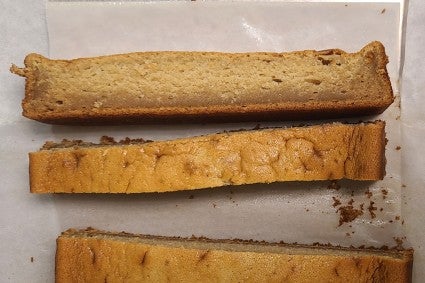
During the development of our Sweet Corn and Blueberry Coffee Cake, recipe developer Molly discovered the dangers of undermixing. Because she was not mixing enough to properly develop the structure needed to support the cake, it was sinking into a gummy layer at the bottom. The recipe directions for the coffee cake now include the cautionary direction to mix at low speed for 1 minute, advising bakers that “this final mix is key to ensuring the best texture, so don't skip it.”
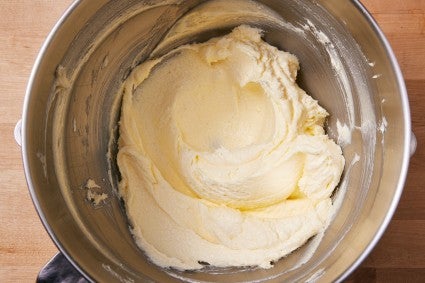
Similarly, Frank notes that you want to be mindful of proper ingredient temperature here, which prevents undercreamed cake batters. “Too cold butter will not aerate properly, and too cold eggs will not be incorporated uniformly, which are both critical steps in creaming recipes.”
That’s right — cleaching not only occurs when you undermix your batter but can also happen when you overmix. This can happen at two points: If you overcream the batter, you’ll introduce too much air, causing the cake to rise too high and subsequently sink in the oven. A similar thing can happen if you overdo it on the final mix, once the flour has been added: You might overdevelop the gluten in the batter, creating a strong structure that rises too much while baking and then sinks.
Treat your cake mixing like Goldilocks — not too much, not too little, but rather just right (in other words, exactly what your recipe directs!). If you need tips, here’s a visual guide to properly creaming butter.
If you don’t add enough baking powder or baking soda — or yours has been in the pantry too long and lost strength — your cake may not rise well while baking, causing it to develop dense streaks at the bottom. It’s always a good idea to test your leaveners to make sure they’re still at full strength: Here’s how to do it.
Just like overmixing, too much leavener can cause a cake to rise too much and then collapse in the oven. Even if the cake isn't obviously sunken in the middle, it may still have that hidden layer of cleaching somewhere at the bottom. To avoid, make sure you’re measuring all leaveners properly.
Cleaching sometimes pops up in cakes with multiple batters or layers assembled in one pan, like this Gingery Lemon Curd Coffee Cake or Lemon Blueberry Loaf Cake. The overall weight of whatever is spread on top of the leavened cake batter — like lemon curd plus streusel in the case of the coffee cake — can weigh things down, causing cleaching. David “DT” Turner ran into this problem while testing this Lemon Blueberry Loaf Cake as well, and he ended up writing specific directions into the recipe to evenly alternate between scooping the two flavored cake batters in the pan to avoid the issue.
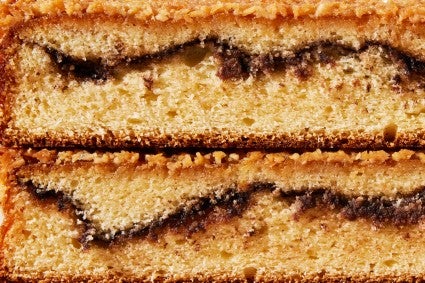
The takeaway here? Always follow a recipe as written, even if a step doesn’t seem totally necessary. You’ll avoid one of our Test Kitchen’s biggest nightmares — and ensure nothing but sweet dreams (and cakes) ahead.
Cover photo (Black Sesame Halva Coffee Cake) by Rick Holbrook; food styling by Kaitlin Wayne.