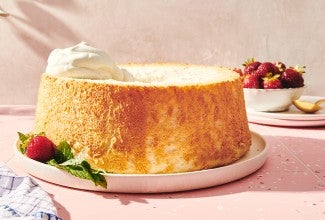



Baking trials: Do I really have to cool angel food cake upside down?
I did the testing to find out!

Date
February 25, 2026


In the baking world, there’s no feat quite as impressive or mystifying as a lofty, cloud-like angel food cake. To successfully achieve a cake that stands tall and proud at home, every recipe will include this one strange trick: Cooling the cake upside down (usually on a wine bottle!) once it comes out of the oven.
If being told to immediately turn a cake upside down while still hot from the oven causes your anxiety to climb like a rising cake, you’re not alone. So, what exactly is behind the reasoning for this cake flip, and is it really worth the hassle? I decided to do the testing and find out!
Traditional angel food cake is a meringue-based cake that sets itself apart from chiffon or sponge cake by containing no fat. Leavened with only the power of whipped egg whites, angel food cake became widely popular with the availability of rotary beaters in the late 19th century, which allowed home bakers to create the voluminous egg foam that gives the cake its fine texture and lift.
As soon as this batter hits the heat of your oven, the thousands of pockets of air trapped within the whipped egg whites begin to expand. At the same time, the protein found in the eggs begins to stretch around this air like a protective web. You can think of the cake like the bellows of an accordion: As the cake bakes, the batter slowly inflates. (Another quirk of angel food cake recipes is leaving the baking tin ungreased; the idea is that the cake is able to rise higher by clinging to the ungreased walls of the pan.)
Because it uses only a small amount of flour, the texture of an angel food cake is fine, plush, and super delicate. The downside of such a small amount of flour is that the cake can’t rely on the power of starch and gluten to help it keep its shape after baking. Once the cake begins to cool, the proteins in the egg whites contract and pull inward. If left upright, this will lead to a cake that’s sunken and dense. By turning the cake upside down to cool, we use gravity to help keep those proteins stretched out long enough to firm up into a sliceable, airy cake.
A lot of things have changed since the invention of the angel food cake. Egg sizes and weights are more standardized and easily measurable with a kitchen scale. Modern appliances allow us to whip egg whites without breaking a sweat. Meanwhile, our flour is now finer and more uniform straight from the bag.
With all of these changes, I was curious if this flip of the cake tin was still as vital as the age-old instructions made it seem. Was this just one of those old baking superstitions that no longer mattered? So I did a side-by-side test, baking two angel food cakes then conducting a head-to-head comparison of the results.
On the left: angel food cake cooled right side up. On the right: angel food cake cooled upside down.
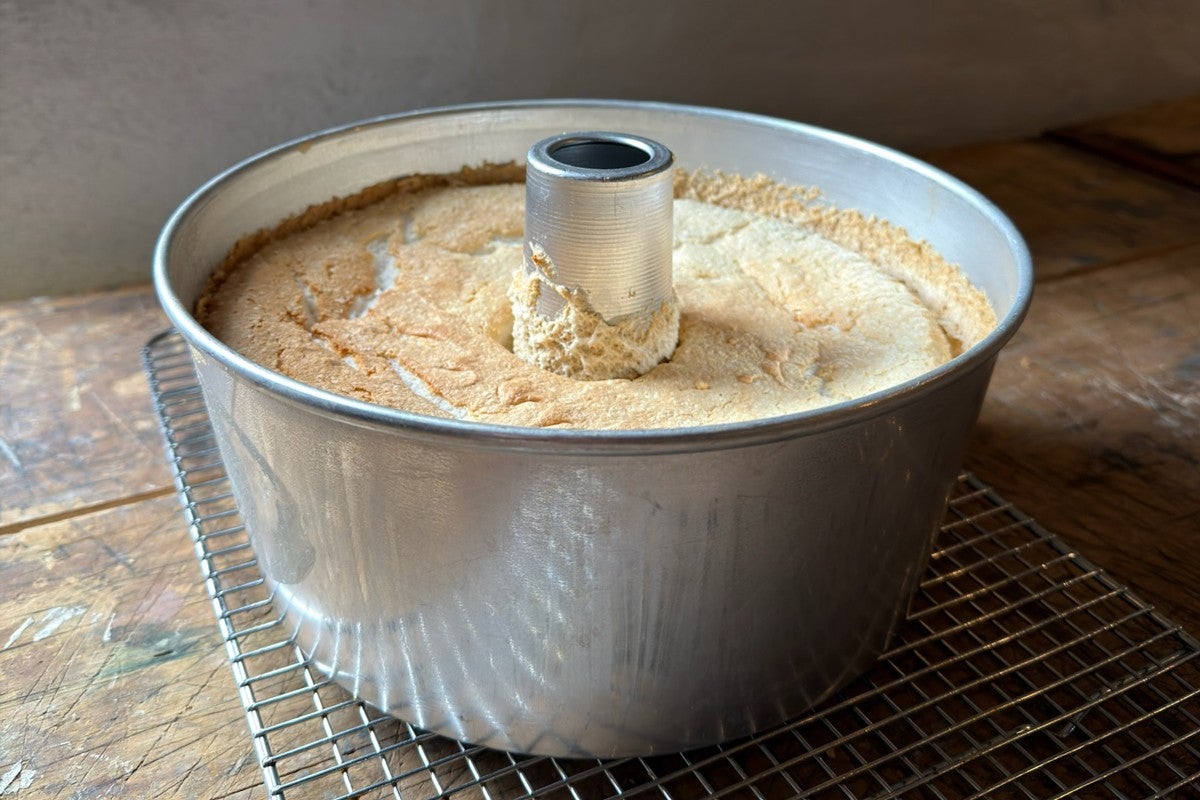
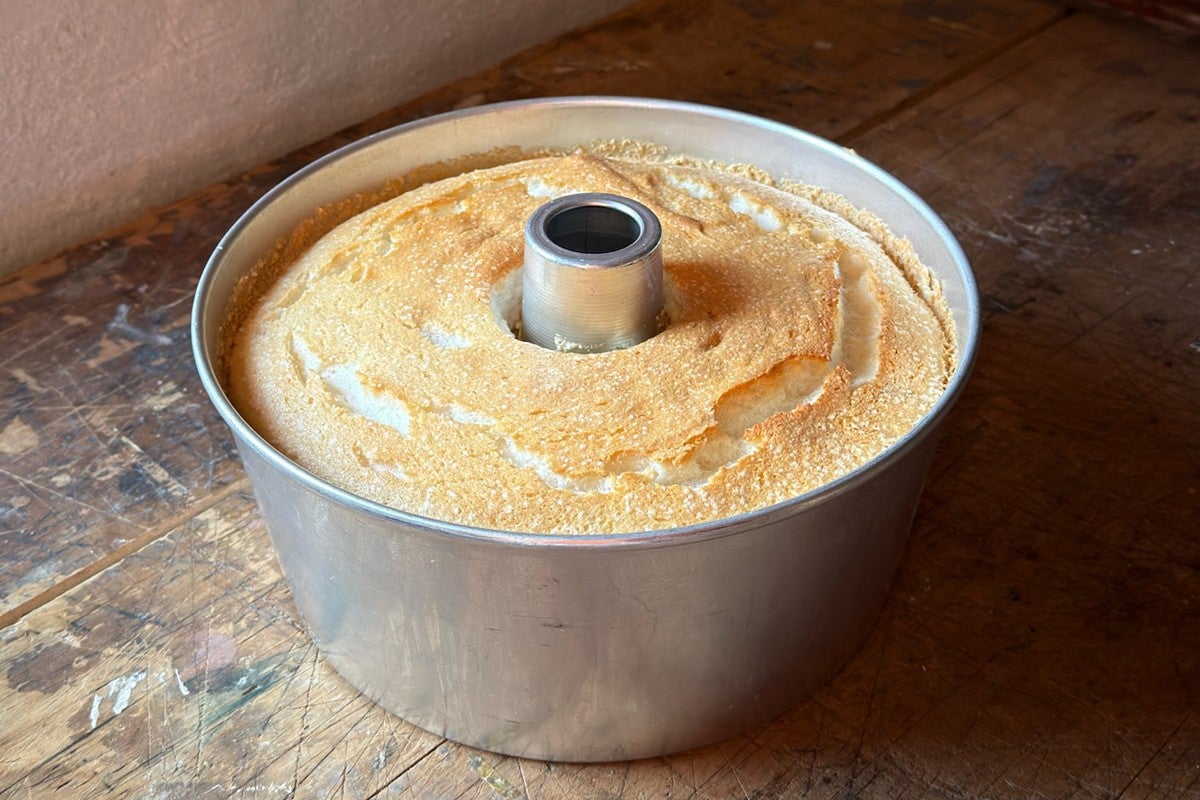
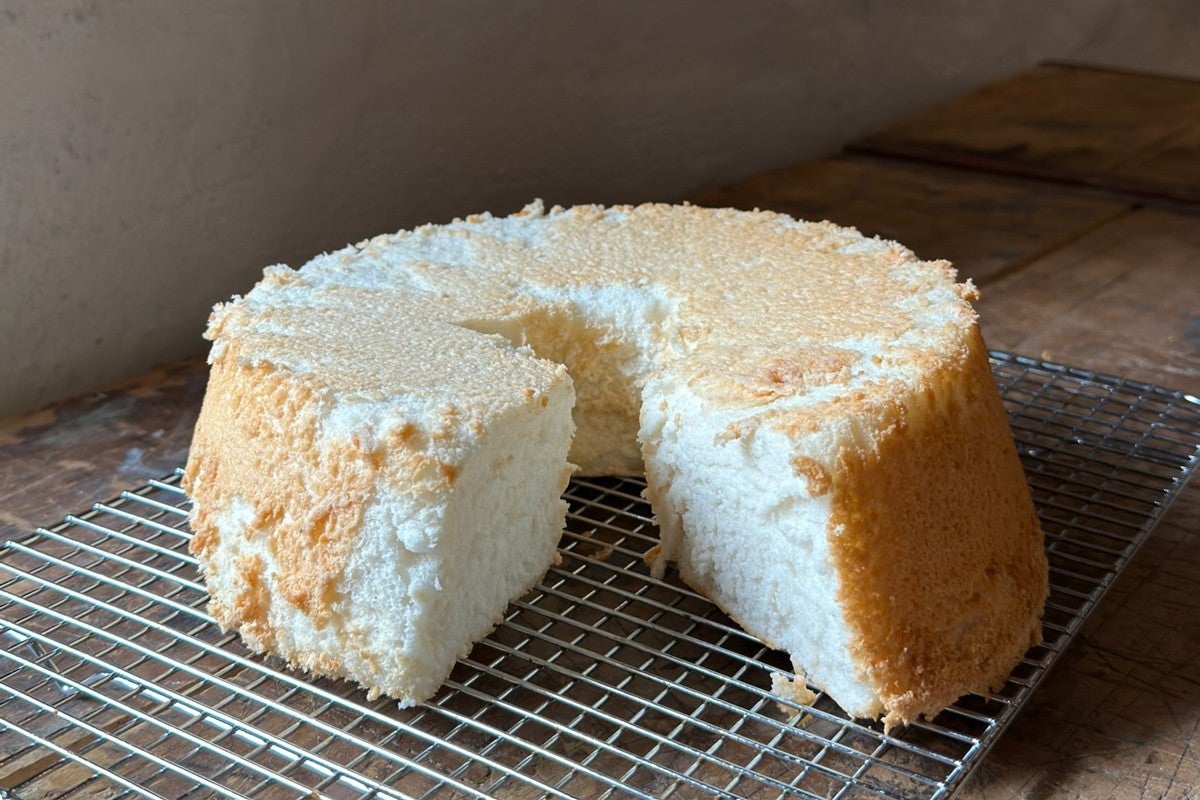
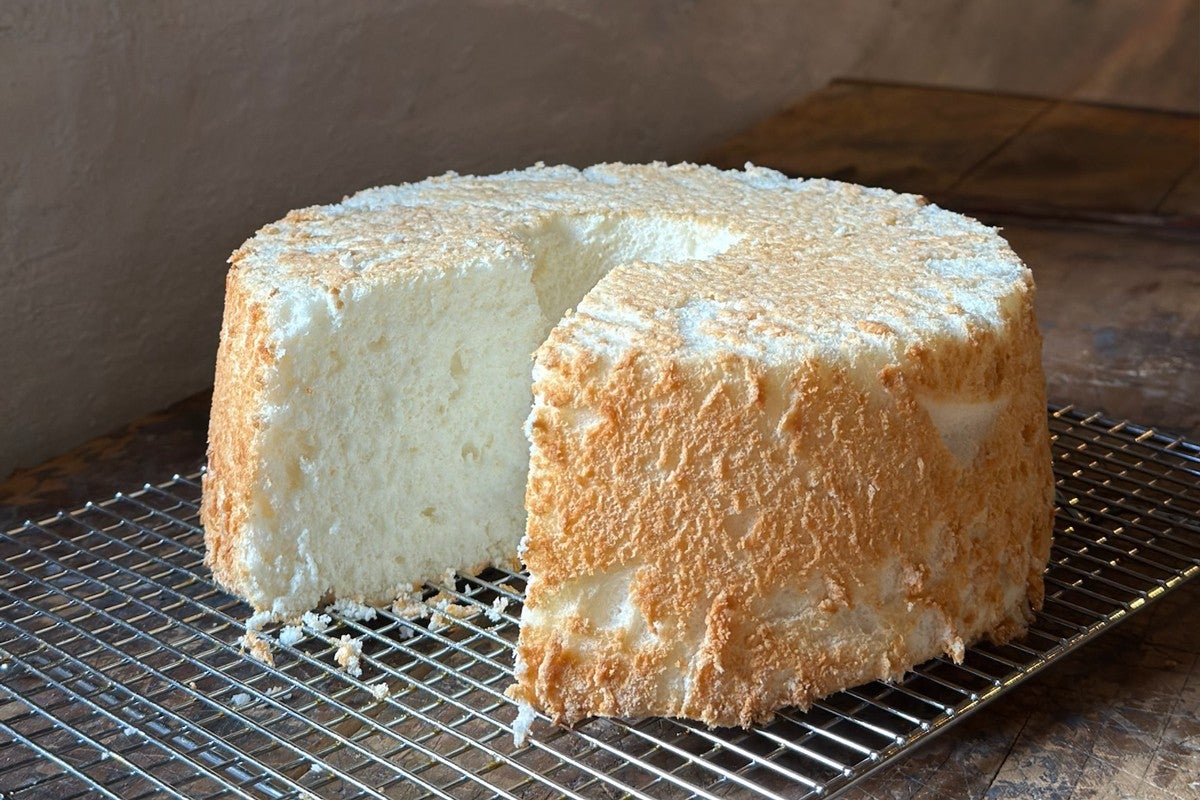
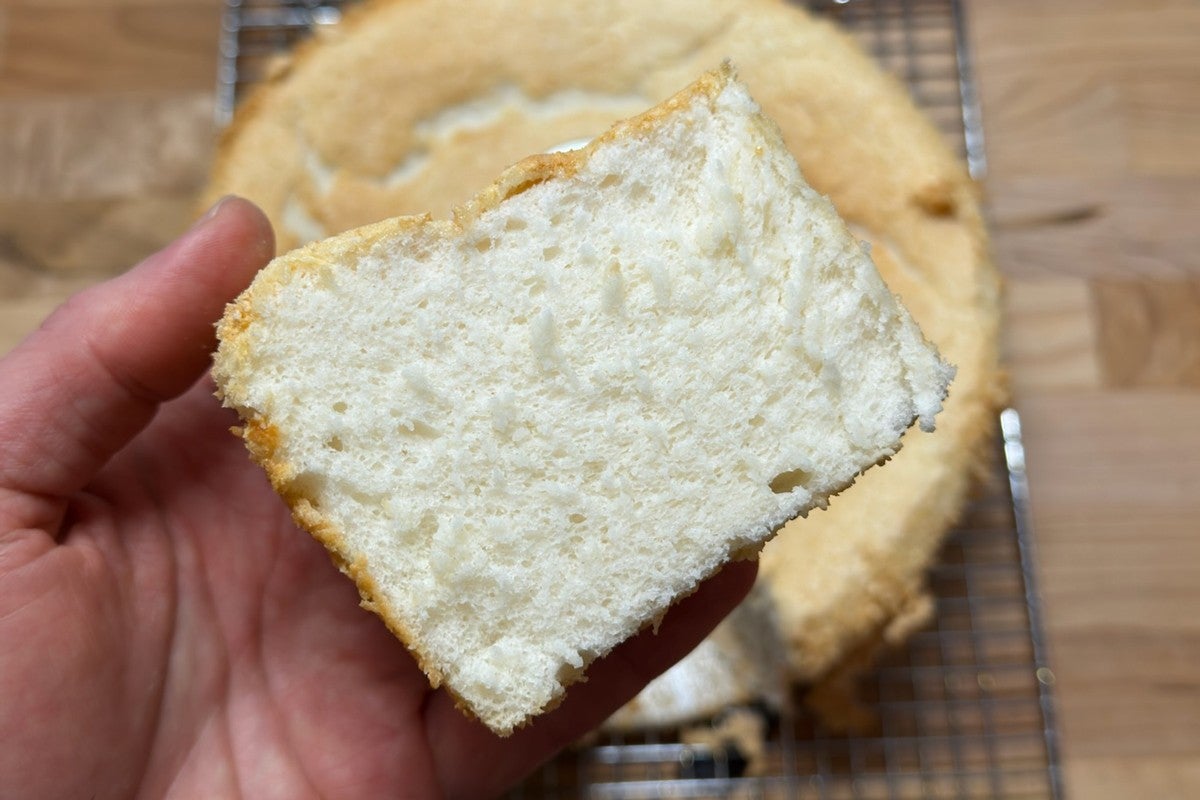
Following this Traditional Angel Food Cake recipe, I whipped the egg whites to stiff glossy peaks, then lightly folded in the flour and remaining sugar before leveling the batter into my ungreased tube pan. Once finished baking, I set the cake to cool on the counter right side up.
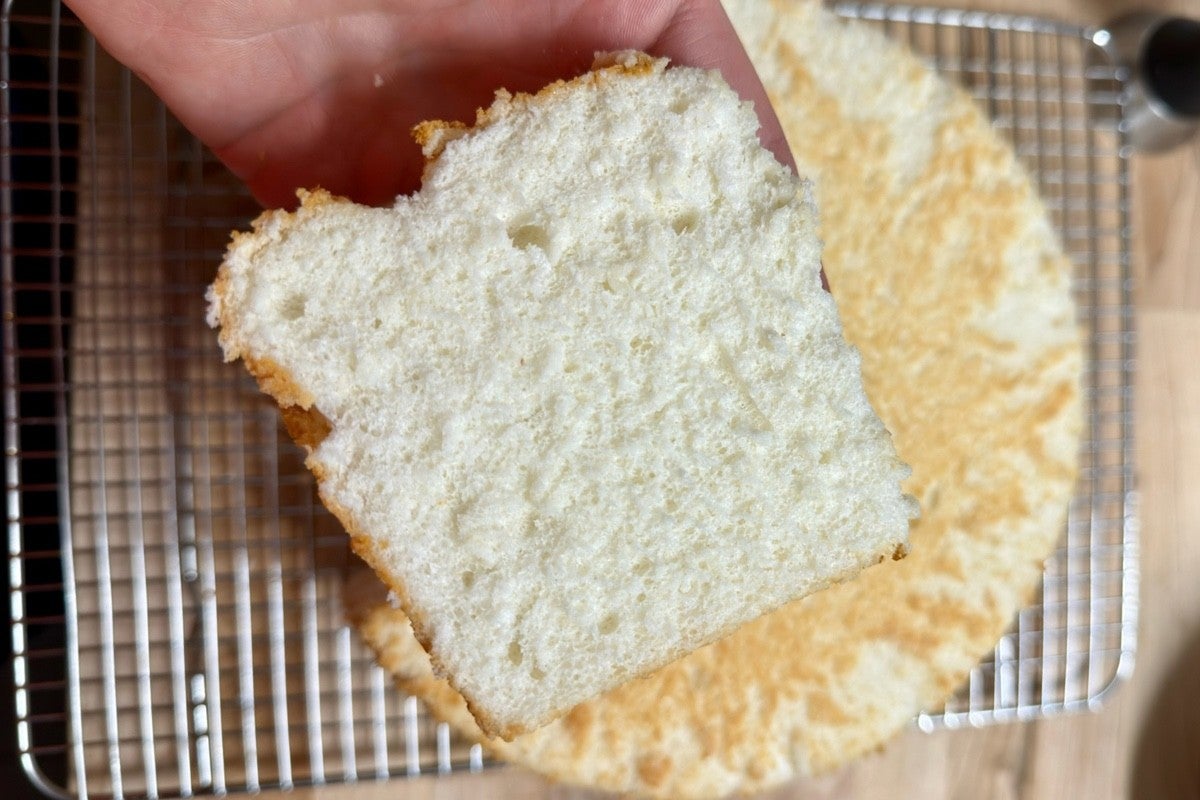
I could tell something was amiss within minutes. The cake first began to pull away from the center post, then slowly began to sink as it cooled. Letting the cake cool for at least one hour, I returned to see that the surface was now nearly 3" deeper than when it had first left the oven. While the cake hadn’t completely collapsed in on itself, the slices were far denser than any angel food cake I have tried before. There was also an unexpected egginess to each bite. It was clear right away the role that the inverted cooling step plays. In an angel food cake, air is a vital ingredient.
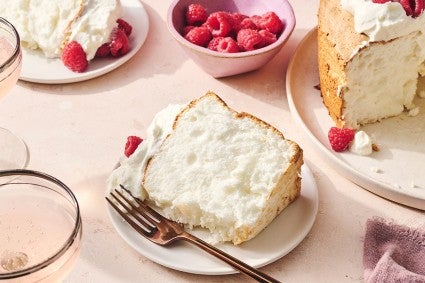
A second test, following the recipe as before but flipping the cake over onto the neck of a tall bottle, yielded a tall cake with a soft, feather-like interior. The trapped air that had expanded during baking remained in place, and each bite was ethereal, as well as balanced, not eggy. It was proof that the technique not only affects height but flavor and mouthfeel. The trapped air contained in the batter helps create a light cake that almost melts during each bite. In short, the flip helps both flavor and function.
For more cake tips, check out this extensive guide on How to Bake Cake.
Cover photo by Patrick Marinello; food styling by Yekaterina Boytsova.