






What is high-extraction flour, exactly?
A baker’s guide to our new T85 Baker's Reserve Bread Flour.

Date
September 28, 2026


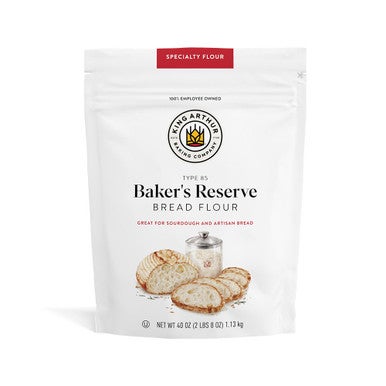
High-extraction flour is a technical term that often prompts a lot of confusion from those unfamiliar with it. But with the debut of our new high-extraction flour, known as Baker’s Reserve Bread Flour, we’re breaking down just what it is and why it's a great choice for avid bread makers.
The extraction rate of a flour refers to how much of the original grain — the bran, germ, and endosperm — ends up in the final flour. A high-extraction flour typically has an extraction rate of about 80% to 90%, meaning some of the bran and germ have been sifted out, but it still retains much of the original grain. Our Baker’s Reserve Bread Flour is a T85 flour, meaning its extraction rate is 85%.
To put that in perspective, whole wheat flour has an extraction rate of 100%; it retains the entirety of the grain, including the bran, germ, and endosperm.
High-extraction flour falls between white and whole wheat flour. It’s lighter and less coarse than whole wheat flour because some of the bran has been sifted out, but it still retains more flavor, nutrients, and color than white flour, since it retains much of the original grain.
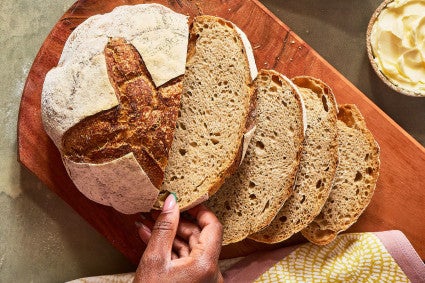
Generally, high-extraction flour is:
High-extraction flour is popular for artisan bread baking because it offers a balance of nutrition and good gluten development. It’s great for rustic loaves, baguettes, and pizza dough, and particularly well-suited for sourdough baking because it strikes a balance between flavor, nutrition, fermentation, and dough strength.
You can substitute our Baker’s Reserve Bread Flour 1:1 for bread flour (by weight or volume) in artisanal bread recipes; it can also be used 1:1 to replace the total flour in recipes that call for a combination of all-purpose and whole wheat flour. If you're subbing Baker’s Reserve Bread Flour for all-purpose flour in a bread recipe, you may find you need to add slightly more liquid to the recipe.
Bread bakers love high-extraction flour for artisan bread and sourdough because it offers the flavor and nutrition of whole grain flour; the stronger gluten development and more open crumb you get from white flour; and better fermentation from the minerals present in the bran and germ, which feed the wild yeast and lactic acid bacteria in sourdough starter, promoting more active fermentation.
If you want a loaf of bread that’s more flavorful and nutritious than bread made with exclusively white flour, but that still rises high and has an open crumb, high-extraction flour is a great choice.
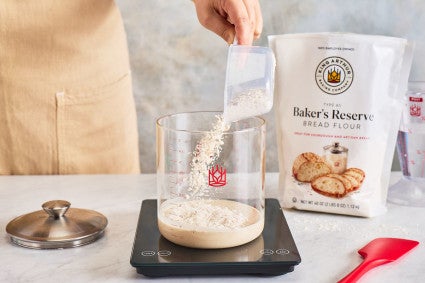
Yes — in fact, it’s a great choice for feeding starter because of the sourdough-friendly minerals present in the flour, which boost activity in your starter.
Yes! T85 is a French specification that refers to the extraction rate (85%) of the flour. Our Baker’s Reserve Bread Flour is a T85 flour, meaning the extraction rate is 85%. If you have a recipe that calls for T85, this flour is the perfect choice.
Find our high-extraction Baker’s Reserve Bread Flour online.
Cover photo by Patrick Marinello; food styling by Yekaterina Boytsova.