




Is a gas oven bad for bread?
Why a gas oven may be interfering with your go-to steaming method.

Date
September 10, 2026


Adapted from King Arthur Baking Company’s Big Book of Bread
One of the most crucial steps for making crusty artisan-style bread comes at the very end: steaming.
Baking bread with steam is critical for achieving expansive, open-crumbed loaves with a golden, crisp crust. If you bake bread in a dry oven, the crust quickly sets, which prevents the dough from expanding to its full potential; this, in turn, leads to loaves with a denser crumb. If you introduce steam at the start of the bake, the crust remains moist and pliable and the loaf can stretch and expand before the crust sets, resulting in a lighter, more open crumb.
What’s more, steam also helps gelatinize starches on the loaf’s exterior, which helps it brown and creates an especially crispy, flavorful, and shiny loaf. (Learn more: A guide to baking bread with steam at home.)
There are many different ways to steam your bread, all of which are designed to introduce moisture to the oven during the first part of baking. The most common method involves setting a large cast-iron skillet below your baking stone or steel when you preheat the oven. After you load your bread into the oven, you immediately pour a cup or so of warm water into the preheated cast-iron skillet and quickly close the door so the steam doesn’t escape.
This method works great, with one exception: It’s not effective in a gas oven.
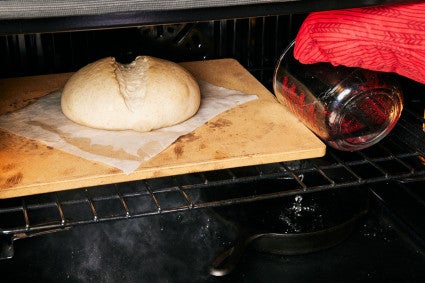
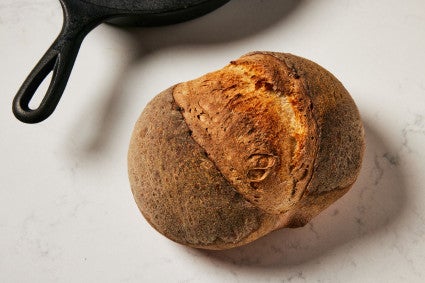
If you have a gas oven, it’s very hard to add sufficient steam. By design, gas ovens vent out effluence, meaning whatever steam you add is very quickly vented out of the oven chamber. This is particularly true if you steam your bread by pouring hot water into a cast-iron skillet, as outlined above. All the water quickly dissipates, and there’s not enough moisture left to enhance the crust.
But all is not lost. There is a workaround.
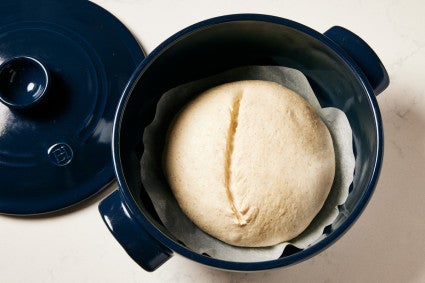
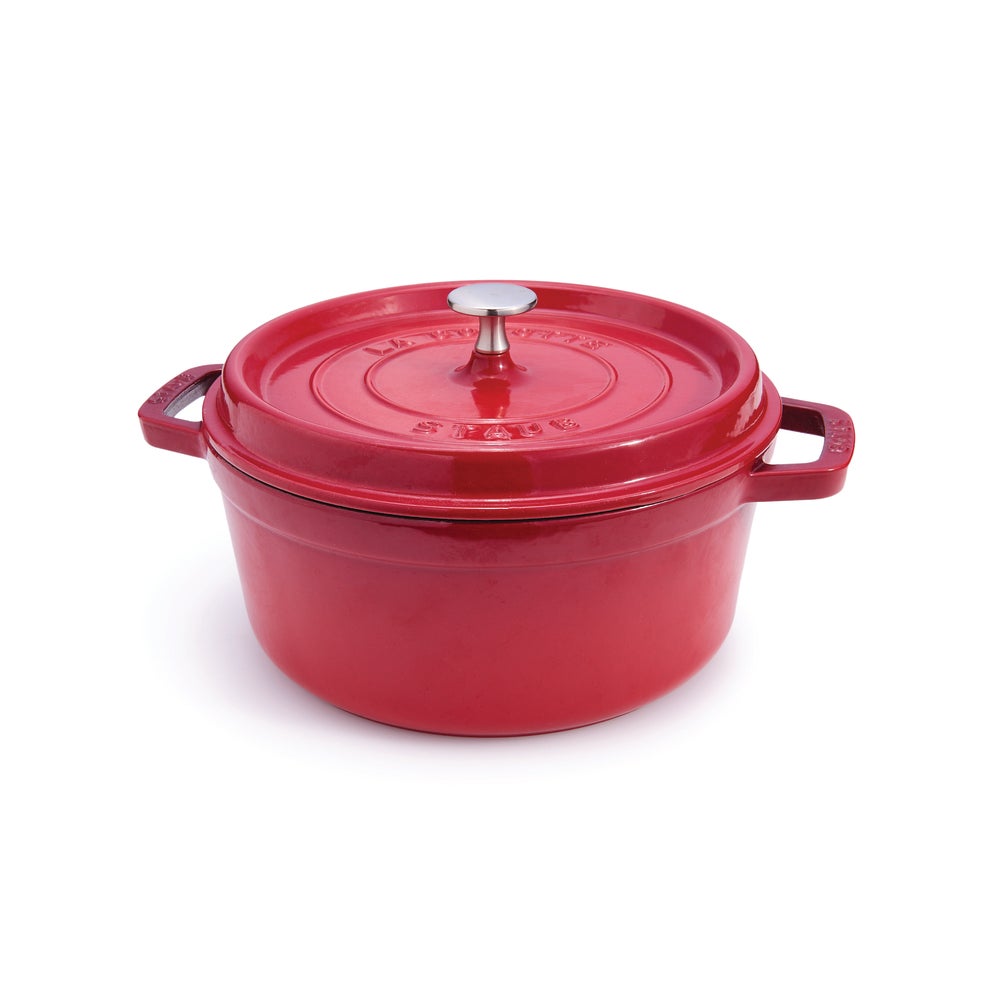
If you’re steaming bread in a gas oven, you need to use a preheated covered baker, such as a Dutch oven. Instead of adding an additional water source, the lidded vessel traps the steam that escapes from the loaf as it bakes, becoming a kind of self-steaming oven. Because the steam is sealed in, the gas oven won’t vent it out.
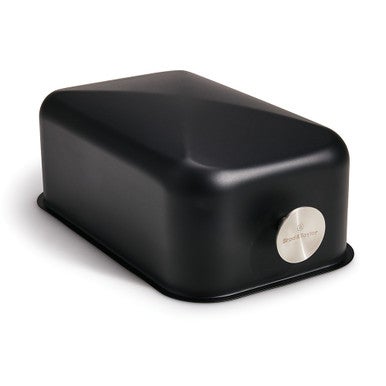
You can use a Dutch oven for a round, boule-shaped loaf, or any other form of covered baker, like the Brod & Taylor Bread Steel for elongated, bâtard-shaped loaves. (There’s also a round version of the Bread Steel available.)
For more guidance on this method, see our previous blogs, Bread baking in a Dutch oven and For crispy, crackle crusts, put a lid on it.
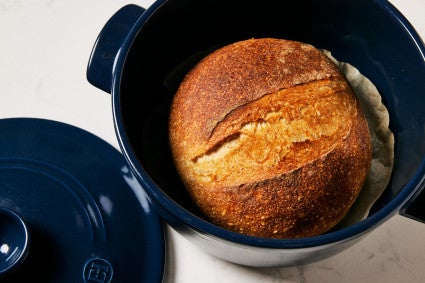
When you load your dough into the oven, slip a few ice cubes between the parchment beneath your loaf and the pan to give the loaf an extra initial burst of steam. Just don’t skip the parchment beneath the dough. Otherwise, the extra water from the melting ice may cause your bread to stick to the pot.
Cover photo and food styling by Martin Philip.