



Ripe sourdough starter: Here's what that means
How to know when sourdough starter is ready to use.



How do you know when your sourdough starter is ready to use in a recipe? And what exactly does "ripe sourdough starter" mean?
We've answered hundreds of questions on this topic, but in this case, it seems some pictures could well be worth a few thousand words. Let's take a look at how you can get your starter ready to bake with, and what to look for in ripe sourdough starter.
This refers to starter that is ready to be used for baking: It has been recently fed and then doubled or tripled in volume and then slowed down in activity. It’s at this point that you want to mix your bread dough.
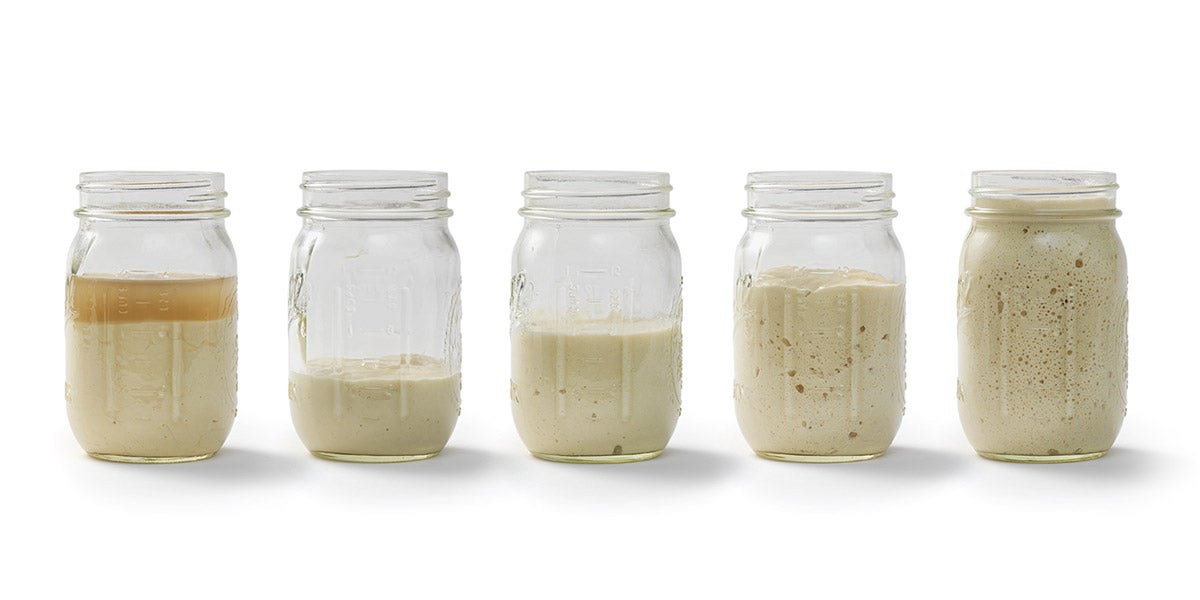
The timing will be different depending on your sourdough starter and conditions, but generally, this occurs roughly six to eight hours after being fed. Starter that is under-ripe has not yet doubled in size, and starter that is over-ripe has doubled or tripled in size and then started to sink again. There is a range of ripeness in between, and that is the zone you are looking for to get the best results in your recipe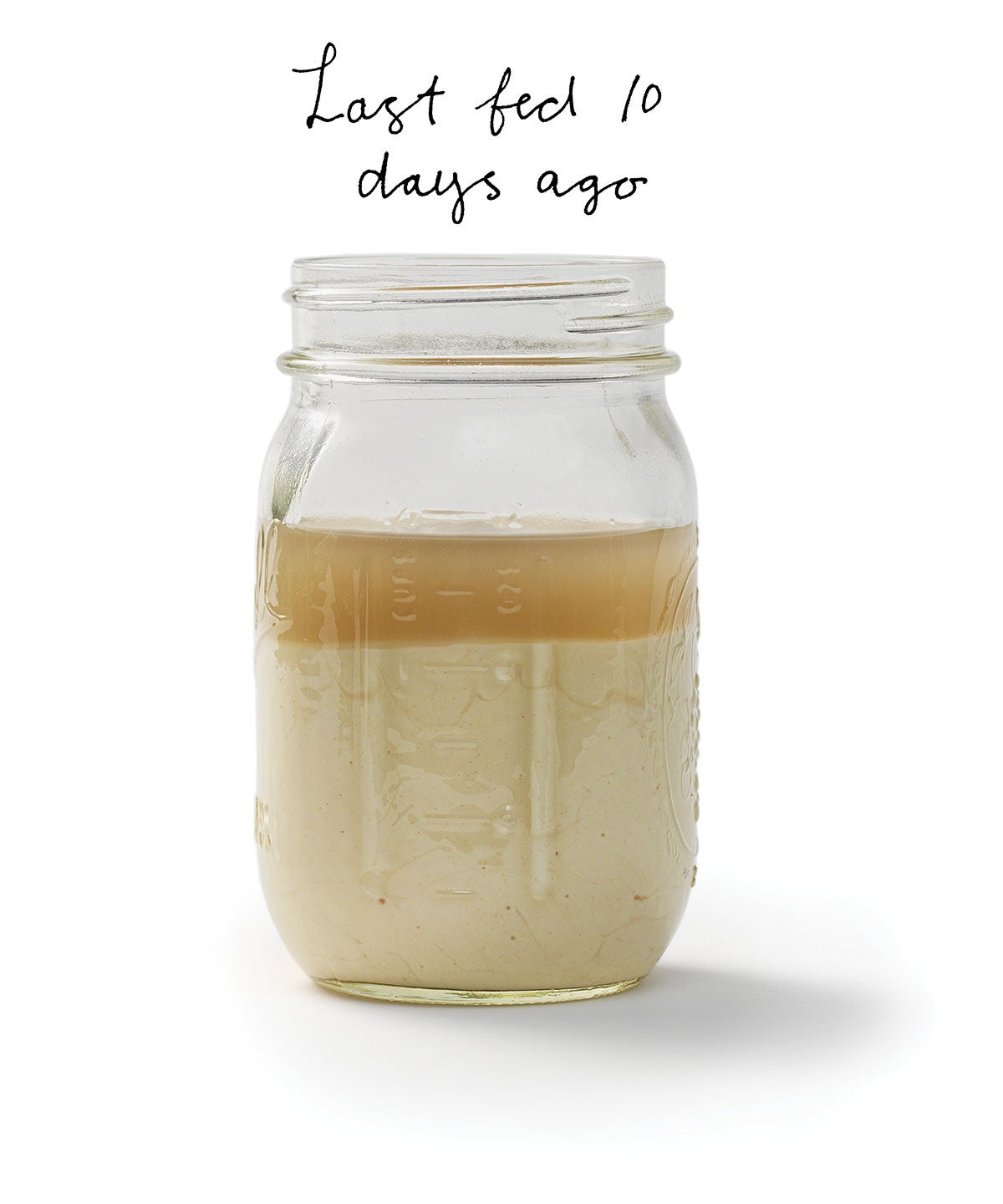
Your starter has been tucked safely in the refrigerator for ... awhile. Ten days, maybe longer. It's separated, with a few tiny bubbles in the bottom, and a layer of grayish-looking alcohol on top. This is the sight that generates a lot of phone calls to our hotline. Can this possibly be OK? Is it dead?
Despite its current uninspiring appearance, this starter is still capable of doing great things. Just not quite yet. Here's how to get it ready.
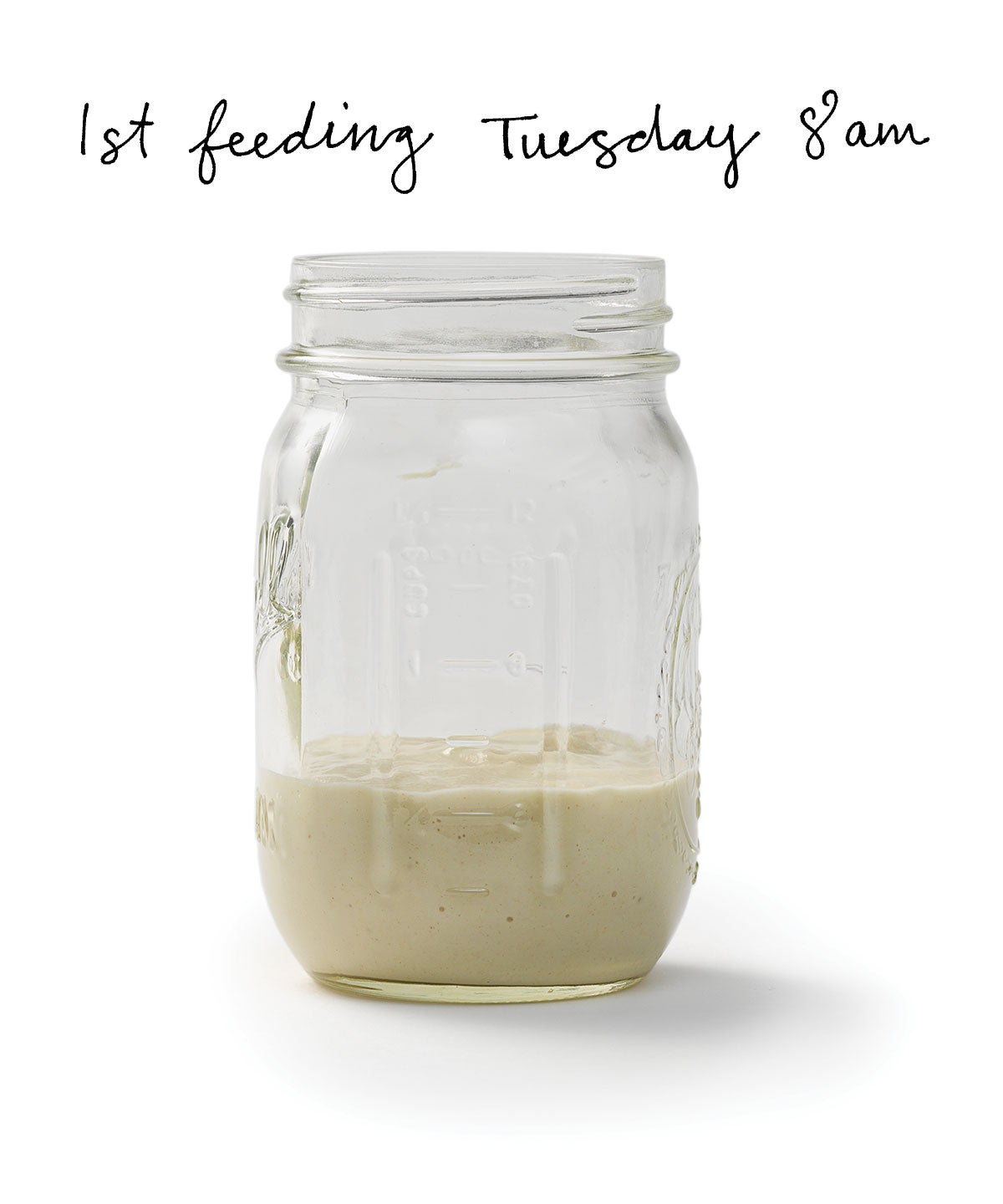
Stir everything back together (some people just pour off the top layer, which is OK, too), measure out 50g (scant 1/4 cup) of starter and discard the rest, then feed the 50g starter with equal weights of flour (50g, about 6 tablespoons) and water (50g, a scant 1/4 cup). Mix well, cover, and leave on the counter for 12 hours. Repeat the discard and feeding process every 12 hours, leaving the starter on the counter. After a few feedings, you'll see the starter becoming more and more active, doubling in size in a shorter time.
(Looking for ideas of what to do with that discarded starter? Visit this page to get a whole collection of recipe ideas.)
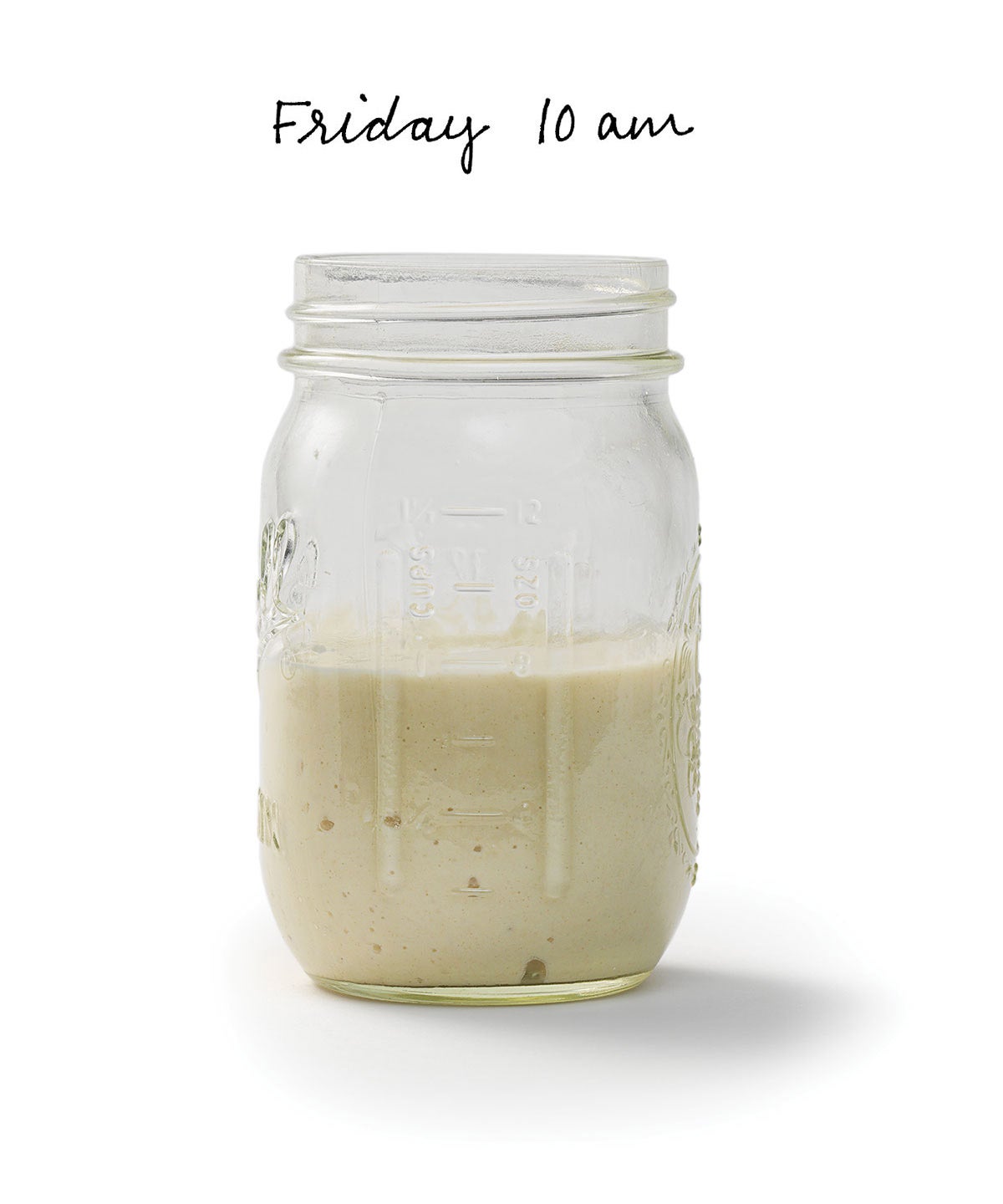
This is the same starter after a few days of the regular feedings described above. We stirred, discarded, and fed it with flour and water at 8 a.m. (2 hours ago). Now we're going to watch its development. See the number and size of the bubbles increasing?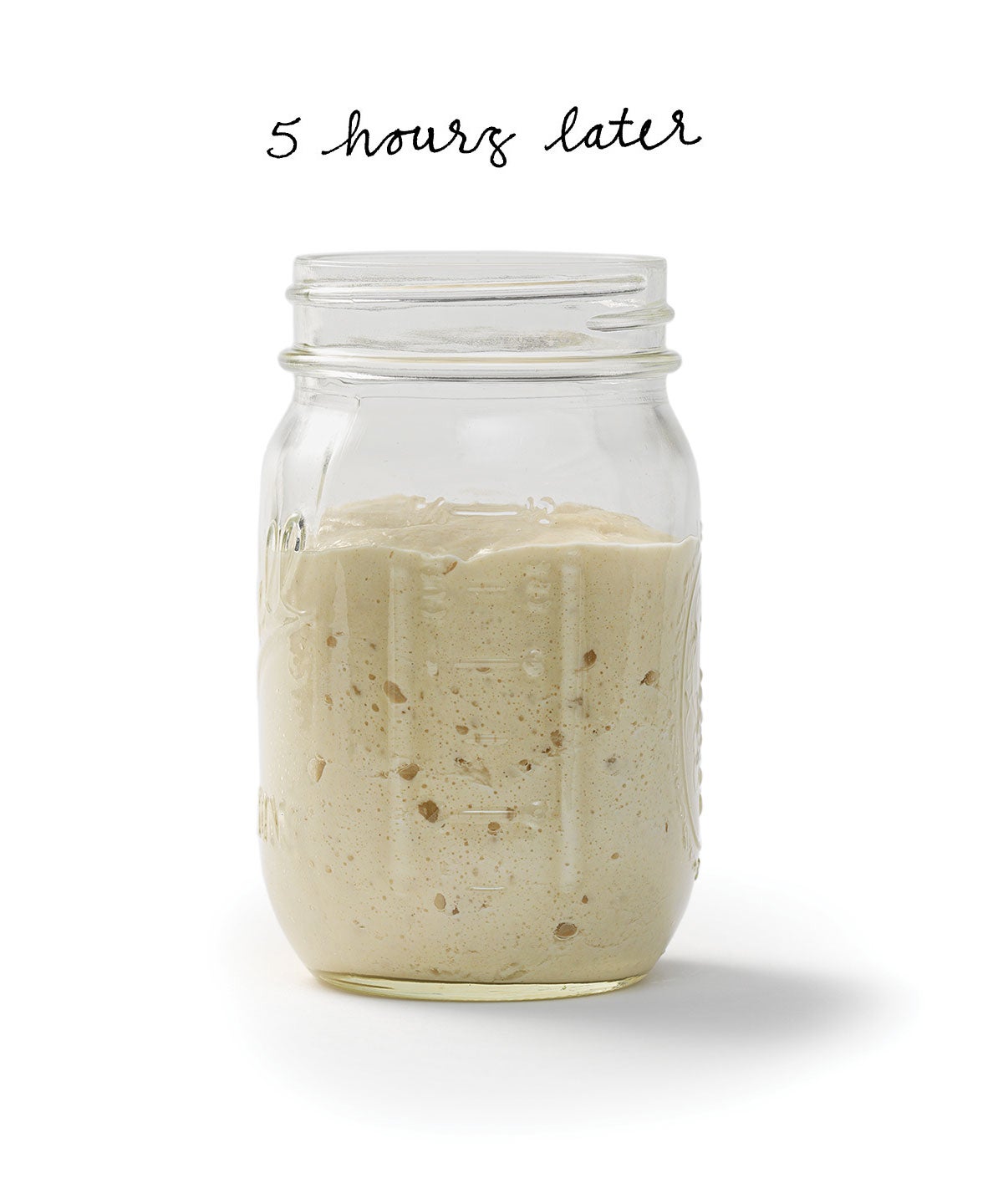
The same starter at 1 p.m., 5 hours after feeding. It's beginning to expand, and has many more bubbles. If you watch it for a minute, you can see the bubbles forming and coming to the surface in slow motion. This is an active starter, growing and expanding, producing bubbles of carbon dioxide. But it's not yet ripe (at the top of its yeast and bacteria growth arc), nor at full strength for raising dough.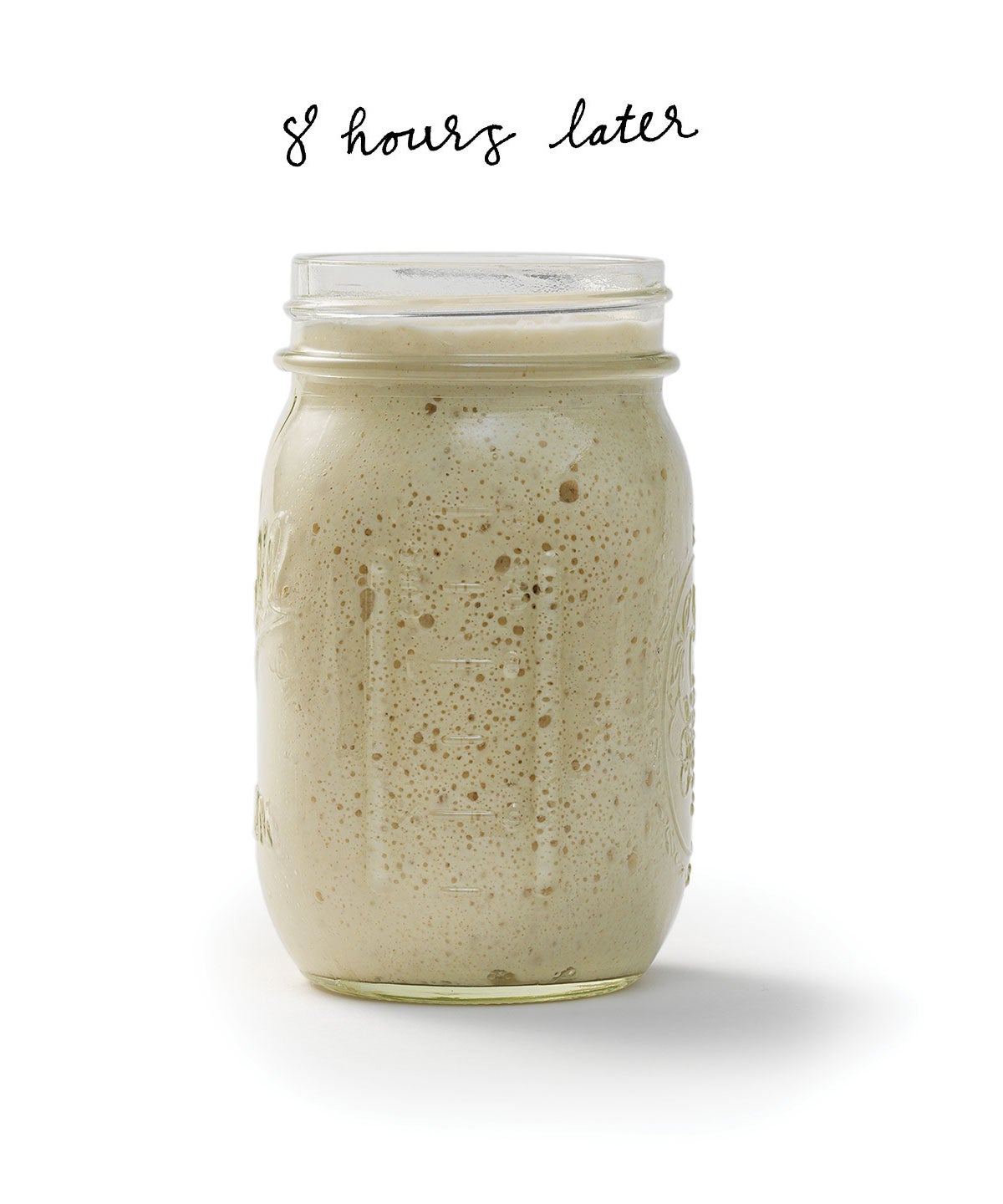
The same starter at 4 p.m., 8 hours after feeding. It's doubled in volume, and shows signs of just beginning to sag under its own weight. This is active starter that's also ripe, ready to be added to bread dough to perform its sourdough magic. After mixing it into dough, then some rising and folding, the dough can be shaped and refrigerated overnight to be baked tomorrow.
An important thing to note about measuring sourdough starter: The more bubbles in it, the less a cup of active, ripe starter weighs. Measuring by volume can mean you have more or less starter in your cup, depending on where it is on its growth curve. That's not a deal breaker for your recipe, but having a different amount of starter than called for may change the rising times and finished size of your loaf. To be sure you have the lifting power you need, measuring ripe starter by weight is always a better choice.
Once you gain confidence that your starter is vigorous, you can move its "get ready" feeding to the evening, knowing your starter will be ripe next morning to mix into your dough.
Your sourdough baking adventures await. We have lots of ideas (more than 150 recipes) to help you navigate this tasty and rewarding style of baking. Be sure to visit our sourdough guide for more in-depth information about creating, maintaining, and baking with sourdough.