







How to substitute self-rising flour for all-purpose flour (and vice versa!)
A guide to baking with self-rising flour.

Date
March 30, 2026

You bought a bag of self-rising flour to make biscuits. But after making them, you still have most of that bag left — now what? The good news: You can easily substitute self-rising for all-purpose flour in many of your favorite recipes. And the opposite! If you have a recipe calling for self-rising flour but only have all-purpose, you can substitute all-purpose flour for self-rising flour, too.
Here's everything you need to know about substituting self-rising flour.
The biggest difference between self-rising flour and all-purpose flour is that self-rising flour has baking powder and salt already included in it.
Besides including leavening and salt, self-rising flour also differs from all-purpose in its protein level. All-purpose flour's protein is 11.7%; self-rising checks in at 8.5%. (This is because self-rising flour is milled from soft wheat, while all-purpose flour is milled from hard wheat.)
So what does this mean for your baked goods? The proteins in flour form gluten, which means the more protein in the flour — i.e., the higher its protein content — the more gluten-forming potential that flour has. Another way to think about it: the higher the protein content, the “stronger” the flour. So self-rising flour, with its lower protein content, results in softer, lighter, more tender baked goods than those made with all-purpose flour.
Similar to all-purpose flour, self-rising flour has baking powder and salt already included in it, while bread flour does not. And these two flours have an even bigger difference in protein level: Bread flour's protein content is 12.7%, while self-rising flour's is around 8.5%. That means that bread flour supports strong, elastic doughs, while self-rising flour is much better for a tender, delicate crumb. As a result, we don't recommend using self-rising flour and bread flour as substitutes for each other.

Here's how to use self-rising flour in place of all-purpose flour:
1) To substitute self-rising for all-purpose flour, look for recipes that use baking powder: about 1/2 teaspoon per cup of flour
Our self-rising flour includes both a concentrated form of baking powder and salt. Self-rising flour will work just fine in recipes using about 1/2 teaspoon (and up to 1 teaspoon*) baking powder per cup of flour.
*What about recipes using more than 1 teaspoon baking powder per cup of flour? Add enough baking powder on your own to make up the difference.
What about recipes that include both baking powder and baking soda? Or only baking soda — no baking powder? For recipes with both leaveners, include the baking soda just as you would if you were using all-purpose flour. For recipes using baking soda, but no baking powder — well, you're on your own. I can tell you that as far as leavening power goes, 1 teaspoon of baking powder is approximately equivalent to 1/4 teaspoon of baking soda. I leave any further recipe math up to you!
2) Omit the baking powder and salt from the recipe — it's already in the self-rising flour
Because there is already salt and baking powder in the self-rising flour, you need to omit them from the recipe. Unless, of course, the recipe calls for more than 1 teaspoon baking powder per cup of flour — in that case, add enough to make up the difference, as noted above.
Here's how to use all-purpose flour in place of self-rising flour:
1) Make a self-rising flour substitute by adding baking powder and salt to all-purpose flour
To make homemade self-rising flour, whisk together 1 cup (120g) all-purpose flour (or another flour of choice), 1 1/2 teaspoons baking powder, and 1/4 teaspoon table salt. Substitute 1:1 by weight or volume in any recipe calling for self-rising flour.
2) For best results, increase the liquid in the recipe
Because of the slightly higher protein content of all-purpose flour, be prepared to increase the liquid in the recipe somewhat, and expect the resulting baked goods to be a bit less tender.
Let's see how these tips translate to real life — starting with our 2015 Recipe of the Year: Chocolate Chip Oatmeal Cookies. The recipe calls for 1 teaspoon baking powder and 2 cups of all-purpose flour — which meets the criteria of 1/2 teaspoon baking powder per cup of flour.
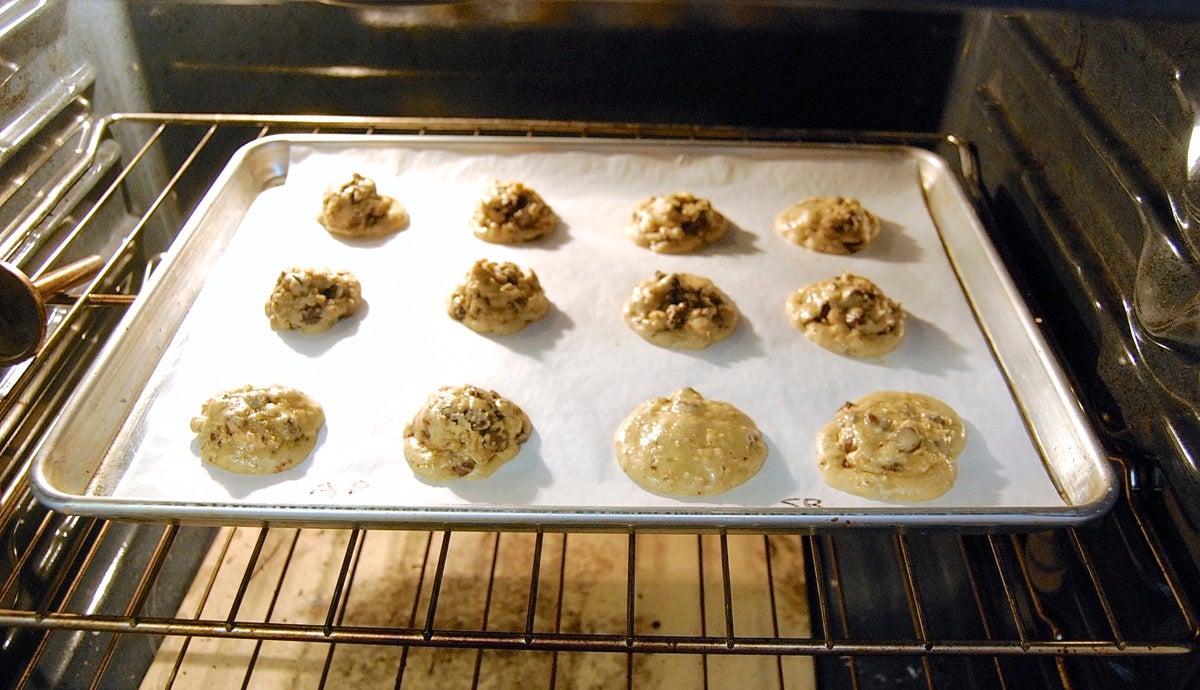
As suspected, the self-rising flour cookies (right), with their lower protein content, start to spread more quickly than those made with all-purpose flour.
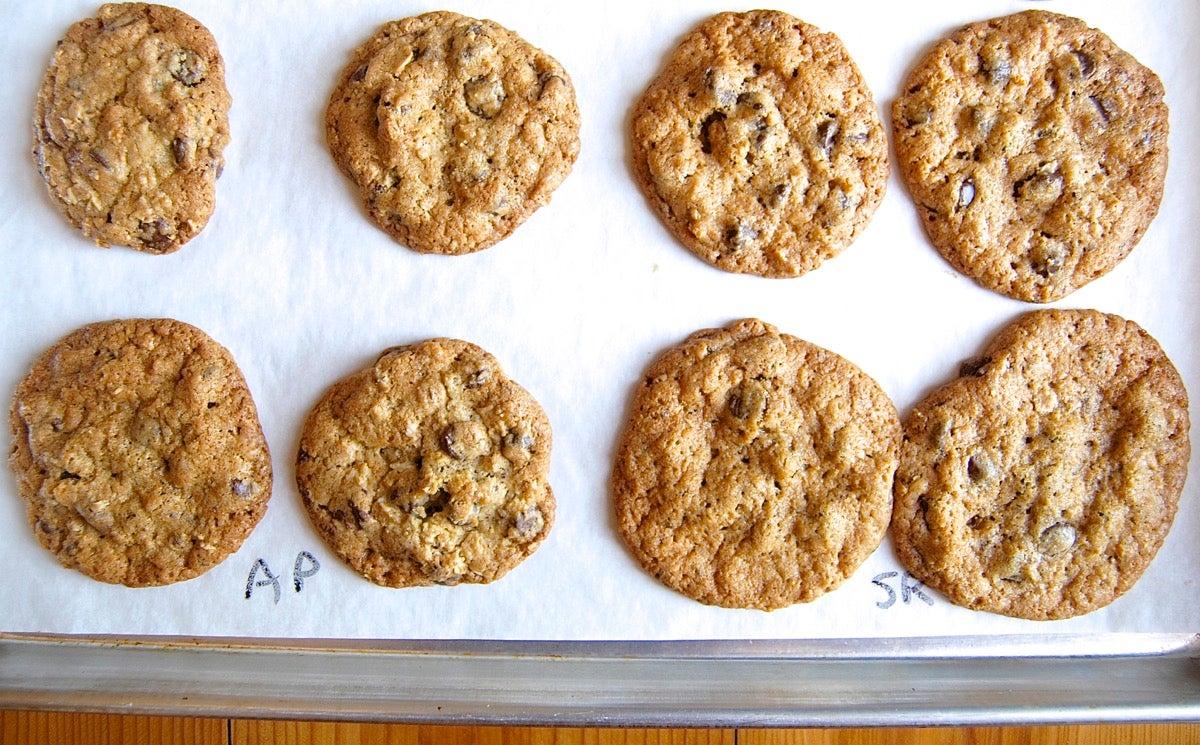
And that quicker spread yields slightly larger, flatter cookies. That's because lower protein means less gluten, which translates to less/looser structure: more oven spread. Not a deal breaker, though — these are still good cookies.
If you have a cookie recipe that spreads a lot using all-purpose flour, then it's probably not the best idea to substitute self-rising flour. But any cookie with normal spread — one using at least 1/2 teaspoon baking powder per cup of flour — should be just fine.
Let's try another popular recipe, Banana Bread. The recipe calls for 1 teaspoon baking powder and 2 1/4 cups of all-purpose flour.
Uh-oh — that's not "at least 1/2 teaspoon baking powder per cup of flour." But rules are made to be tested, and it's close; let's see what happens.
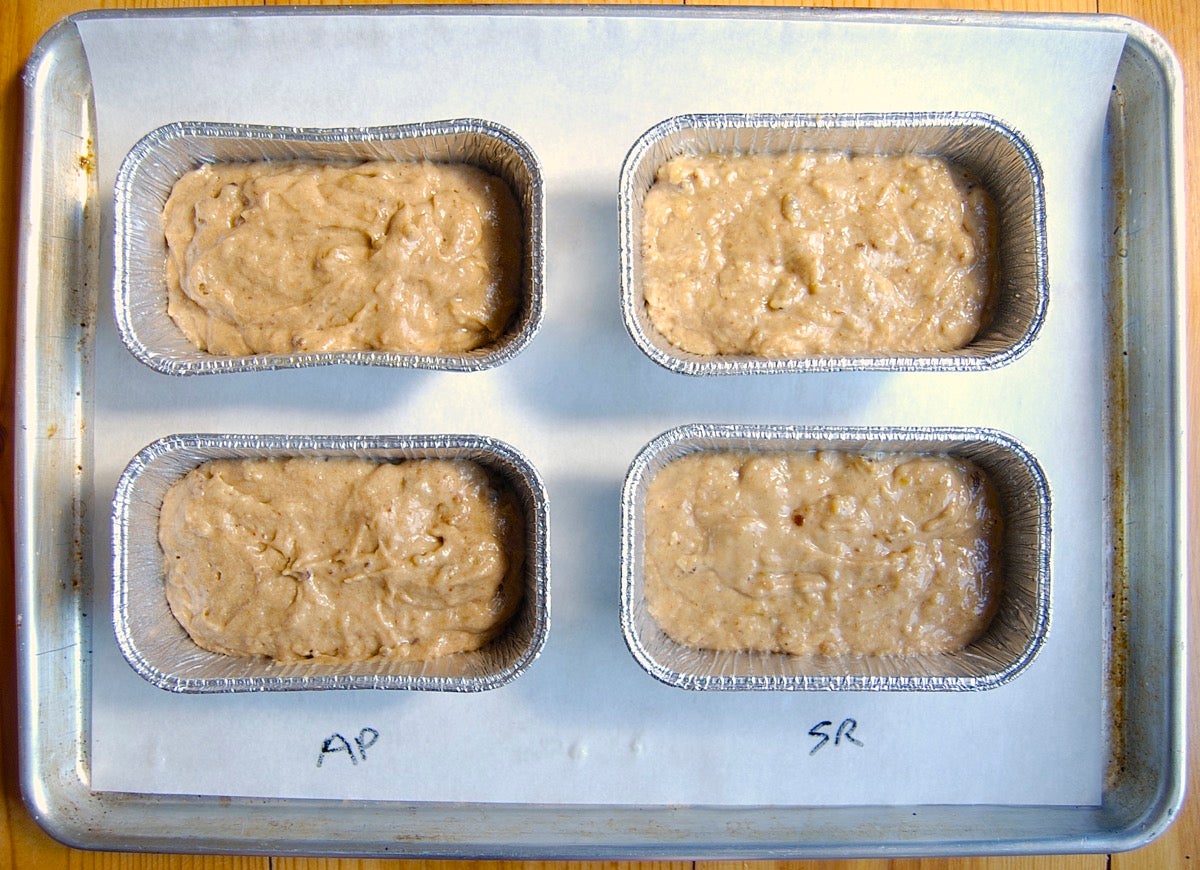
The batter made with self-rising flour is just slightly thinner. Again, that's a reflection of self-rising's lower protein level. Still, both breads rise and bake up similarly.
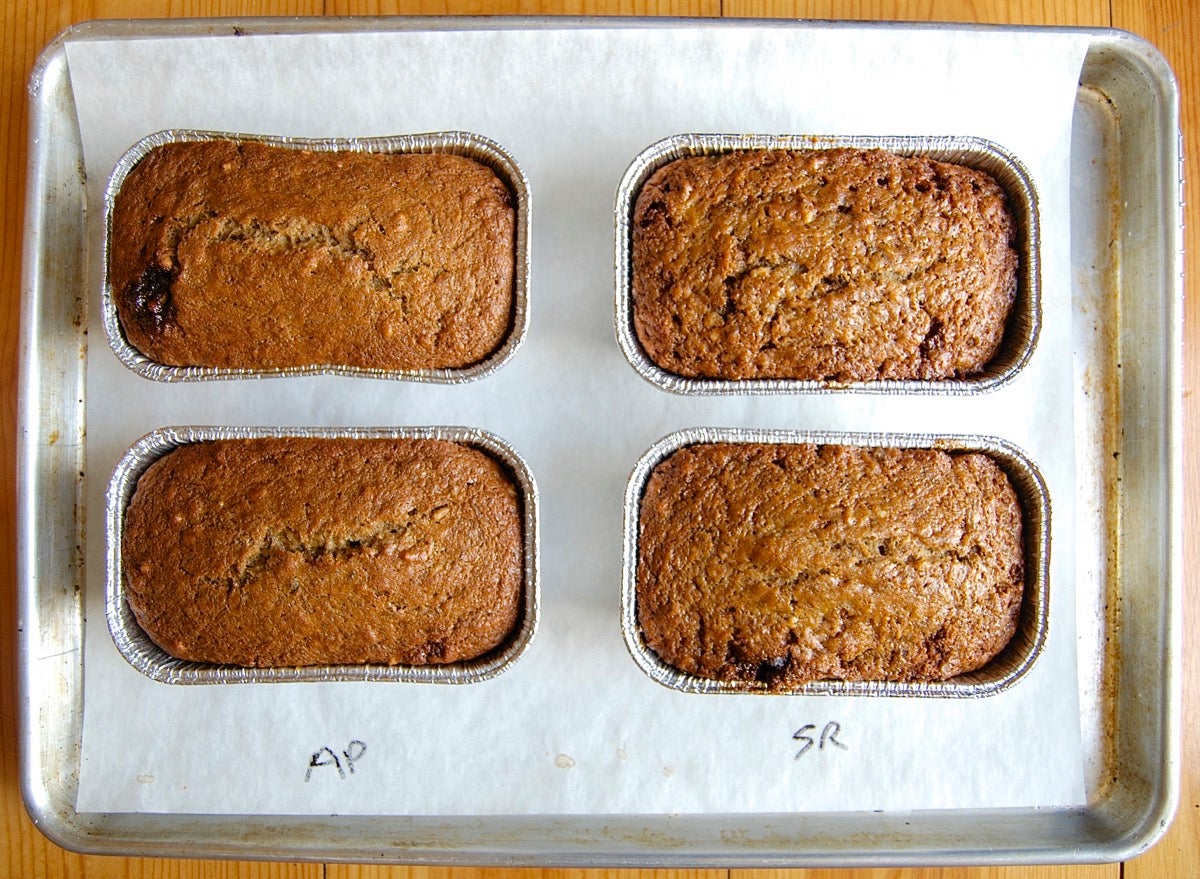
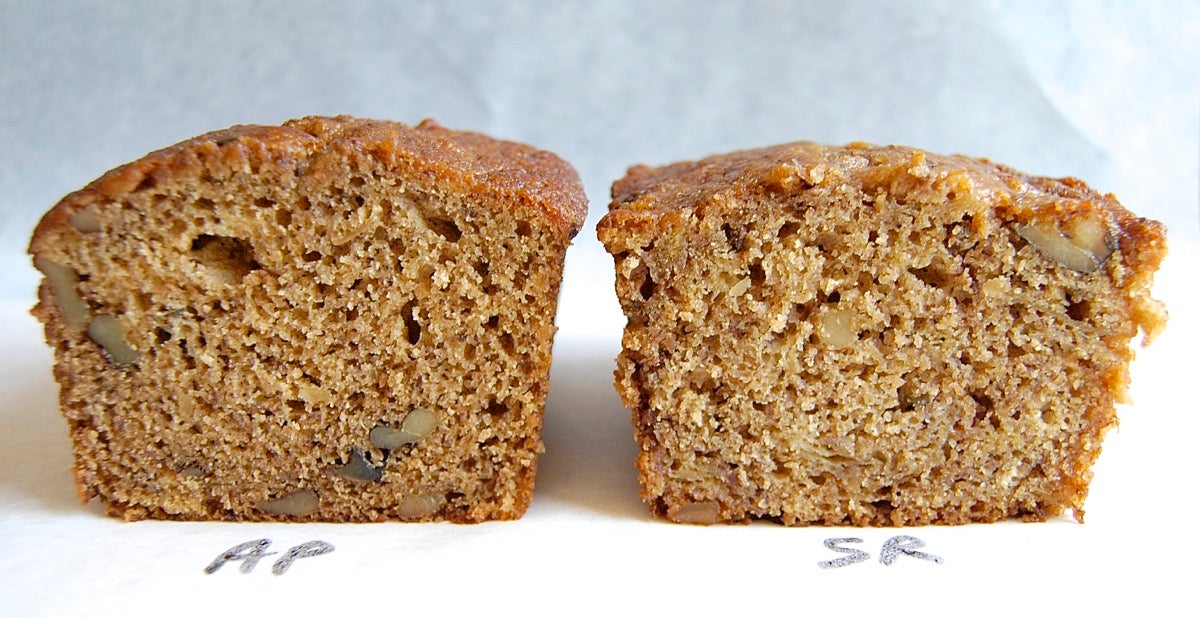
Maybe the self-rising flour bread is a tiny bit flatter across the top? But without a side-by-side comparison, you'd never know. Once again, this substitution yields nice results.
Finally, let's try one of my favorite cake recipes, Lazy Daisy Cake, and see how it does with self-rising flour. It's an old-fashioned hot milk cake, calling for 1 teaspoon baking powder and 1 cup of flour: that's 1 teaspoon baking powder per cup of flour, double the minimum.
Will the self-rising flour have enough leavening power? Absolutely. That's all-purpose flour on the left, self-rising on the right. They look exactly the same.
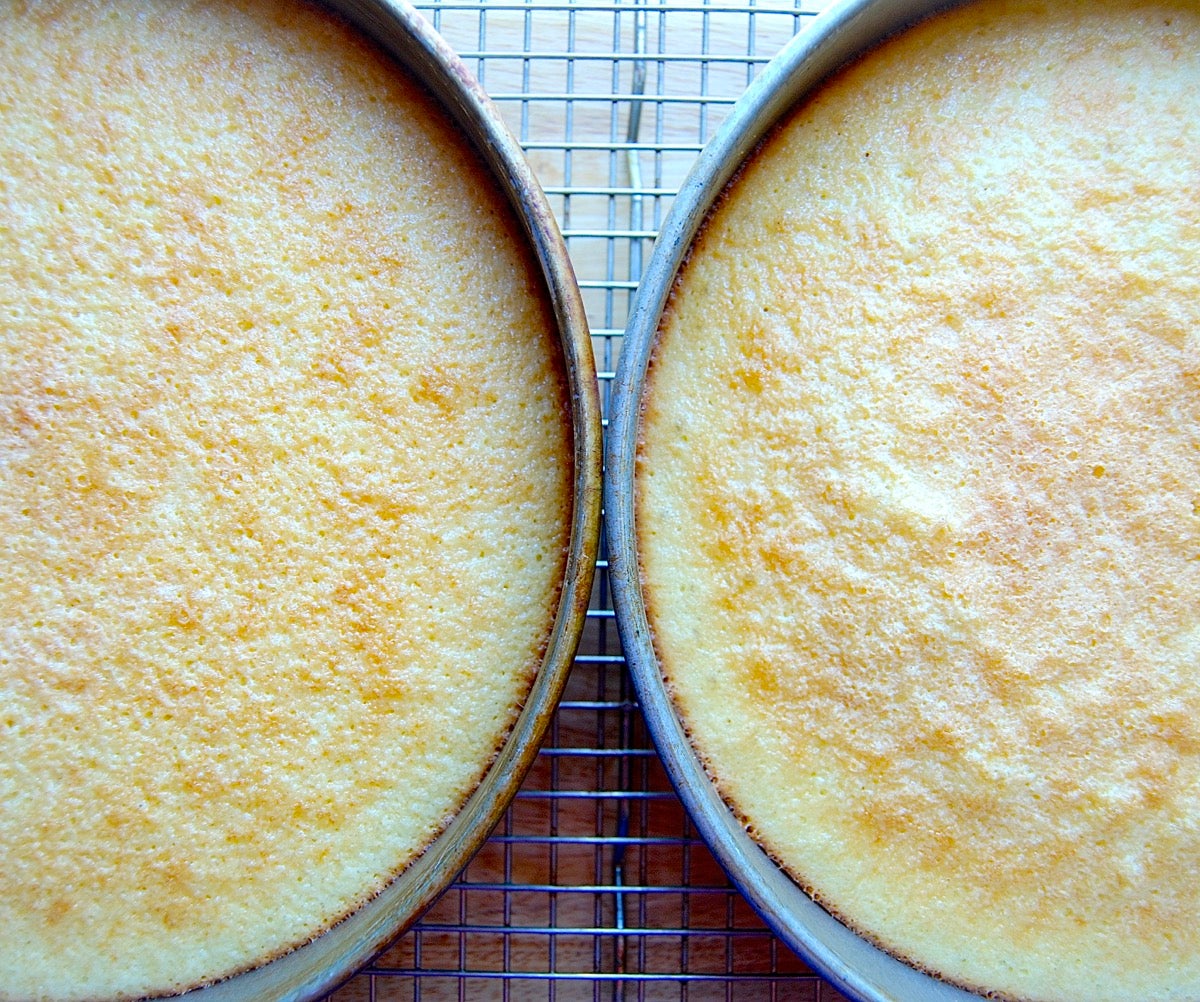
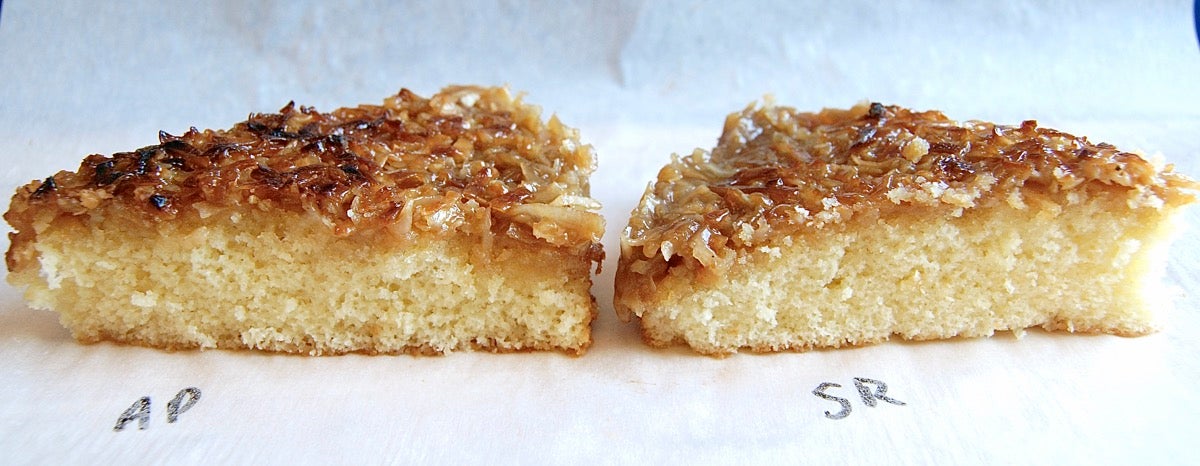
Once cut, it appears the all-purpose flour cake may have risen a bit more evenly; but that also might be just a simple aberration. Both have a lovely crumb. And both versions, with their broiled brown sugar/coconut topping, taste just as I remember from junior-high days: superb.
Editor's note: This blog post was updated and republished in March 2026.