




2026 Recipe of the Year: Flaky Puff Crust Pizza
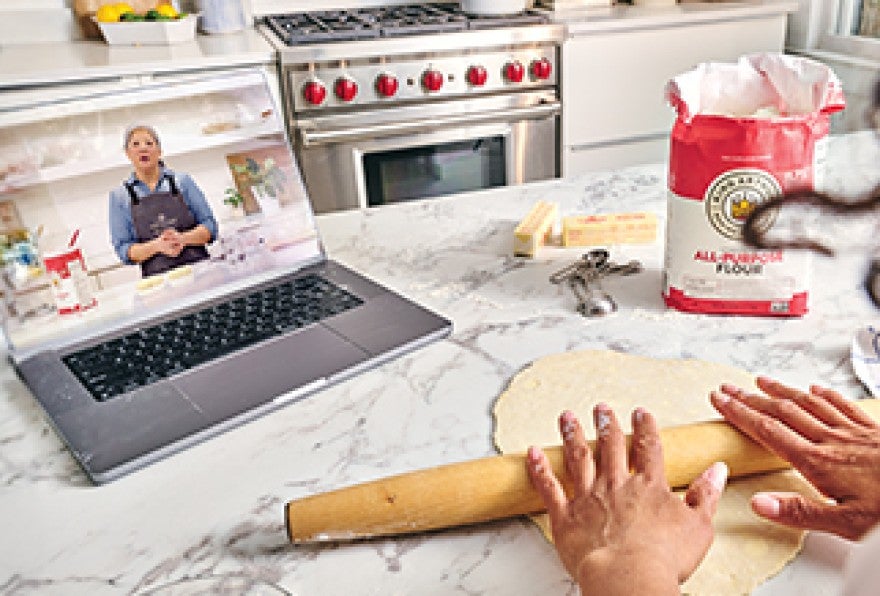
Martin's making the brand-new Recipe of the Year for YOU! It's a truly groundbreaking sheet-pan pizza with a shatteringly flaky, pastry-like crust that puts it in a category all its own. The distinct layers are made by incorporating frozen grated butter into the dough as it’s rolled and folded several times; this creates sheets of butter that puff and separate the layers as the butter steams. It's similar to the process of lamination used to make croissants, but in a streamlined, less exacting form. You’ll need to stick around the kitchen to tend to this dough on-and-off for two hours, but the result is a crust that’s rich yet light and crispy (no baking steel necessary!) and like no pizza you’ve tasted before.
Did you hear that crunch? Ridiculous. Hey y'all, Martin here in the studio today and I'm excited to share with you our 2026 recipe of the year flaky puff crust pizza. Join me for the video. The recipe link is right down there in the description.
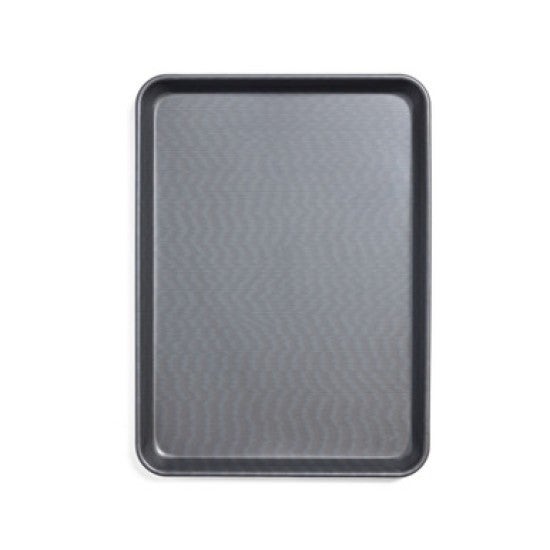
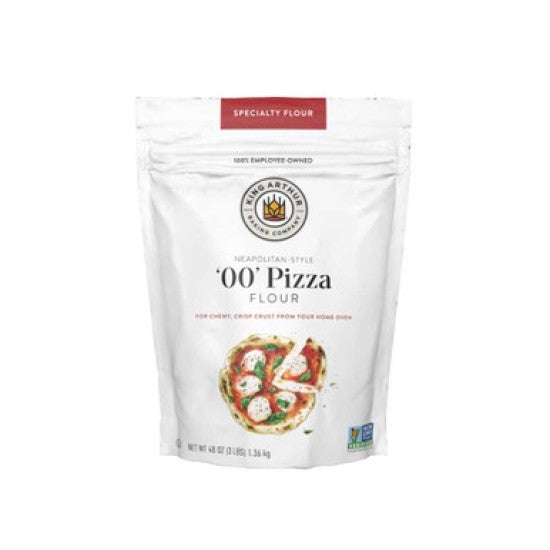
This is our flaky puff crust pizza. Okay, so the first thing that we're gonna do is get our butter ready. I'm gonna grate it, I'm gonna put it on some parchment and we'll freeze it until we're ready to use it for the lamination. Alright, so let's jump into the mix. I've got my 00 Flour in the bowl. Remember, we're trying to make a flaky, tender pastry type pizza crust. So 00. I also have my salt and my sugar and my yeast. A good way to scale this is to leave those elements right on top of your flour. So in the bowl I've got my 300 grams of 00 Flour, and then we'll just whisk 'em together just for a second, just to make sure that they're combined and well distributed. And I've got my water here, that's 170 grams of lukewarm water and I've also got 12 grams of olive oil going in. Olive oil will help flavor, it'll help crispness, it'll help tenderness too. Anytime you add fat, right? Okay, spatula. And we're just gonna stir to combine. So what I would say about this dough consistency, in case you're sort of mixing it together and you're thinking, "Ah, this is a little bit on the firm side," is that you're right, it is a little bit on the firm side. Having that sort of firmer crust will actually make it more tender because it won't be as chewy. So less chew, more tenderness, more pastry-like in a way. All right, dough looks great. We're gonna put it into a bowl. We're gonna cover it and we're gonna let it rest for 30 minutes. And now's the time where you can go ahead and preheat your oven, 475. Okay, 30 minutes. We're back and we're ready to get the butter into the dough. At this point, you're not gonna see something big and puffy that's necessarily doubled in size, but you should feel a little bit of activity. So a little bit of flour on the bench. We're gonna roll this dough pretty thinly, and in that process you're gonna want to have a decent amount of flour on the bench, okay? I'm inverting it once so that I have flour on both sides so that it doesn't stick to my rolling pin. So I'm gonna roll this to roughly 10 by 13. And you know, if you feel like it sometimes during the rolling process, I will invert it just to see and make sure that I'm not sticking anywhere. So I'm at 10 and I'm at 13. And now we can get our butter in. So we literally just took this butter out of the freezer. You want to keep it cold until that very last moment. It will sprinkle and sort of keep off your hands a little bit more easily, the colder that it is. And I'm only gonna use about three quarters of it, not all of it. You're gonna save a little bit. And for the next fold, we're gonna add a little bit of additional butter. Okay, so with lightly floured hands, I'm just pressing the butter to make sure that it's sort of adhered. And then I'm just gonna fold it. I'm gonna start on the left side. I come to the other side and I fold all the way over. And this is a letter fold. I'm folding it exactly as I would a letter. I want this to be a little bit wider, about four inches. And so I'm just gonna give it a little press. This also helps to ensure that those layers of dough are sealed. If it doesn't look quite as tidy as that, that's okay. Just keep on going. Okay, so the butter is still nice and cold. I'm just distributing it a little bit and just gently pat this to make sure that it adheres when I go to fold. And now from the bottom, I'm gonna fold up, you know, about two thirds of the way. I'm gonna press firmly with my hands to make sure that everything is sealed. And then I'll come down from the top and fold it one more time. And you can see I've got this nice little tidy package developing here. Making sure that I'm not adhered to the bench, light dusting. And then I'm just gonna roll it until it feels like it resists, and you'll know if you feel like it's sticking at all, you can grab just a little bit of flour. If you see any spots where the butter might want to sort of escape, you can go back and just give 'em a little pinch with your fingers. Little bit of flour on my surface there. Transfer the dough. If you have your baking tray at hand, you can use that as a lid. Put that on there. We're gonna rest it for 15 minutes. Alright, 15 minutes. Dough is already nice and relaxed, actually. What I have to attribute that to is that normally in a process like this, or often in a process like this, I'm working with bread flour, but this is 00. And remember that this is an intentional choice to have a dough, which is slightly softer in terms of its protein content. It's more extensible, it's a little bit easier to work with. Looks good. Love that. Okay, let's see where we are here. Got my trusty ruler. Hey, 13, thank you very much. And exactly 18. Okay, so now we can put it into the pan. So today I'm using this Lloyd pan. It's the same size as a half sheet tray, but it will produce a darker crispier crust. And this doesn't have to be a delicate gesture, you can just pick it up and plop it in there. No big deal. If it's overhanging, just slightly, just get in there and adjust it. I'm just going to sort of gently stretch and press the dough up the sides of the half sheet tray, about half the distance to the top. One of my favorite parts about eating this is that edge crust, because that's where you get the most puff and the most crunch and sort of crispness. Alright, so get this covered. We're gonna come back in 30 to 45 minutes after it's had a chance to rest. Okay, 45 minutes. Pizza is ready to load. My oven's preheated to 475. It's ripping hot, it's ready to bake. Let's sauce this pizza. So the amount of sauce, let's talk about that for just a second. It's not a lot of sauce. If we drowned this crust in sauce, it would not be as crispy. And so it's just a little bit of sauce and I'm gonna spread it evenly across the surface of the dough. So nothing fancy here, just get it on there and distribute it well. And after the sauce, we've got some Parmesan. So I like putting this parm on underneath the other cheeses, you know, and Sarah and the test kitchen's intention there was that it doesn't get too dark during baking. So parm first, and then we'll go on to our grated low moisture mozzarella. And then we'll go with our fresh... So the fresh mozz, you know, it melts completely differently than an aged mozzarella, like the low moisture. This just melts totally differently. Okay, that's it. Not too fancy. We're gonna put this in for 15 to 17 minutes on a rung, placed on a rack in the middle of the oven, and we're gonna look for that nice, beautiful, golden brown, deeply colored, bubbling cheese aspect before we take it out of the oven. And while it bakes, we're gonna make a beautiful garlic-basil oil. Alright, so let's make this basil oil. Alright, half clove of garlic. And we're just gonna grate that into our bowl. Some olive oil into the bowl. I need 10 grams of basil leaves. You can measure this by volume too, but I don't know, I just find the scale to be the best tool. So 10 grams, and I'm gonna mince that. What else do I have here? I've got a little bit of lemon, just a little bit. Okay, lemon juice. Half to one teaspoon. And I'm just gonna mince up this basil. Basil is a great thing to add after the bake. And the reason for that is that when it hits the hot pizza, it really blooms. It blooms in a way that is intoxicating, I think. I don't think that's too big of a word. So I've got those things, nice big pinch of salt, and then red pepper flakes as well. I like a nice big pinch. Stir to combine. And we'll just set that aside at the ready for when the pizza comes out. We'll get our space cleaned up and it's almost time to eat. Okay, hot pizza. So get it out of the pan immediately. You don't wanna let that sit. We've worked really hard to have this beautiful, crispy, crispy pie. Put it onto a cooling rack while we finish it, okay? Beautiful. Okay, first things first. Get some parm on there. We're gonna grate it and then we'll add our basil oil. This is to taste, and this is one of those things like, man, just smells incredible. The second you add it, I'm like, . So it's a gorgeous bake, you know, I can look at it for just a second. Beautiful, beautiful. Well colored on the bottom. I know that it's gonna be crisp just by the fact that I can pick it up and it sort of holds its shape. I know that it's gonna be beautifully crisp and flaky. All that effort that went into the recipe coming through and how it performs right out of the oven. Come on. Wow. Did you hear that crunch? It is pizza. It is pizza. But man, it's not like any pizza that I have had in terms of its flake. It's almost like we took some puff pastry or something and we topped it as we would a pizza. Except it's laminated. You know, it's layered. It's got some fermentation. The flavor layers are all there. I've got the crispy, I've got the cheesy, the sauce, the herby note from the basil, the layers in this dough, which are just incredible. So this is Martin from the studio saying thank you to our test kitchen and everyone else who's worked so hard on this flaky puff crust pizza, which is our recipe of the year. I hope you bake it. I hope you enjoy it. I'm gonna stop talking and have myself a bite of pizza. Cheers, y'all.

Video Credits
Shop this video
Related Videos

Your bread fell flat. Your cookies crumbled. Who do you turn to?