



Evaporated vs. condensed milk: What's the difference?
Navigating the canned dairy aisle.



Navigating the dairy section at the grocery store is one thing, but when it comes to the canned stuff, how much do you know about the difference between evaporated milk and condensed milk?
These two nonperishable dairy products usually sit right next to each other on the grocery shelf, and with holiday baking season fast approaching, they’ll both be crucial elements in pies, cookies, bars, and much more. And while evaporated and condensed milk are easy to confuse, they’re very different products: using one when you meant to use the other is a hard pill (or pie) or swallow. To clear the confusion, we’re here to share everything you need to know about these canned milk ingredients, their differences, and how to use them.
Before we discuss what sets evaporated milk apart from condensed milk, it’s important to discuss their similarities. Evaporated milk and condensed milk are both concentrated liquids made from fresh milk that gets heat-treated until about 60% of the water content is removed. The primary difference between the two is the amount of sugar they contain and their resulting texture.
Evaporated milk will typically only contain lactose, or the naturally occurring sugars found in milk and dairy products. Condensed milk, on the other hand, contains around 40 to 45% added sugar. That contrast means condensed milk is much thicker (almost syrupy) and has a more pronounced sweet flavor (it’s no wonder it’s often referred to as sweetened condensed milk!), and evaporated milk runs watery in texture and is lighter in taste.
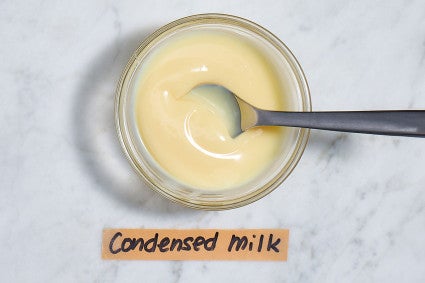
Because of the extreme differences in the sugar content and consistency, evaporated milk and condensed milk cannot be used interchangeably. There will be a very noticeable difference if you use evaporated milk in a recipe that was written to use condensed milk, or vice versa.
Using evaporated in a recipe that calls for condensed milk will result in a dessert that is too bland and watery, while using condensed milk in a recipe that calls for evaporated milk can make a dish way too sweet and thick. If your recipe calls for a very small amount (1 to 2 tablespoons) of condensed milk, you could get away with combining a spoonful of evaporated milk mixed with some sugar. But if your recipe needs one whole can of evaporated or condensed milk, be sure to use the correct type.
If you want to learn more about – and celebrate – the differences between evaporated and condensed milk, make this Tres Leches Cake, which is a fantastic recipe that utilizes the two milks with heavy cream in a luscious cake soak for dessert. For a different dose of double the milk, you’ll want to try this creamy, custardy Vanilla Bean Flan.

Evaporated milk provides richness and creaminess to dishes that are both sweet and savory. It’s often used to enrich custard-based pie fillings, like Hong Kong Egg Tarts, Delicata Squash Pie, and Pumpkin Pie. To round out your fall table and use up that can of evaporated milk, try the dairy ingredient in dinner recipes like Pumpkin Soup and Creamy Tomato Soup, or macaroni and cheese.
Richer, denser desserts call for sweetened condensed milk’s thicker texture and higher sugar content. Must-make recipes include Chocolate Magic Cookie Bars, Easy Microwave Fudge, and Simple Stovetop Pudding.
If you have an unopened can of condensed milk, you can also make dulce de leche with it. One way to go about it is to let it simmer in a pan filled with water for a few hours: Learn how to make it here.
Cover photo by Patrick Marinello; food styling by Yekaterina Boytsova.