


The two-second step to caramelize your pie crust
Just add sugar.

Date
November 18, 2026


Most pie recipes will instruct you to sprinkle sparkling sugar or turbinado sugar on top of your egg-washed pie crust just before baking, so the coarse sugar can make those edges extra-crunchy and add a bit of glittery sheen. But why stop there — what if the bottom crust got the same treatment too?
That's what our Test Kitchen wondered while developing a new galette recipe for our newest cookbook (coming out next year!). While working on an apricot galette recipe, they tried adding a finishing sugar to the bottom of the dough before baking, and found that it created a crunchy, sugary, caramelized crust that elevated the entire dessert.
As the crust bakes, the hot pan caramelizes the sugar — similar to the torched sugar on top of a crème brûlée. This step makes pie crust more reminiscent of flaky, sugar-coated Palmiers. (If you think about it, those cookies are essentially pie dough scraps dusted in sugar.)
As an added bonus, this technique can help ensure a crunchy, well-browned bottom crust; consider this step another line of defense against a soggy bottom, like baking your pie on a pizza stone or steel or baking pie on the bottom rack of the oven,
You can apply it to any pie (or galette!) recipe while rolling out the dough. Here’s how to do it:
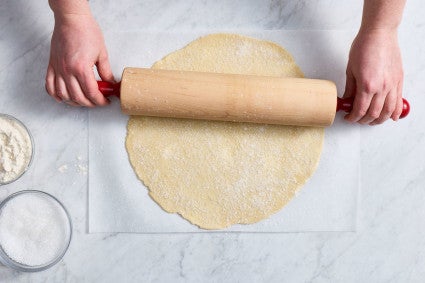
On a lightly floured surface, roll the dough to a 10" to 12" round (aim for the smaller diameter for pie crusts, and larger for galettes). Sprinkle around 1 tablespoon of sparkling sugar or turbinado sugar all over the dough. (It’s important to only use these larger, coarse-grained sugars — we don’t recommend using granulated sugar.) Sprinkle lightly with flour, then continue to roll the dough to reach a 12" to 14" round. Carefully invert the dough round so that the sugared side is on the bottom of the pie pan (to make a single or double crust pie) or parchment paper (to make a galette).
Use this step in classic applications like apple pie where sparkling sugar can cover the entire thing, from top to bottom crust. Or, use it in custard pies like pecan or pumpkin. If you’re going the galette route for Thanksgiving, use it in our Apple Butter Apple Galette or Tiny Apple Tarts for Two. Regardless of the pie you choose, the crust — not the filling! — may be what steals the show.
Photography by Patrick Marinello; food styling by Yekaterina Boytsova