





How we landed on our ultimate biscuit
This perfected recipe unlocks towering, ultra-flaky biscuits.

Date
February 23, 2026

Test Kitchen Director Sarah Jampel spent nearly half a year developing a single biscuit recipe. But not just any biscuit recipe. Alongside her Test Kitchen colleagues, she set out to create the Ultimate Flaky Biscuit, a lofty biscuit with sky-high layers and more flakes than you can count, a show-stopping bake inspired by the renowned biscuits at Tandem in Portland, Maine and Sqirl in Los Angeles.
Sarah tinkered with every single variable of this recipe, from how to handle the butter (Smeared? Smashed? Softened? Frozen?), to ingredient ratios, to how to handle the dough. She even tried more outlandish tricks, like baking the biscuits on their sides to defy the very laws of gravity and prevent them from toppling over.
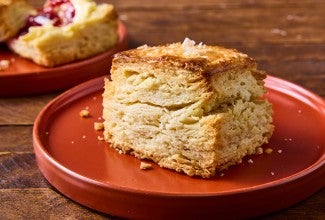
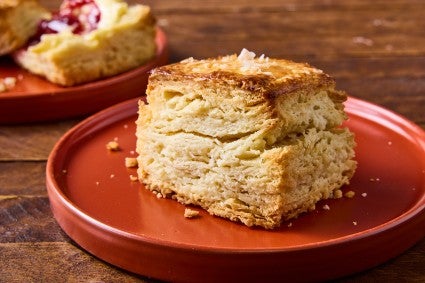
In the end, she discovered one core truth: “In order to achieve a very flaky biscuit, you have to be willing to use a lot of butter, make a mess in the kitchen, and wait for the biscuits to chill before baking them.” These biscuits are a project bake, but they are worth it. I could describe them, but I think in this case, the photos tell the full story. I mean, just try and count those layers:
Here’s the secret to their success.
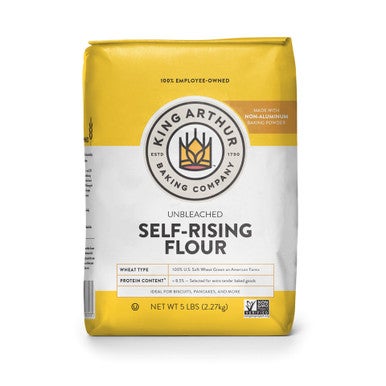
This recipe is made with a flour frequently associated with biscuits: self-rising flour. This flour already includes baking powder and salt, so it streamlines the measuring and cuts down the ingredient list. (Though the recipe also calls for salted butter, to add a little more flavor without needing to actually add salt.)
But there’s another reason it’s well suited to biscuits: Self-rising flour is milled from soft wheat (as opposed to the hard red wheat in our all-purpose flour). As you might guess based on its name, that wheat does exactly what you might think — it promotes softer, more tender biscuits because of its lower protein content (8.5% in self-rising flour vs. 11.5% in all-purpose flour).
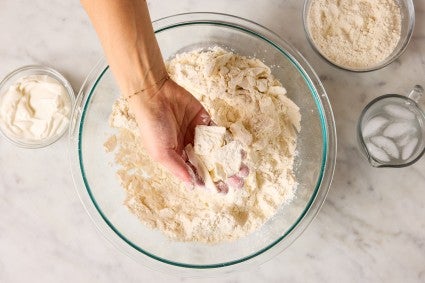
Traditionally, biscuit recipes call for cutting cold butter into flour, similar to the technique used to make pie dough. The idea is that the butter remains in cold pockets throughout the dough; in the heat of the oven, the water in the butter evaporates as steam, leaving pockets of air behind that translate to flakes. Many biscuit recipes take this technique a step further and call for grating cold butter into the dough, so that the pieces of butter are smaller and more evenly distributed. But while testing that method, Sarah landed on one she liked even more: Grating the butter into long sheets on the slicer side of a box grater.
“The idea behind the longer, thinner slices was inspired by the fraisage technique used to make pie dough, where butter is coated in flour and then smeared and flattened in the dough,” explains Sarah. “Whereas smaller shreds of grated butter distribute evenly throughout the biscuit, the larger pieces of sliced butter remain in distinct pieces — these steam in the oven, contributing to a more pronounced layered effect.”
Beyond butter, biscuits typically call for some form of liquid dairy to add richness and bring the dough together. And Sarah tried them all, including the most common, buttermilk. Her favorite, by a mile, was sour cream. “Compared to buttermilk, sour cream is more flavorful, contains more fat, and contains less ‘free water,’ which meant that I could then add ice water to the dough to achieve the proper hydration,” she explains.
That ice water is important: It regulates the temperature of the dough, plus it affords a lot of control when it comes to hydration. “I wanted to keep this recipe fairly low hydration — that's why the dough may seem uncomfortably dry and crumbly when you're rolling it out — because I knew a wetter, higher-hydration dough wouldn't have as distinct flaky layers, but would instead be softer and breadier.” With sour cream, Sarah was able to dial in the exact hydration for a dough that comes together and produces the most layers.
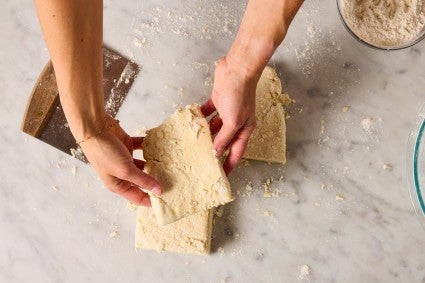
Since the goal of this recipe was to deliver biscuits with the maximum flakiness, Sarah leaned on a handy stacking technique sometimes used in pie crust or scones. To assemble the final biscuits, the dough is rolled thin, quartered, and stacked, creating even more layers and flakes; it’s like a rough form of lamination.
Good things take time, and that’s certainly the case with these biscuits. The recipe calls for not one but two separate chills: once after the butter has been mixed into the flour, and for a second time after the biscuits have been stacked and assembled. While you might be tempted to skip these chilling steps, Sarah stresses their importance. “As with almost all butter-dependent pastry recipes, the temperature of the fat is really important. If the butter gets too soft in the earliest steps, it's going to blend in with the flour into a sort of paste-y mixture, and you won't get as distinct layers in the final biscuits.”
She adds that it’s also important to freeze the shaped biscuits before baking to give the fat a chance to resolidify, which helps the biscuits stay upright in the oven and reduces the amount of butter leakage. “I also think that a frozen biscuit will steam and rise more dramatically in the oven than a chilled or room temperature biscuit. The exterior won't set as fast so the steam has more opportunity to encourage the layers to separate.”
Want to dive deeper into biscuits? Check out our podcast episode: History in the baking: talking biscuits with Deb Freeman
Cover photo by Patrick Marinello; food styling by Yekaterina Boytsova.