





Pizza stone vs pizza steel vs sheet tray: maximize your home oven for a crispier crust
Great pizza needs great heat, and your home oven has more of it than you think. Sure, you'll never hit 900°F like a pizzeria, but you don't need to.
Martin sets up our studio oven the way he would at home, then bakes the same New York-style pie three ways: sheet tray vs pizza stone vs pizza steel. Same dough, same 550°F. The tops look nearly identical — but flip them over and it's not even close.
- Hey, y'all, it's Martin. We're here in the studio today and I'm baking some pizzas and showing you how to set up your home oven for best pizza practice. First and foremost, great pizza requires great heat. More than anything else that we bake, we need a lot of heat for the best pizzas possible. A couple of tips on that in terms of how I do things.
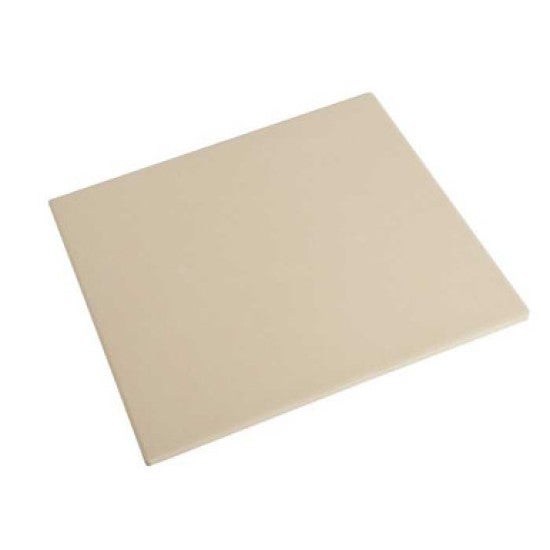
First and foremost, I set my oven to the maximum temperature possible. So if I come over to your house to bake pizza, the first thing I'm gonna do is I'm gonna turn the oven on and I'm gonna see how hot it will go. Oftentimes these days, we can set an oven to 550 degrees. Our ovens here in the studio all can go to 550 and I find that to be a great way to sort of level up the quality of my pizzas. And when I'm setting my oven for the maximum heat possible, the other thing I'm looking at if I come to your house is to see if you have a convection setting. If you do have a convection setting, I'm gonna turn that on as well because circulating heat does a better job of crisping the pizza, removing excess moisture. It browns toppings better and it even preheats my oven more quickly than just a standard bake setting on the oven. So as much heat as possible and convection also if possible. Okay, we've got our oven preheating, hot as possible. We've got our convection setting on. The next thing I'm gonna do is make sure that I have two racks in the oven, one in the lower third with my stone or steel on it and another one in the upper third, which is empty. During baking, I'll start on that one in the lower third. I'll get a good amount of bottom color on my pizza. And then once it's pretty much done on the bottom, I'll pop it up to the upper third. I'll switch the oven to broil and I'll give it a nice amount of top color. So two racks, one in the lower third, one in the upper third. Now that we know that we need a lot of heat and we also know that rack placement is important, the next thing that I want to talk about, and it's really key, is the type of surface that you choose for your pizzas. Let's go from sort of okay to superpowered. We're gonna start down here with the baking sheet. A half sheet tray is a great tool for lots of things including pan pizzas, but for hearth-baked pies, it's not our best choice and here's why. One, it doesn't have any thermal mass. Thermal mass is stored heat which transfers to our pizzas during baking. We need that in order for pies to have that beautiful edge crust and dark sort of colored undercarriage as it were, right? The baking tray just doesn't have enough thermal mass. If it's all you have, obviously you can still do pizza. I often steer people towards pan pizzas if all we have is a baking tray. If your heart is really set on a hearth-baked pizza, what I will sometimes tell people is to preheat the inverted half sheet tray on a rack in the oven and then slide your pizza onto it. Just note that in many cases that pan may sort of shift or slightly warp some during the heating phase so you want to keep an eye on that. In general, though, I would steer people away from doing hearth pies on a sheet tray. So that's in third place. In second place, we have a baking stone. This is a great surface for baking at home. It's great for loaves. It's great for baguettes. Lots of things do very well on a stone for baking. The reason that I don't put them in first place for my pizzas is that they just don't conduct heat as well as metal, right? And what that does in terms of function is that it just doesn't move as much heat as I want to the pizza in as short of a time period as possible. I want that heat to immediately transfer to my dough and give it that puff and give it that nicely-colored undercarriage of the pizza. So baking stone can work, but it's not quite as good as the baking steel. Let's talk about that. In first position for me is the baking steel. This is something that's come into my kitchen in recent years and at this point I wouldn't trade it for my home pizzas. I like the way that it conducts heat. It gives it really quickly to my pizza crusts. I find that they brown more quickly. They have better crispness. Everything seems to be better for me with the baking steel. If you're looking for a way to sort of level up your pizza making, I highly recommend you try out a pizza steel. This is our New York-style dough from "The Book of Pizza." Okay, so we have three pizzas out, one baked on a sheet tray, one baked on a stone, and then one baked on a steel. Same dough obviously, same sauce, same cheese, all of those things the same. Same oven setting as well, 550, convection. And we confirmed the temperature of the sheet tray, the stone and the steel, all baking at 550, okay? So what do we get? Well, we've got a pizza that looks good on top. I did broil it towards the end of bake. So the top looks great. All three of them very much in range in terms of what I would expect. What I noticed though, without looking underneath them yet, even though I have peaked, is that the volume isn't quite as good. So this one on the sheet tray, volume didn't quite get the same puff. Stone, a little bit better. I would say the stone and steel are pretty close in comparison in terms of volume. And then if we turn them over, that's really when we begin to see the sort of stark differences between these three. So, same bake time, same bake temp, same everything, right? Blonde would be generous, to say that that's blonde is sort of generous. You can see that when I moved it to the upper rung for the broiling portion, I did get a little bit of browning, but it's only from where it contacted the baking rungs. A little bit better here with the stone for sure, I've got some browning. It's not uncommon to see a little bit of white where the dough jumped and sort of pulled itself away from the baking surface, but color's not bad, but best is the steel, right? I love it when I see these little black spots. That really tells me that I have got good oven heat. Pretty stark difference between these three. So I want to cut these. They've been sitting out. They're fully cool. They're not gonna be as crisp as they would be if they're right out of the oven. Or best case scenario, if I had re-crisped them, which I recommend. But let's taste them anyway and see where we are in terms of the differences between these three pies. It looks great. Making a super slice 'cause that's the best way to do it at home for a New York-style. Did I mention that this is our New York-style dough from "The Book of Pizza"? I don't know if I mentioned that, but I just did. Still sounds pretty crisp. I mean, let's agree that this is a good dough. Do you even make a super slice at your house? You should. You only get one per pie, but it's pretty good. Oh, that was sad, even just cutting this, I don't hear any sort of crunch, which is a little bit sad. Part of the moral of the story here, honestly, is that if you're using a sheet tray, if I were making the sheet tray pizza at home, if that's all you have, re-crisp it. Seriously, like re-crisp that thing because it will help boost that bottom texture. Even if you don't have the fancy baking steel, even if you don't have the great baking stone, if all you've got is the sheet tray, there's no shame in that. Still make pizza. Don't let me sort of gatekeep great pizza here, okay? It's still beautiful, still delicious. This is still gonna be good. We're really just sort of nitpicking a little bit. So again, bottom crust, it's not exactly no dip, but it's floppy. It's white, it probably is lacking texture. If I look at the edge crust here, I can even see that we've sort of had a little bit of a whiff here in terms of the baking surface. The crumb is homogenous, it's tight, it's not variably open. It's not the things that we're looking for that we'll hopefully see as we move down the line. All right, a little sad. I mean, it's still good, it's a little bit like lunchroom pizza or something. So let's go down the road here. The stone actually looking quite good. And somebody out there is saying, "Wait a minute, every pizzeria that I've ever been in has had a stone deck." That is absolutely true. But in a commercial environment, they have an incredible amount of thermal mass. So that stone transfers all of that heat bank to the crust immediately. It's a much bigger thermal bank or sort of thermal mass than what you have with our home stones, right? So that's why stone can work in a great pizzeria, not so hot for home. In terms of the crust expansion and the crumb, it does look much better. I've got some beautiful fine bubbling in here, I even have some larger bubbles. That aspect of it looks great. And bottom color actually looks great as well. I think it's very good, it's certainly within range and it's got less flop. Less flop than the white one. And if we crisped it a little bit in the oven, it would be even better. So still good. Certainly within range. Honestly, really good. I would re-crisp that. I put some chili flake on it, a little bit of oregano, maybe some more parm, and that's a slice that I don't know. I think it's almost unmistakable from a slice that you might buy on the street in New York City. Great example of a New York-style slice. When I bit it, it's got some crispness and crunch. Beautiful, delicious slice. All right. Last but not least, let's look at this steel baked pie. I mean, it's beautiful, it looks like we literally walked out of what? The best slice shop in New York City with a gorgeously baked bottom. I mean, I haven't even re-crisped this and it's really super, super crunchy. One of the things I like about it too, and this is really a characteristic of any good baking surface, is that I have this beautiful micro bubble crust. It's thin, it's crisp, just looks gorgeous. I can tell without even biting it that it's gonna be crispy versus the sort of rubbery quality of the sheet tray, the slightly crisper and nice quality, not bad quality of the stone. And then we've got the steel, which is really kind of like the best of both worlds. The other thing that I like about the steel is that because it gives heat so much more quickly, your bake times are slightly reduced, and the benefit of that is actually that you end up with a sort of creamier crumb while at the same time having this crisp exterior. And so, where with a stone where you have to bake a little bit longer, the crust may become a little bit cottony versus this which is still sort of moist, but crisp at the same time. Really can't say enough good things about the qualities that I like of a baking steel. So maybe I have a bite now. Forgive me. For me, the difference here is really between something that you might take out of a box in the frozen section at the supermarket and something that you would walk out, again, of the best slice shops in New York City with. Literally, I would put that up against some of the best pies in New York. Beautiful crispness due to the great qualities of that baking steel. Can't say enough good things about it. So if you're looking for ways that you can up your pizza game, if you're looking for ways that you can serve pizza to your friends and say, have some of the literally best pizza of your life, I recommend you do some research around baking surfaces. Get yourself a steel if it's in the budget, try that out, and I think you'll be so happy and so pleased with the results. This is Martin and Lydia and Tucker in the studio today saying, "It's time to pizza, let's do it."

Video Credits
Shop this video


Your bread fell flat. Your cookies crumbled. Who do you turn to?