



Sourdough bread sliced on a cutting board and a loaf inside a dutch oven
Crusty Dutch Oven Sourdough Bread

Crusty Dutch Oven Sourdough Bread

Recipe by Melanie Wanders

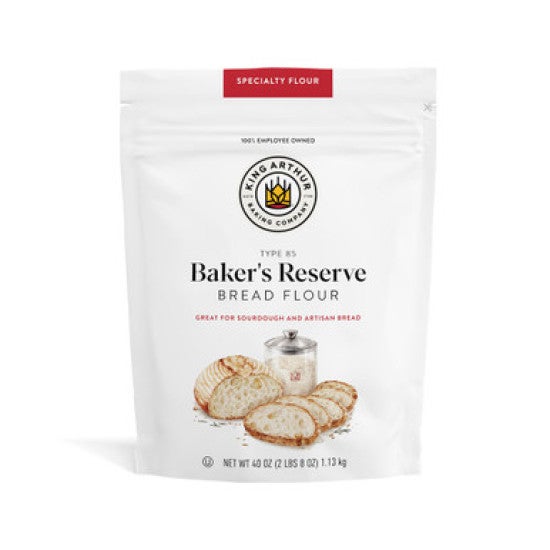
Our Baker’s Reserve Bread Flour finds a natural and welcome home in this crusty Dutch oven bread. The naturally-occurring minerals in the flour aid fermentation, creating a tangier loaf than bread made with traditional flour. The overnight preferment adds even more complex flavor, making this a must-bake recipe for sourdough enthusiasts. (If you’re not baking in a Dutch oven, check out our tips at the end of the recipe.) 

Prep
32 mins
Bake
25 to 40 mins
Total
22 hrs
Yield
1 loaf
Crusty Dutch Oven Sourdough Bread sliced on a cutting board and shown in a dutch oven - select to zoom
A loaf of sourdough in a dutch oven - select to zoom
A dutch oven and a sliced loaf of crunchy sourdough with Baker's Reserve flour in the background - select to zoom
Our Best Products

Instructions

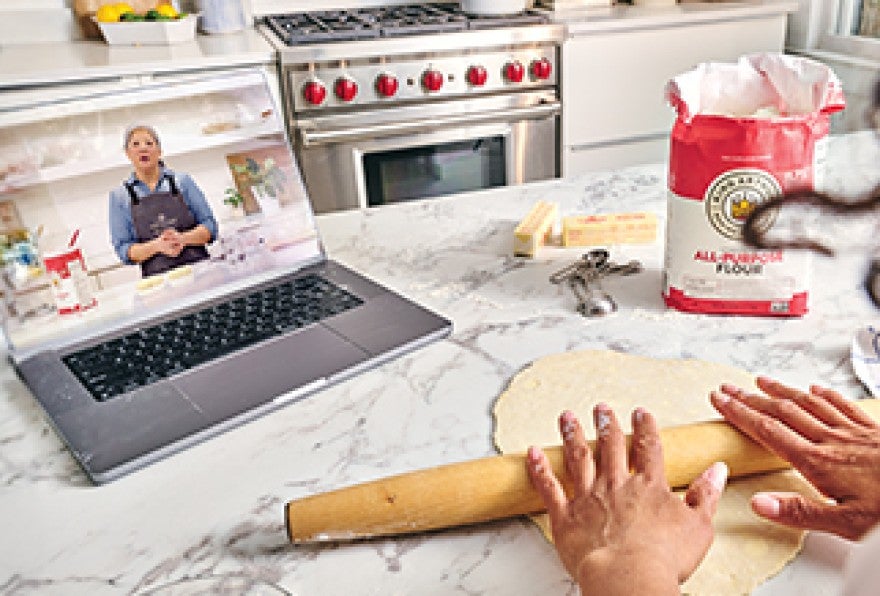
Prevent your screen from going dark as you follow along.
  1. The evening before baking: In a large bowl, mix all the preferment ingredients until combined. Cover with plastic or your favorite reusable wrap and let rest at room temperature overnight, up to 16 hours. 

  2. The next day, mix the dough: Weigh your flour; or measure it by gently spooning it into a cup, then sweeping off any excess. Add the flour and water to the preferment and stir to form a shaggy dough (some small dry patches of flour are OK at this stage). Cover and let rest at room temperature for 20 minutes. 

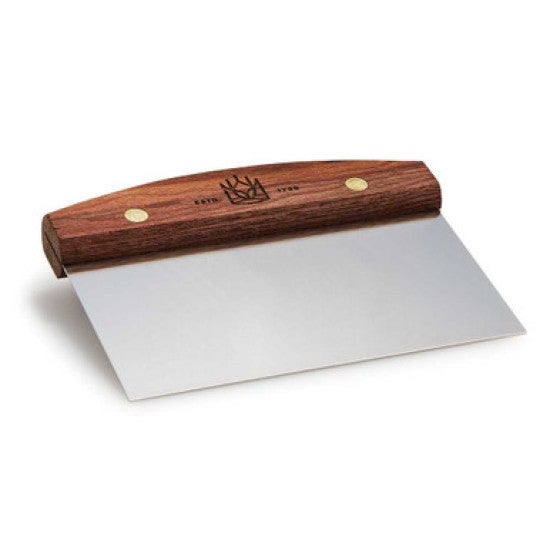
  3. Transfer the dough to a lightly floured surface. Sprinkle the salt over the dough and knead until smooth and slightly elastic, 3 to 5 minutes. If the dough sticks to the surface, scrape it off with a bench knife and add more flour as needed. (By the end of kneading, there should no longer be any dry patches of flour.) Return the dough to the bowl, cover, and let rest at room temperature for 30 minutes. 

  4. Complete a series of bowl folds: Use a floured hand to grab a section of the dough from one side, lift it up to gently stretch it, then press it down into the middle. Repeat this 6 to 8 times, working your way around the entire round of dough. Turn the dough seam-side down and use a cupped hand to drag it against the side and bottom of the bowl to tighten the dough into a ball. Cover and let rest at room temperature for 30 minutes.  

  5. Complete a second series of 6 to 8 bowl folds, then cover the dough and let rest at room temperature for 1 hour. (The dough may rise a bit during this time, but likely not much, unless using yeast.) 

  6. Transfer the dough to a lightly floured surface and preshape it into a loose round. Cover the dough with the now-empty bowl and let it rest at room temperature for 20 minutes.  

  7. Shape the dough into a taut round and place it seam-side up in a lined and flour-dusted round brotform or bowl. Cover and let rise for 2 to 3 hours, until puffy and an indent remains when the dough is pressed gently with a floured fingertip. (Depending on the temperature of your kitchen, dough containing yeast will likely become puffy by the end of 2 hours, while dough containing only sourdough may require the entire 3 hours.)  

  8. Near the end of the rise time, preheat the oven to 425°F with a rack in the center and an empty, lidded Dutch oven inside. When ready to bake, invert the dough onto a piece of parchment a little bigger than the size of the loaf but with some overhang to help lower the loaf into the pot. Score the loaf and carefully lower it into the preheated pot. 

  9. Bake the dough for 20 minutes with the lid on, then uncover and bake for 15 to 20 more minutes, until the crust is deep golden brown. A fully baked loaf will sound hollow when tapped on the bottom and a thermometer inserted into the center should read at least 205°F. Remove the loaf from the Dutch oven and let cool completely on a rack before slicing. 

  10. Storage information: Store leftover Dutch oven bread, loosely wrapped, for several days at room temperature; freeze for longer storage. 

Tips from our Bakers

  • No starter? Replace the starter in the preferment with a pinch (1/16 teaspoon) instant yeast and add 1 teaspoon instant yeast to the dough along with the flour and water in step 2. Reduce the salt to 1 1/4 teaspoons in step 3. 

  • The recipe works whether you’re using a starter made with conventional flour or one made with Baker’s Reserve Bread Flour. To make a small amount of starter for this recipe using Baker’s Reserve Bread Flour, start with 16g (2 tablespoons) Baker’s Reserve Bread Flour and 16g (1 tablespoon plus 1/2 teaspoon) water, and discard/feed using a 1:1:1 ratio until ripe.   

  • No Dutch oven? Add steam or use a baking shell: Preheat the oven to 425°F with a baking steel or stone in the center rack. Place a cast iron skillet on the rack below (if possible, adjust the pan so that it isn't directly under the stone so that steam can reach the baking bread) or have a baking shell nearby. Transfer the loaf, right on the parchment, to the steel, then carefully pour about 1 cup (227g) of water into the cast iron skillet, or immediately cover with the baking shell. Bake for 35 to 40 minutes, remove the shell after the first 15 minutes, if applicable.

  • No Baker’s Reserve Bread Flour? Try our Pain de Campagne (Country Bread) recipe, which uses similar techniques and a combination of bread flour and whole wheat flour.