








Despite what you may have heard, cleaning and maintaining a cast iron skillet or Dutch oven isn’t difficult. It’s practically impossible to ruin a well-seasoned skillet, and despite your best efforts, sometimes food will stick. If your cast iron is covered in stuck-on bits of cheese from a batch of Crispy Cheesy Pan Pizza, here's how to clean it.
We can settle the debate once and for all: Yes, you can use soap to clean your cast iron. Dishwashing soap will not damage the seasoning that makes your skillet non-stick. Polymerized oil creates the layer of seasoning through heat, and dish soap isn’t strong enough to break that bond.
No, you cannot clean a cast iron skillet in the dishwasher. This will degrade the seasoning layer and cause it to rust.
You should not soak a cast iron pan either; the water will cause it to rust. If you do end up rusting your pan, you can still rescue it by scrubbing off the rust then re-seasoning the pan.
Using warm, soapy water, scrub the pan with a stiff-bristled brush or sponge to remove any food residue. Avoid harsh, abrasive scrubbers like steel wool or metal pads, which can strip the pan of its seasoning.
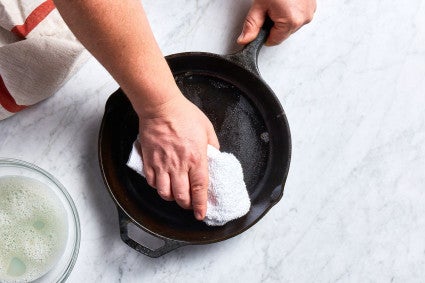
Once cleaned, fully dry the pan with a kitchen towel, or place it onto a burner over low heat so the water fully evaporates. Don’t walk away from the pan — it can quickly get smoky once the water has evaporated.
Regardless of which method you prefer, it’s imperative that the pan is fully dry. Water (not soap!) is the enemy of cast iron, which can cause it to rust. Once dry, add a few drops of neutral oil and spread all over the pan with a towel.
And that’s it!
Use your cast iron skillet in these popular recipes: Crispy Cheesy Pan Pizza, Chocolate Chip Skillet Cookie, Sourdough Cornbread, Giant Cinnamon Roll.
Photography by Patrick Marinello; styling by Yekaterina Boytsova