




Focaccia Di Recco
Buongiorno! Buonasera! Martin is back in the studio to bake Focaccia Di Recco. This thin, crispy, cheese-filled focaccia hails from the coastal Italian region of Liguria. There, it’s baked in blazing pizza ovens, reaching blistered perfection in minutes. For a home version, we mimic the conditions as best we can by cranking the oven up as high as it will go and baking the focaccia on a thin round metal pizza pan set directly on a pizza stone or steel, which ensures that the focaccia gets crispy on both the bottom and the top.
- Hey y'all. Buongiorno. Buonasera. My name is Martin Philip, and I'm here in the studio today, and I'm gonna make a beautiful Focaccia di Recco. This is a recipe that's in our "Big Book of Bread." It's one of my favorite things to make. It's ready in under an hour. Let's do this.
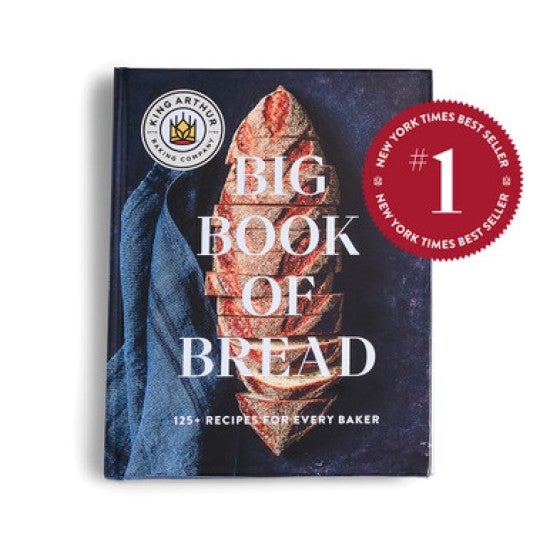
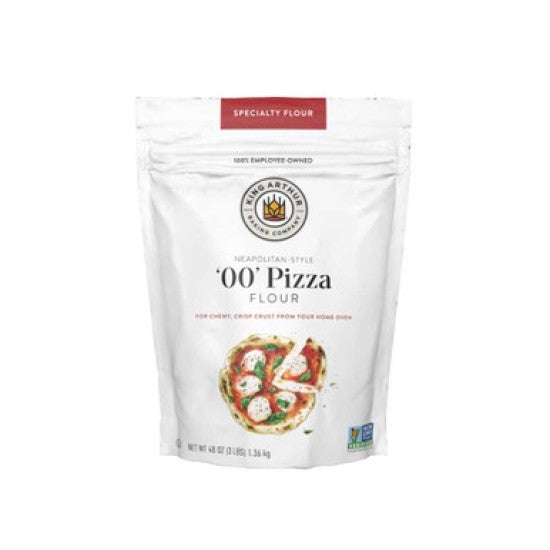
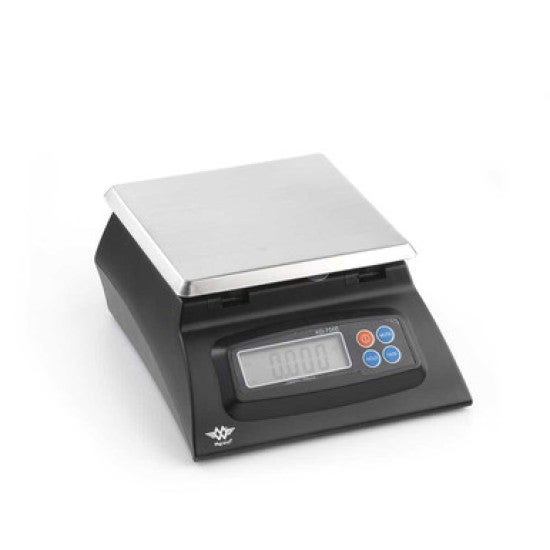
The recipe is right there in the description. You can bake along. Let's make some focaccia. Okay, so let's get to the mix. Again, we're making, today, this beautiful Focaccia di Recco, which is this beautiful, beautiful like translucent, paper-thin focaccia from Italy. It's one of my favorite things that's in "The Big Book of Bread." And this recipe does a good job of highlighting the diversity of breads which exist within Italy. If you're up north, you might see some rye sourdough. If you're down south, they've never heard of it. You know what I mean? Incredible diversity of breads and bread-based things that you can enjoy in Italy. So let's start with our flour in the bowl. I'm using double zero today. It's slightly lower in protein than all-purpose flour, but it's milled to a very, very fine consistency. It's a beautiful flour for making lots of types of pizza, and it will be beautiful in our Focaccia di Recco today. And now, I'll get some salt in. Nine grams of salt. And normally at this point, if I'm making focaccia, I would be adding some yeast, right? Little thing about this is that it's unleavened. This is not leavened bread. And if you think about it, it actually makes sense. Some of the earliest breads that we have made in western societies are things which are literally baked on hearths or on coals. And panis focacius or focaccia literally means out of the ashes. It's a bread that was hearth-baked going back as far as we've had fires, I think. And so it's not necessarily a leavened bread. Leavening is something that came later. And so this is an unleavened focaccia, which, again, sort of breaks the category, if we think about like high-rising, fluffy, fluffy breads. Next up is warm water, 227 grams or about one cup. So next up, I've got some olive oil. A good heavy-handed, two tablespoons worth going into this dough. It will do a great job of not only affecting the tenderness, it will also be delicious to eat. So two tablespoons going in. It's about 25 grams. So let's stir this to combine. In the book, we say you can use a stand mixer, and we tell you how to do it. I'm gonna do it by hand today because when I think about Italian food, and I think about my times spent in Italy eating especially, I think about the beauty of handmade foods and the joy of sort of getting my hands into a bowl, or kneading something, or maybe even making pasta by hand, rolling it out. You don't have to do it like that. I don't always make pasta by hand. Sometimes I use a pasta machine or whatever, but I'm gonna do this by hand today because we got all the time in the world. So I've got my wooden spoon. I'm just sort of stirring to combine. Then, I'm gonna grab this little flexible scraper, clean my spoon up, and then I'll go back in and sort of do this pressing, turning motion just to get this dough to a cohesive state. In terms of consistency, I would say this is not incredibly firm. I'm not gonna say it's like a soft dough, but I will say that is not a firm dough. It's somewhere in the middle. Okay, so clean the bowl up a little bit, and now I've got this dough, which is definitely, you know, not smooth. And so what I can do now is just put it out on the counter, and I'm just gonna knead it a little bit. And I'm doing this sort of slap and fold, and I'm just gonna work it until I feel like it smooths out. If you're using a machine, it might take about 10 minutes, and I would say that by hand, it might also take around that. It's not a workout, but it should feel like you're doing something, which I like. I haven't put any flour down. I'm not adding any flour to this recipe. I'm just sort of working it with a little bit of a firm hand, I guess you could say. If you like doing it with one, that's good. You can also do it with two. So I'm slapping it down. I'm folding it over. If you feel like the counter is sort of getting a little bit messy, run back over, grab your flexible scraper, pull any sort of extra stuff back to your mix. Get back to work. If you don't have double zero flour, you could do this with all-purpose too, okay? So don't feel like not having double zero is gonna get in the way of you and this beautiful focaccia. So I just saw the dough sort of begin to change. I just saw it start to smooth out a little bit, and that's not a sign to stop. That's a sign that we're doing things well, and we can continue. It almost goes from like a shiny aspect to a slightly opaque aspect. And listen, it is impossible to overmix this dough by hand. It is impossible. Your arms will wear out long before anything you're kneading by hand will. So if you're enjoying the process, you keep at it. If you wanna take a break for a minute, and step away, let your arms sort of like recover and then come back, you can certainly do that. I think that honestly looks pretty good. I'll give it a little bit of a rounding, and I have a nice smooth ball. It bounces back when I press on it. Grab my bowl, grab a little squiggle of olive oil, and put it in here so that I can get it out. And put it in here. And then I'll get a cover on it. This dough is only gonna rest for 15 minutes. So something that I should have told you at the beginning of this video, and, hopefully, you'll be a good sort of baker and read the whole recipe before you jump in, but the thing that I should have told you is that before you start this process, you're gonna want to get a baking stone or steel into your oven, and get your oven as ripping hot as possible. The hotter we bake this, the more crispy, and beautiful, and flavorful it will be. So because it's such a short process, before you even mix anything, make sure you've got that oven coming up to temperature with a good baking stone or steel preset. We're gonna let this set for 15 minutes. If it's 30, that's okay too. There's no leavening in here. It can just kind of hang out. When we come back, we're gonna divide it into four pieces, we'll round it, and we'll proceed to shaping. So get any ingredients that you need that remain in this recipe, like the cheese and stuff like that, ready to go. We'll come back, and we'll have some Focaccia di Recco from this beautiful "Big Book of Bread," which we're so proud of. Okay, so our dough has had some time to relax, and, you know, there's no yeast in this. It's not like it's gonna run away from you. If you had a little bit of extra time, you build that into your day. Make the dough work for you. Don't sort of work for the dough, right? So let's get it out onto the counter. Little bit of flour down, and I'm gonna divide this into four even pieces, about 157 grams each. All right, a little bit of flour on top if you need it. Like I said before, it's not a sticky dough, but it's also not a not sticky dough, right? It's a little bit sticky. So a little bit of flour will help you process without sort of tearing it too much. And four pieces. 157 grams, 160 grams, somewhere in there. When you're dividing an amount of that size plus or minus five grams will be okay, at least on the dough divide. That's okay. So 160. I mean I might take a little bit off. 150. 158. Okay, done with the scale, and the reason to use the scale in this case, rather than just dividing it by hand. Maybe if you're, you know, the most famous nonna on your block, and you've done this a thousand times, you don't need to divide with a scale anymore. But I would recommend the scale because we want these pieces of dough to be the same size so that they will roll to the same thickness so that we have some consistency, right? So take the time to get out your scale for that. Now, what I'm gonna do is I'm gonna form these into sort of gentle rounds. I'm gonna form 'em into rounds, but I'm not gonna use all the strength of my arms to make 'em nice and tense. If I do that, it's gonna take a long time for them to relax enough that I can roll 'em out to this very thin consistency. So gently form them into a round, gently. So just like every other time you've seen me shape a round, I'm stretching slightly, gently from the outside, and pressing to the middle. And if I need to, I'll just hold that dough flap in place with my thumb, and I end up with this beautiful little barely tensioned round of dough. I'm gonna set it on some flour, and get it out of the way, and then work my way through. The reason for rounding right now is that I'm gonna shape 'em into these huge rounds, right? So if I start with round, I'll end up with round. If I made a square right now, and then I tried to turn it into a round, it's gonna be challenging, right? Cover the ones that you're not gonna use, right? So I'm gonna set 'em aside, and I'll go back. I went ahead and grabbed my pan. This is a 14-inch Lloyd pan. It's dark anodized, which means that it can handle high temperatures. It also means, due to the color, that it transfers heat very quickly to the baking, you know, to our Focaccia di Recco in this case. It also heats up more quickly than a lighter colored baking pan. So if you don't have one of those at your house, any 14-inch pan will do, or even a 16-inch pan. Just know that if it's got a coating on it, you're gonna want to check with your manufacturer's instructions and make sure that it can take the heat that we have going on in this oven. Remember, I've got my oven as hot as possible. Not all pans are rated for those high temps. What's there to say about Focaccia di Recco? I mean, honestly, I think one of the reasons we included it in the book is because of the fact that it's sort of like a little bit of a contrarian. You know? If what we like to talk about is Big and Bubbly Focaccia and sort of maximal, this focaccia is a little bit more under the radar. It's a little bit more maybe soft spoken. It's a little bit less of a show-off this dough, right? But it's a focaccia that I've known for, I don't know, probably decades at this point. I've eaten in Italy. And then also there's some places in the US where you can get them. Nancy Silverton makes a very good version of Focaccia di Recco. Absolutely gorgeous. Thin, crispy. One of the challenges for making it in the states is that it can be very hard to come by the cheese that's most traditionally used with it, which is Crescenza. It's very hard to find Crescenza. I think sometimes people are mail ordering it. Or if you live near a larger city, maybe there's a chance that somebody has some Crescenza kicking around. In our case up here in the wilds of Vermont, we definitely don't have access to any Crescenza. And so what we ended up prescribing for it is fresh mozz. So at this point I've got a dough piece that is, you know, almost all the way there. Not quite. In the instructions we say roll to 10 inches, and then put it on the pan, and stretch it the rest of the way. That's an option as well. A comfortable way for me to stretch also is to use gravity a little bit in the same way that I would pizza, right? So I'm just letting the weight of the dough stretch and fall off my hands. It will also work just to go over there, plop it down, and then gently, with patience and sort of a generously kind hand, work your way around and give it a little bit of a stretch. I place it on one side, I come over to the other side, and I give it a little stretch. If you want, you can give a little bit of pressure to this edge, and that will sometimes hold the dough in place for just a second. Then, what I'll do is I'll go to another place on this dough piece, and I'll give it a little stretch and press. And what I'm trying to do is get the dough to just sort of rest with only the weight of that edge piece hanging over slightly, right? Okay, so I've got my cheese here. I'm not using Crescenza because we can't get Crescenza where we are. We can get fresh mozz. So I've got my fresh mozz here, today. And what I'm gonna do is just break it into pieces and place it on the dough in dollops, sort of distributing it as best as I can. We're making two Focaccia di Recco. We're gonna make one. We're gonna bake it. That pan's gonna come out. Everybody's gonna swarm you. They're going to eat it faster than you can imagine. And then you gotta start rolling another one. Alright, I got my cheese on there, and I'll get this second dough rolled real quick, or I'll get this second dough rolled. Maybe not that quick. We'll see. Little bit of flour on the bench. I want the flour because I want this dough to be floating the entire time just like if I'm rolling puff pastry, if I'm rolling croissant dough, or if I'm making a pie, or something like that. I don't want the dough to ever be adhered to the counter. There's no benefit to that. That's only gonna cause me some problems. So I'm gonna go over to my di Recco. I'm just giving it a little bit of stretch. You don't have to do that, but if I can get it a little bit bigger, it'll be a little closer to the size that I need. So now I'm gonna drape it, and what I'm aiming for is just to have at least one side that's slightly over the edge, and then I'll stretch it, and I'll just press it into place, and it'll hold there. You do want a little bit of overlap. I think in the book we said one inch. I would say that would be about the maximum that you would need. You just wanna make sure that you have a little bit of dough so that the two pieces will stick together. That's the main thing. And then what I'm doing is I'm just working my way around the outside, stretching just enough to sort of cover and then pressing to adhere. And unless you've really used a lot of bench flour, I don't think that you're gonna need to add anything wet to get these doughs to stick. So I've pressed these together. I have a slight amount of overlap. Everything looks good. I've got a just absolutely paper-thin top layer of dough. And now, I'm gonna take my rolling pin. and if you have a big pin, it's possible to just put the whole thing on and roll all the way across in one fell swoop. Not everybody has that. So I'm gonna show you how to do it with a smaller pin. And, basically, what I'm gonna do is just roll on that metal edge in order to cut the dough. And once you've gone around once, then I can go back, and I just pull out to release the dough, and then I go out the other side, and I've got a beautiful even thing. And you can see, I mean I could move it, and I can just see how absolutely paper thin that dough is, which is what we want, right? We could probably bake it just like that. But if you add a beautiful edge, it's even a little bit more visually compelling. So I'm gonna go in, and I'm just gonna sort of crimp the edge. You can do it according to your style or fashion. I'm gonna do just a little bit of a rope, which means I'm stretching and pressing. I'm holding a piece in place with my one finger and stretching and pressing with my other fingers, working my way around. It's one of those moments in baking where we're really doing hand work. I think of my grandmother and the years of her life, she spent at the quilting frame or at a window stitching. And I think about these little things that we can do to add beauty, to add intention, to show that we care. Give yourself a quiet moment to just work your way around this dough, trying to make something beautiful. Last thing before we get into the oven is to basically just pinch some holes in it so that the steam can evacuate during baking and leave us with something that is as crisp and sort of like shattering as possible. So I'll go back in, I'll find a couple spots where I can sort of get my fingers in there, and I'll just nick a piece of dough away. Just basically just creating some steam holes. The reason I'm using my fingers and not cutting it is that, if I cut it, I risk sort of breaking through that bottom surface of the dough. And I don't want that. I just wanna create a little bit of a steam vent. You don't have to be too precise here, just give yourself a few spots where things can sort of work their way out. There is a little bit of scrap, and if you do that times four pieces, you know, you may have a little bit of scrap. You can let that relax and then come back and roll it and make a small one. You won't have enough dough to make a huge one, but you can make a small one. So let's get this into the oven. It's gonna bake for about 10 to 12 minutes. I have my oven set as hot as possible, and I've preheated it with a stone or steel in the oven. Remember, at the inception of this process, you wanna get that oven on because this is not all day focaccia. This is within the hour focaccia, right? So we're gonna get it in there. We're gonna bake it 10 to 12 minutes until it's the color that you like. I like a pretty full color. And so we'll give it that nice look, and then we'll bring it out. We'll cut it, we'll garnish it, and I might eat the whole thing by myself. Already salivating. Hot, hot. Look at that though. Beautiful. Buttery, flaky, crispy, crunchy, hots. Beautiful, delicious. You can let it sit on the pan for a second if you want. I don't know. Life's too short. Let's not wait anymore. You can eat it like this, or you can garnish it a little bit. What we say is a little bit of olive oil and a little bit of coarse salt, I mean it makes just about everything better, right? So I'm gonna put a little bit of olive oil and a little bit of coarse salt. Just a little bit. I'm gonna cut mine into pieces because I can almost hear the troops coming. You know what I mean? Like when I pull a plate of brownies out of the oven at home... I don't know when I make brownies, but if I made a plate of brownies at home, it's like you can hear the troops running in, right? So it's like, get the bites ready. Go ahead and get some cutting. So I've got my pizza wheel, and it should be crispy. I don't think I need to tell you like when to eat this, right? When it comes outta the oven, that's when to eat it. I mean, you'll know because it'll come out, and you'll say, "I'm eating that now." Like no questions asked. I'm diving in. It's that good. It's sorta a little bit greasy. It's sorta a little bit fried. It's crispy. It's flaky, It's salty. It's got all those things, and it's done in what? An hour, even less. Something like that. So if you need a special treat, dinner's coming up, maybe you're having some friends over, you just got home from work, and you're scrambling a little bit to figure out what you're gonna do, turn that oven on, Stone or steel. Preheat to 550. Get that thing cranking. Make yourself a dough, and put some cheese inside of it. Roll it nice and thin. You know, Focaccia di Recco. It's like the unassuming, less braggish version of a delicious focaccia that you can make in under an hour. Give this recipe a try. As always, don't forget, we've got this recipe right down there in the description. You can read the whole thing through. You can bake along if you want. This is Martin, and Tucker, and Lydia, and Cecile and everybody else at the studio today saying thanks for joining us. Get out there and make some Focaccia di Recco from this beautiful book, "The Big Book of Bread."

Video Credits
Shop this video
Related Videos

Your bread fell flat. Your cookies crumbled. Who do you turn to?