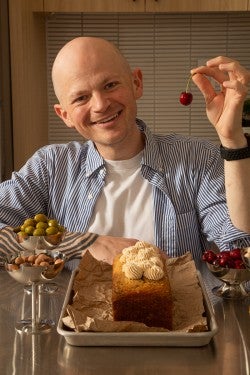



How one cake — and its unexpected baker — helped shape my queer identity
My great-grandfather's pound cake showed me how to authentically express myself.

Date
June 9, 2026


As a professional baker, baking is how I bring comfort to others. While my words sometimes fail, baking enables me to nurture the people closest to me; when I bake for someone, I do so because I care about them deeply. As a boy growing up, however, caring for and nurturing others weren’t traits I was rewarded for focusing on.
Growing up in the American South, I was very aware of the stereotypical man I was supposed to grow up to be. Be strong, don’t cry, and above all — don’t act like a girl. These gendered roles were enforced not only by my peers in school but by adults as well. It made me question the range of emotions I was allowed to express and limited my ability to form strong relationships with people my age.
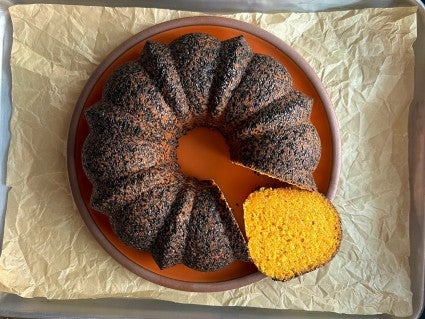
At home, however, I found a different message. While domestic baking has traditionally been relegated to the realm of women, particularly in the South, my great-grandfather broke from these stereotypes with his mahogany-crusted pound cake, a constant fixture beneath the glass dome on our kitchen counter. He made one almost every week until he was no longer able, and then we continued to make it for him. This cake, a traditional family recipe with a dense, golden crumb, was ever-present throughout my childhood. It was my afternoon snack, my running-to-the-bus breakfast, my post-dinner dessert. Its comforting flavor and scent are still with me now as I type.
When I think about my great-grandfather, more than the words we shared, I think about that cake and the many slices I brought to his bedside in the last few years of his life. That cake was part of the love he showed to our family and part of the legacy he left behind. It taught me that these expressions know no gender and can come in many forms beyond just words. Now as an out and proud gay man, I’ve embraced my instincts to care for others through baking, rather than hiding these impulses in the ways I was taught when I was young.
Over the last 10 years of working in professional kitchens, I’ve extended this care for others through the pastries I’ve served. Desserts play a special role in bringing comfort to guests through flavor and nostalgia, but their importance and the contributions of the people who bake them haven’t always been accepted in every kitchen. Being the only gay person in a room is not a new experience for me or many others, and carrying that awareness into a kitchen, especially when it’s a male-dominated environment, brings its own fears and hesitations. There’s pressure to constantly prove yourself while dodging homophobic jokes and comments that can fly without a thought in a high-intensity environment. It’s vital in these situations to find representation and reassurance that you’re on the right path, and I’m thankful to have found that in the many queer bakers I’ve worked with and befriended over the years.
I’m not the only one who has found strength and guidance from the bakers who have come before me. Daniel Aubry, a professional baker in New York City, told me about his close family friends Ronald and Ira, a queer couple who ran a bakery stall in the Essex Street Market. “They were partners at work and in life for 40 years. Not only did I learn to bake there, but I think they taught me a valuable lesson on being my authentic self and not hiding that, even in a place of work.” He added, “They taught me so much about what it meant to be a queer man, when I didn’t have many references or people to look up to.”
When I think about the role that I play now, I hope that by showing up as my whole self and by embracing the side of me that wants to care for others through baking, younger LGBTQ bakers will have fewer obstacles to face in their careers. Baking can create small but powerful communities that reflect what we wish the larger world was like, one act of care and one slice of cake at a time.
Read more of King Arthur's Pride Month coverage here.
Cover photo by John Sherman.