







A horror story that will be familiar to every baker: One day, you open your brown sugar to find that — oh no! — those soft, loose granules have become a mound as tall and solid as the iceberg that sank the Titanic. So what do you do when you need to make a batch of Soft Brown Sugar Cookies for a potluck or this Brown Sugar Strawberry Frosted Cake for a friend’s birthday? Before you grab the keys and head to the store to buy a fresh new bag, here are four easy ways to soften brown sugar and bring it back to a usable state.
Brown sugar includes molasses, which is what makes it brown (and slightly acidic!). But more importantly, molasses provides moisture, which is why brown sugar has a soft, almost Play-Doh-like texture. But when brown sugar is exposed to air for too long, that moisture evaporates, and the sugar crystals stick together to form a solid, dry mass.
Now that we know why it happens, here’s how to fix it.
Use a slice of soft bread (from a basic sandwich loaf) to soften brown sugar. When placed together, the brown sugar will absorb the moisture from the bread, softening it to its former glory. This method will take about 24 hours to kick into gear, but there’s a reason why bakers continuously rely on it: It works well, nearly everyone has sliced bread on hand, and it’s easy to pull off.
To soften hardened brown sugar, place it in an airtight container or resealable plastic bag and lay a slice of sandwich bread on top before sealing it. Let it sit for 24 hours, or at least overnight, allowing the moisture from the bread to soften the sugar. Once the brown sugar is soft again, remove and discard the bread before using the sugar. You can also adapt this method to use sliced apples instead of bread.
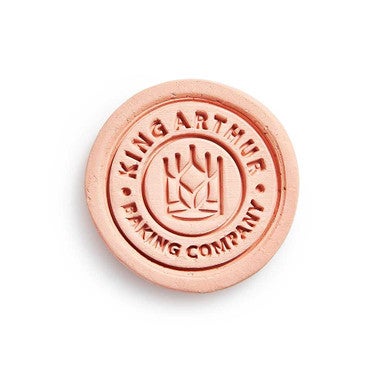
Rather than use bread or an apple, you can also use a terracotta disk like King Arthur’s Brown Sugar Saver to soften your brown sugar. Once the tool is soaked in water and blotted dry, the brown sugar saver can go straight into your container of brown sugar, where it will slowly release moisture back into the sugar molecules, reviving the sugar into soft, scoopable granules.
But don’t let the name fool you: When it’s not coming to brown sugar’s rescue, the Brown Sugar Saver can also be used to keep salts, spices, crackers, and chips crisp — simply keep the Saver dry, and it will absorb excess moisture (basically working in reverse!) so ingredients don’t soften over time.
This technique was popularized by pastry chef and writer Stella Parks, who found that a little water and some elbow grease could soften brown sugar for immediate use, rather than having to wait for it to soften over an extended period of time.
To use this technique, place a solid mass of brown sugar and a small amount of water in a bag (Stella suggests 3/4 teaspoon of water, or 3.5 grams, per every 8 ounces of brown sugar), then knead until the mixture becomes homogeneous and returns to a soft, malleable consistency. In the process, that water will reintroduce the moisture that was lost by the brown sugar.
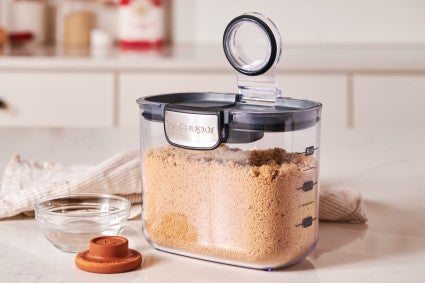
The easiest way to soften brown sugar is to prevent it from hardening in the first place. Once you open a bag, transfer the brown sugar to an airtight container or a heavy-duty resealable plastic bag, pressing out as much excess air as possible before sealing. Limiting the sugar's exposure to air helps lock in the moisture from the molasses, keeping it soft and scoopable for much longer. For even more protection against drying out, tuck a reusable Brown Sugar Saver into the container to help maintain the proper moisture level between baking sessions.
Cover photo by Patrick Marinello; food styling by Lydia Fournier.