




Martin's Top 5 Recipes
We asked Martin for his 5 favorite recipes from past videos. Then we had him read those videos' comments. It seemed like a good idea at the time...
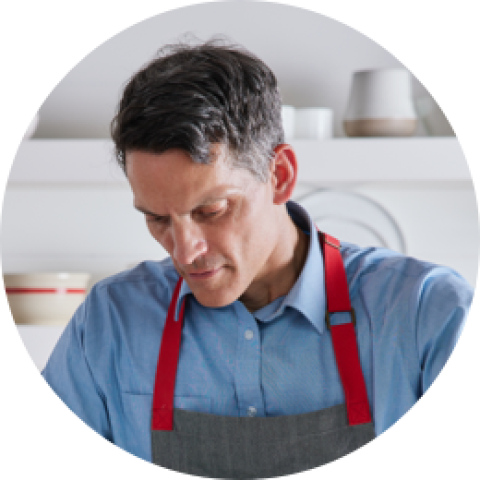
- Just looking at comments for just a second, Bob Ross of baking. I think that's pretty funny, the Bob Ross of bread baking. I mean, missing the hair and beard, but maybe some of the vibe is there, and I'll take that as a compliment. I get questions on the regular about what it is that I recommend that bakers make. And so today what I'm gonna do, is I'm gonna show you five videos, five great bakes from our channel that I think you should make. Let's jump in.
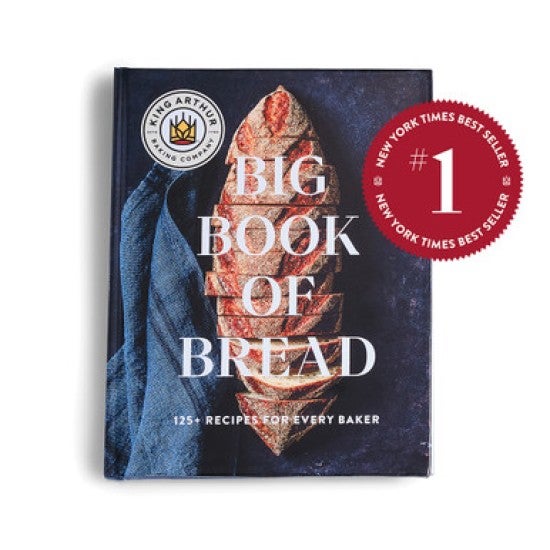
In the fifth position today are some Artisan Sourdough Baguettes from our channel. This is a video that I made in the early days of the pandemic. Maybe the funniest thing about baguettes is that I get more questions about baguettes from pros than any other kind of bread. You know what I mean? So it's like even my friends who are professionals are still obsessing and trying to figure out their baguettes. And that makes sense, because, you know, I've said it so many times, baguettes are like the triple Salchow of baking. It's something that is one of the most challenging, and yet, basic things that we do. You know, four ingredients, flour, water, salt, yeast, not even yeast sometimes. And so it's the simplest, but it's also the hardest. It's such a good sort of litmus test. Let's look at it for a second. Gorgeous structure, that's what we're going for. Beautiful sort of fingertip sized bubbles, thin crust. And I decided to do this. I decided to do this with some fresh milled flour. The recipe calls for 10% whole grain flour, and at that low percentage, it's a great opportunity, if you're someone who has a home mill or has a whole grain of almost any type that they want to use. You can absolutely use that, because it's such a low percentage. It's impactful for flavor and for color and all of these things, but it won't mess up the structure of it. So you can have that little bit of grain to sort of play with, which is really nice. One of the things that I think is very helpful for people to see, especially from this overhead angle, are both the preshape and the final shape. So I preshaped as cylinders, right, these little short sort of tubes. And then I go to the final shape, and you'll see me sort of turn it, you'll see me do my folds, you'll see me invert it, and then, you'll see how the hands begin in the middle, and then slowly move to the edges and tapering. I think that it's one of those things where if I'm teaching someone how to shape and I'm not right there, I think this is the next best thing is to watch this and sort of make sure that at each step your bread is looking somewhat similar. So I think these overhead shots, super helpful. The artistic transition. I didn't know anything about editing, you know, so I was just trying to make something that was pretty, so. And then we're gonna score 'em. I did some with a single slash, which I think is really helpful for people. If you're struggling with getting your scores to open, just use a single cut, or you can do a five cut or a three cut, something like that. I was worried that I wasn't gonna have a good structure. I was definitely feeling the pressure. And so moment of truth. Yeah, we're not gonna argue with that. I think it's pretty funny. I mean, I'm like jumping up and down inside, which I think is kind of funny, but it looks good. It looks really yellow. Khorasan, the whole grain that I ground for that, that I milled for that, is a very yellow hue, almost like durum, and so it brings this beautiful yellow character to the crumb. Beautiful baguette, and I think a nice walkthrough of a video that is like sort of half instructional, half inspirational. Yes, it's about the recipe, but more than that, it's about sort of engaging with baking in a way that challenges you to rise above your current level as I do, because we're all sort of on this journey. And try and make something that's better and bring grace to it in the process, knowing that people are going to love your bread, whether it's like perfect cuts or not. In the number four spot, we're gonna do something that I think is great because it teaches consistency and accuracy. It strives for beauty, but it delivers it in a very simple, approachable way. This is a great one from our "Big Book of Bread." It's the Big Batch Potato Roll. Come along for the recipe. Look beautiful. There's that shot that you like, Tucker, where it's like I mash them and then they go, and they recover. So I'm going to go forward a little bit. I want you to sort of focus on the reasoning or the justification for the inclusion of some rolls, is the idea that if you bring a little bit of attention to detail to the small things, like scaling your ingredients, like dividing your doughs and making sure that they're even, and then when you shape them, also making sure that they're even, it brings a level of professionalism and beauty to what you're making. And if you can sort of enforce that habit with little things like rolls, it will carry over into the harder things that we want to make like baguettes, like beautiful sourdough loaves, and on and on. That little bit of attention to detail is really the key takeaway from this roll video. These look beautiful. Okay, they look beautiful. Awesome. They're marshmallowy. I proof them well and then I'm gonna bake them well. You never know what you're going to find in the comments. Sometimes I sort of look like this, like, oh. Be nice, everybody be nice. His comments about attention to detail show how much he cares. This is exactly why we do this. Love it. The scale is an act of love. The scale is an act of love. I think that's accurate, you know? Measuring, attention to detail, those are ways that we sort of act as caregivers through what we make. This video is a video that's been very popular, but the reason I'm sharing it is not because of clicks. It's because of the fact that I think in your sort of stable, in the repertoire that you have as a home baker of things that you want to make on any given day and any given week of the year, you need to have an open, structured, high hydration, crusty, crispy thing that you can pull out of the oven and blow people's minds with, because the structure is so incredible. So in spot number three, we've got our favorite slightly cringy at points video for Pan de Cristal. Who's that guy who does the Dos Equis commercials, you know?
- [Voice Off Camera] Oh yeah, most interesting man.
- Most interesting man. I usually end up a little salty. I think I'm on like the salty end of the spectrum a little bit. All right, let's make some bread. I used to be a little sillier in the videos, I think. You edited this, got some good music going on. It's a little funky. "Baking with Martin." Okay, beautiful open structured loaf. It's relying almost entirely on the sort of superpower of bread flour, right? Higher protein content means it can take more water, means that the structural integrity of the loaf is improved through not only the base sort of protein and handling characteristics of the flour, but also through time, through folding, and through sort of fermentation as a function of time. Even though this is still really sloppy, it's starting to get some structure. It's not a lot. It's soupy. Okay. It's definitely soupy. So in this video, it's almost like what I want you to do is not only pursue this beautiful open-structured crumb and this incredible crust, but I want you to sort of trust the process and get comfortable with the fact that you're gonna be uncomfortable at first and you're gonna feel like you're outside of your comfort zone, and the dough's not coming together. But then, over the course of time and folds, you're gonna watch it sort of get itself into shape, and in effect, you'll sort of watch that transformation. I'm gonna dump it onto a really well-floured surface, like really well-floured. No flour on my shirt. Beautiful time lapse, looks great. The one thing I would say about this, and I think sometimes people push back a little bit, bake to a full color. You get to be the judge of that, right? Your eyes, your nose, your hands as you feel it, does it feel light for its size? You can rely on that, but please take my encouragement to bake to full color. Golden brown and delicious, okay? 2,225 comments. Oh yeah, this is right. I got taken to task pretty hard on the fact that I give this whole speech on be accurate. The hardest thing about bread is that, is understanding the ways which accuracy and measurement and guiding environmental controls sort of come together, right? So first and foremost, start with quality ingredients, accurately measured, well-fermented. But then, when I went to measure the yeast for this recipe, I'm like, eh, that's about right with the yeast. It's three quarters of a teaspoon, because I really want to make sure I get that right. So I've got a half and then about a quarter. Okay, it's a fair criticism. I am a little bit loose down there, but also I've done it a few times. So, you know, 61 people replying to that comment, like Martin's fudging that. In the number two spot, we're gonna make some classic Braided Challah. That is a happy dough. Look at that thing. A loaf like this is so great, because it's perfect for sharing and that's really at the heart of what challah is, I think. It's a bread that comes to us out of the Jewish tradition of baking. It's traditionally made across the globe by households in celebration of Shabbat. The part that I think is important and that you should focus on is really at the shaping phase. It's really important to preshape with challah, if you want to have strands which are beautifully even from end to end, which yields a loaf which doesn't have this sort of like rise and fall in unexpected ways, right? So if you can control your shape, beginning with the preshape with your challah, you're gonna have much more beautiful form. What I really recommend is don't just do a three-strand, go past the three-strand and do the four-strand. The four-strand, if you do it with this batch quantity, which yields a four-strand loaf, which will barely fit on a half sheet tray, I mean it is massive. And when I have taken that to people's homes, they have absolutely, like it's like jaw dropping sort of, you know, showpiece bake territory to my lens, because it's so beautiful, if it's well-risen, and if it's beautifully baked and all of those things. And this recipe makes a particularly moist and beautiful challah. Great time lapse. Is it possible to have a straight face when you're carrying bread this big? I mean, it's almost like cartoonish, it's so big, right? What I'm looking for in a good challah. Love this recipe, love this bake, love this video. You definitely need to have an enriched bread in your powerhouse of the things that you can go to for your friends, family, neighbors, potlucks, whatever it is. These are great bakes. This challah especially is such a big, beautiful loaf that you can drop on someone. So in the number two spot of the things that I think that you should make on our channel, that's this beautiful Braided Challah. At my own house, the loaves that we most often go to are a basic sourdough loaf. This is our number one spot. It's the Pain de Campagne. Let's have a look at the recipe. So you're in luck today, because I'm gonna show you how to make the only sourdough bread that you need to know. If you're gonna make one sourdough bread, let's make it something that's a great staple. It can be made in the cracks of the day. It doesn't require a heavy maintenance routine of the sourdough culture. It's easy. Tucker, this bread's for you, buddy. Crusty, crustylicious. You know what's funny? I'm pausing right there at that "Baking with Martin" screen, because someone was really bent in the comments about not having cut open the bread to show the crumb structure. It's right here, right at the top of the video. This is my staple sourdough loaf at home. We don't call it Pain de Campagne. We just call it bread, like my wife says, "Are you gonna make some bread or should I make some bread?" Because this is some bread, the bread. This is the only bread you need, if you're gonna make a sourdough. The problem this recipe solves, and I believe it does it really well, is that it takes what can be a high touch sort of laborious process of making sourdough, and it confines it to these intervals within the day, which make it manageable. So the idea of the recipe is that in the morning you might mix and then fold over the course of an hour, and then, you're gonna leave it alone for a long period of time, you know, eight hours or more, and then you'll come back to it. At the end of that period, you'll do some shaping, and then you'll put it in the fridge overnight, no touches, no sort of active work involved, and then you come back the next morning and you bake it. The whole idea is that not only is it approachable, but it's achievable. It's executable in the cracks of your day, which I think is sort of the calling card of this great sourdough bread. Three minutes and 16 seconds into the video, you can watch me try and moonwalk. Beautiful, love it. That's it. That was our number one spot. It's the Pain de Campagne. So five bakes that I think you should try off of our YouTube channel. This is Martin and Tucker and Lydia in the studio, and Rob's here as well today, all of us at the end of a shoot week, saying thanks for joining us and let us know what we missed. Maybe there's a video out there that you think that we should have included that we didn't. Tell us what you're thinking or what you want to see. We're here, we're listening, and we're baking. Cheers, y'all. We'll see you next time.
Video Credits
Shop this video
Your bread fell flat. Your cookies crumbled. Who do you turn to?