-
Line a baking sheet with parchment. Set aside.
-
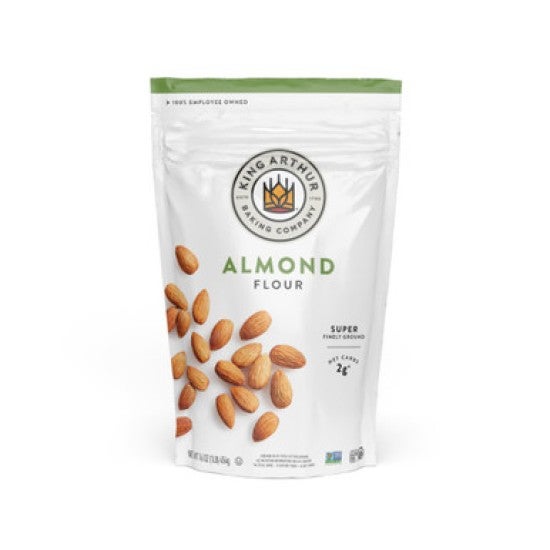
To make the macaron shells: In the bowl of a stand mixer fit with the whisk attachment, mix the egg whites, granulated sugar, and cream of tartar on medium speed for about 3 minutes, until the sugar is dissolved. Meanwhile, in a medium bowl, sift the confectioners’ sugar and almond flour.
-
Increase the mixer to medium-high speed. Continue beating the egg white mixture until it forms a meringue that is thick, glossy, and holds medium peaks, 5 to 6 minutes. The peaks should resemble the tip of soft-serve ice cream; they should be slightly firm but still curl slightly at the tip. Avoid overbeating to stiff, dry peaks.
-
Using a flexible spatula, gently fold the meringue into the almond flour mixture; once partially incorporated, fold more assertively to fully integrate the dry ingredients. When no visible streaks of almond flour or confectioners' sugar remain, begin the macaronage process by smearing the batter against the side of the bowl and folding it back over on itself. Continue this motion until the batter becomes smooth, glossy, and falls off the spatula in a ribbon that slowly dissolves back into itself.
-
Transfer the batter to a piping bag fit with a round tip approximately 1/2" in diameter — an Ateco #805 tip works well here. Pipe the batter into rounds that are 1 3/4" in diameter onto the prepared pan. (Here is a helpful template of 1 3/4" circles — print two copies and place them side-by-side underneath the sheet of parchment before piping.) The batter should be deflated enough that it does not retain a “tail” after piping.
-
When all the macaron shells are piped, tap the tray on the surface several times to remove any air bubbles and smooth out the surfaces. Remove the template from underneath the parchment, if you used it.
-
Allow the piped macarons to rest at room temperature, uncovered, until a skin forms on the surface, typically at least 30 minutes or up to 2 hours in a more humid environment. The shells should appear matte and feel slightly dry or leathery to the touch. When gently touched with a fingertip, no batter should stick. As the macarons dry, preheat the oven to 320°F. (If your oven temperature can only be adjusted in 25-degree intervals, preheat your oven to 325°F.)
-
Bake the macaron shells for 15 to 20 minutes, or until the tops are set. If the macarons begin to take on too much color, reduce the oven temperature to 300°F and continue baking until set.
-
Remove the macaron shells from the oven and allow them to cool completely on the pans. Once fully cool, use an offset spatula to remove the shells from the parchment. If they stick, place the baking sheet in the freezer for 15 to 20 minutes before attempting to release them.
-
To assemble the macarons: Match the shells in pairs of similar size to ensure uniform macarons and turn one shell from each pair flat side up.
-
Transfer the buttercream to a piping bag fit with an open round tip about 1/4" in diameter— an Ateco #802 tip works well here. (If you don’t have a piping bag, you can also scoop the buttercream using a Teaspoon Scoop.) Pipe or scoop a heaping 1 teaspoon of buttercream onto the center of each face-up shell.
-
Place the second macaron on top of the buttercream and gently press until the buttercream is even with the sides of the shells. Place the filled macarons on a baking sheet or a serving platter.
-
For best results, macarons should be allowed to rest in the refrigerator for 24 to 48 hours before eating. (“Maturing” the macarons allows the shells to soften slightly and the flavors to meld.) Macarons are best enjoyed at room temperature, so remove from the refrigerator at least 1 hour before serving
-
Storage information: Macaron shells or filled macarons can be stored in an airtight container in the refrigerator for up to 1 week or frozen up to 1 month.