




How to get perfectly smooth frosting on cake
Get rid of those air bubbles once and for all.

Date
August 12, 2026



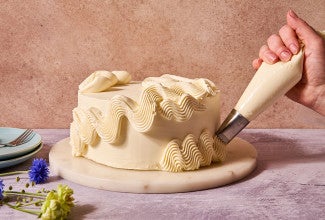
When it comes to frosting cakes, nothing beats a meringue-based buttercream. Whether you prefer Italian or Swiss, the goal is to have a frosting that’s smooth, silky, and pipes like a dream. However, the biggest enemy to a smooth buttercream can be the most frustrating to troubleshoot: tiny air bubbles.
They don’t necessarily change the taste of your buttercream, but that small detail can still impact the look of the final decorated cake. Here are our three best tips to all but eliminate those pesky air bubbles for a picture-perfect cake.
If you're using a metal bowl with your stand mixer, King Arthur Test Kitchen Recipe Tester Lydia Fournier recommends gently warming the outside of the bowl after you’ve finished mixing your buttercream. She prefers using a blowtorch, but if all you have is a hair dryer or heat gun, those will also work.
The goal is to slightly warm and soften the buttercream just enough to soften it. A small amount of heat encourages trapped air bubbles to rise and escape, resulting in a smoother, silkier texture. If you don’t have any heating tools to try this technique, you can briefly set the bowl over a double boiler to achieve the same effect.
Heat a small amount of the frosting (eyeball about 1/4 cup or grab a few spoonfuls) in the microwave for 5 to 10 seconds, then add it back into the mixing bowl and reincorporate with the paddle attachment on low speed. Don’t be alarmed if the microwaved buttercream is melted — that’s what you want! Similar to the previous technique, warming up the entire buttercream mixture will eliminate air pockets.
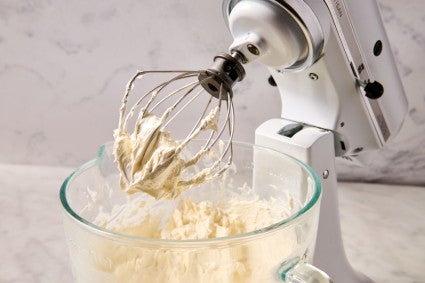
Resist the urge to crank up the mixer. High speeds introduce even more air (especially with a whisk attachment), while low-speed mixing with the paddle attachment helps smooth the frosting and release trapped bubbles over time. Once your buttercream is fully mixed and incorporated, it can take up to 20 minutes to see results (as this Swiss meringue buttercream recipe from Crumb Chronicles instructs), but the extra patience pays off in a noticeably silkier, smoother buttercream. Patience is key here!
For more cake troubleshooting tips, check out our Cake Learn page.
Cover photo (Italian Buttercream) by Danielle Sykes, food styling by Yekaterina Boytsova.