-
Weigh your flour; or measure it by gently spooning it into a cup, then sweeping off any excess.
-
To make the dough: In the bowl of a stand mixer fitted with the dough hook, combine the dough ingredients, then mix on low speed until a smooth and cohesive dough forms, about 5 minutes.
-
Cover the mixing bowl and let the dough rest for 10 minutes. Mix on low speed until a smooth, elastic dough forms, about 10 minutes. At this point, the bread dough should pass the windowpane test. If it doesn’t pass the test, mix the dough for another 2 to 3 minutes on medium speed before testing again.
-
Transfer the dough to a 4-cup measuring cup or another straight-sided container (it’ll be easier to track the progress of the dough as it rises in one of these vessels rather than in a bowl). Cover and let rise until puffy and nearly doubled in bulk, 70 to 90 minutes.
-
Line a rimmed baking sheet with parchment.
-
For assembling the salt bread: Portion the butter into seven even pieces, a scant 2 tablespoons or 24g each. (It's easiest to do this by weight using a scale. If you don't have a scale, use the tablespoon marks on the butter wrapper to measure out a scant 2 tablespoons; the pieces will be about 1" thick.) Place the butter pieces on a parchment-lined plate or small pan and place in the freezer while the dough is rising.
-
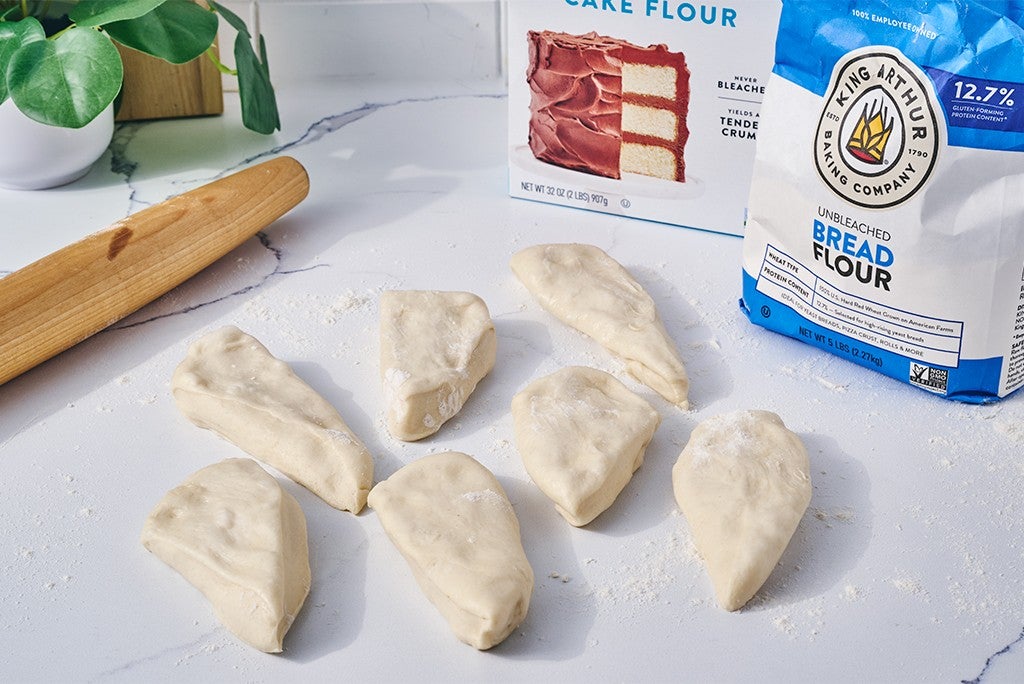
Transfer the dough to a clean or lightly floured work surface and gently deflate (degas) the dough. Divide it into seven equal pieces (about 80g each).
-
Shape each piece of dough into a rough triangle. Place on the parchment-lined baking sheet, cover, and let rest for 15 minutes to allow the dough to relax and make it easier to roll.
-
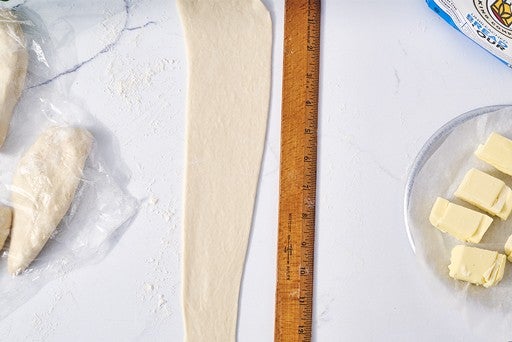
On a lightly floured surface or a silicone mat, use a rolling pin to roll each piece into a long, thin triangular strip about 16" long with a 2"-wide base; work with one piece of dough at a time and keep the other pieces covered to prevent them from drying out.
-
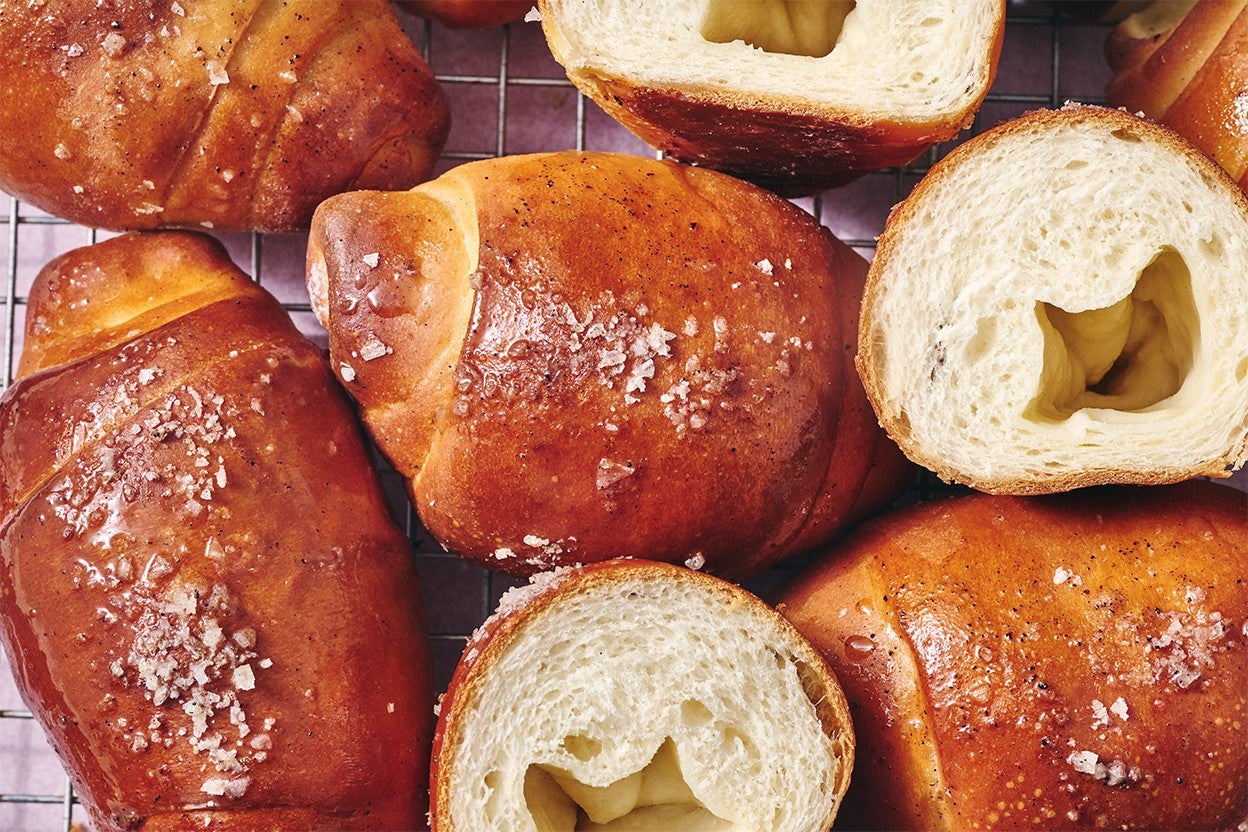
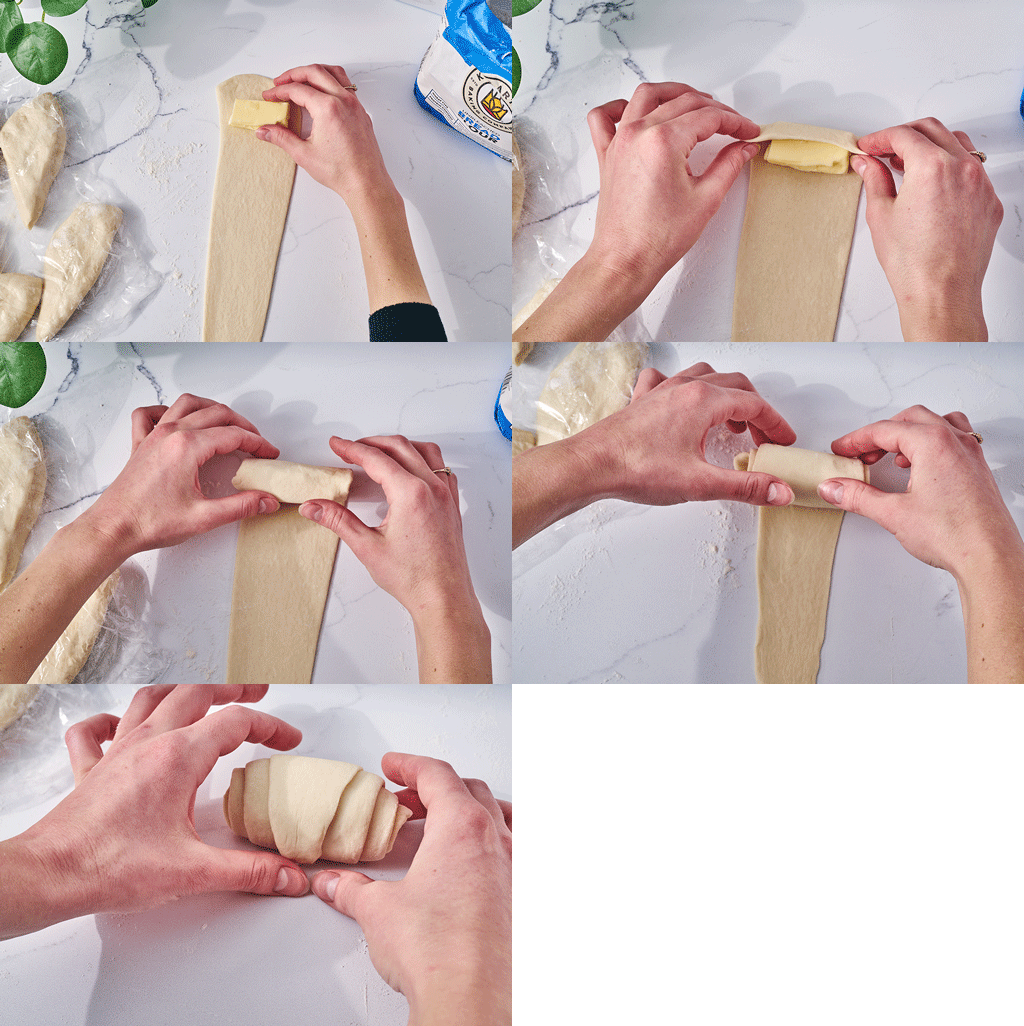
Place one cube of cold butter at the base and roll toward the tip. As you roll, gently pull the dough to elongate it and form a smooth, even roll, like shaping a croissant. There's no need to pinch the ends of the dough to seal the butter inside; it's OK if you can peek in and see the butter cube.
-
Place the shaped rolls on the prepared baking sheet, spacing them at least 2" apart and making sure the tips are on the bottom. Cover and allow them to proof until puffy and marshmallowy, 1 1/2 to 2 hours depending on the warmth of your kitchen. (The ideal proofing temperature for salt bread is about 70°F to 75°F. Don’t be tempted to place the shaped rolls in a warmer spot to make them rise faster; this could cause the butter to leak out during proofing.)
-
About 20 minutes before baking, preheat the oven to 400°F with a rack in the center.
-
Immediately before baking, lightly spray or brush the tops of the dough with water and sprinkle with flaky sea salt or pretzel salt. Bake the salt bread for about 18 to 20 minutes, until deeply golden brown with crisp bottoms.
-
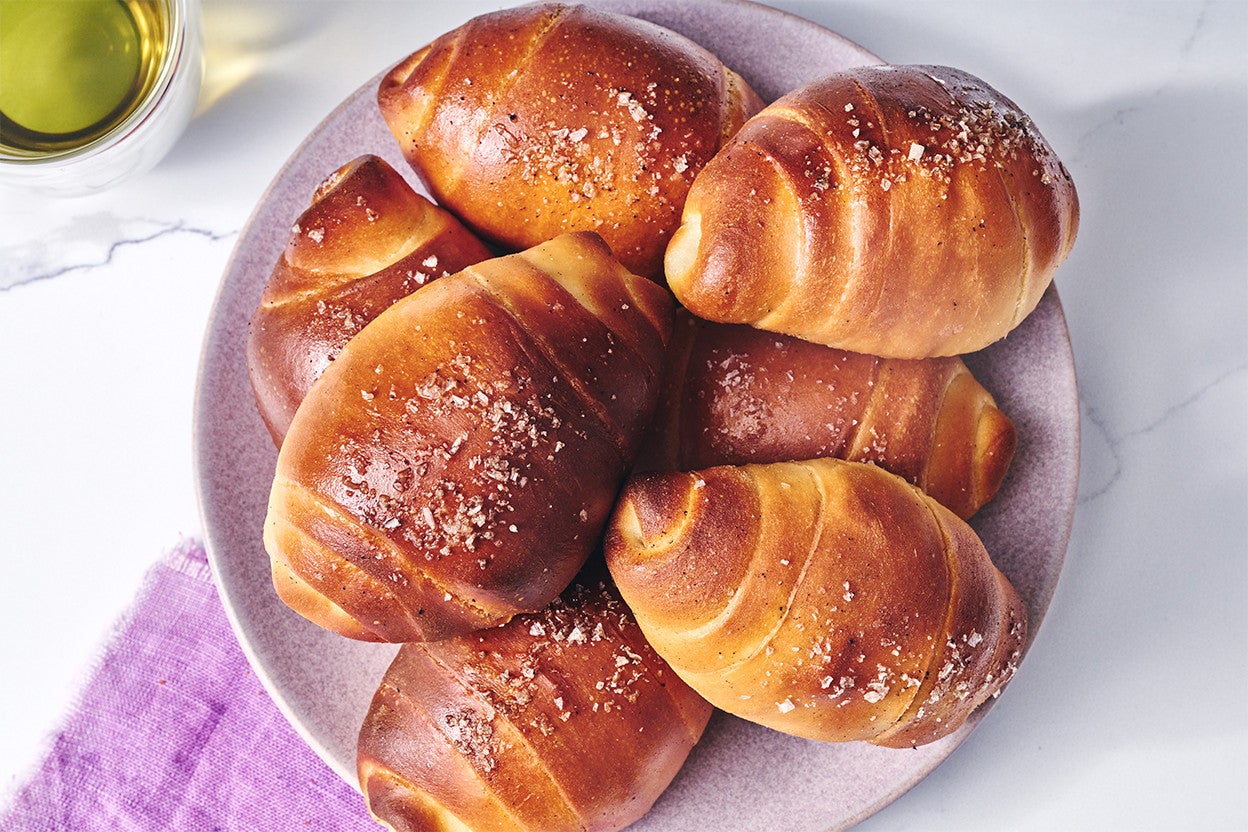
Remove from the oven, brush the tops with the melted butter that pooled on the baking sheet, and let them rest on the baking sheet for 5 minutes to cool slightly. Turn the salt bread upside-down, sprinkle a little salt on the bottom of each bread, then turn right-side up and transfer to a wire rack to cool slightly. Serve warm or at room temperature with your favorite jams, like ube halaya, or enjoy plain with tea or coffee.
-
Storage information: Store leftover salt bread, well wrapped, at room temperature for up to 2 days; freeze for longer storage. To reheat, toast in the toaster oven or warm in a preheated 350°F oven, uncovered, for 5 to 10 minutes.