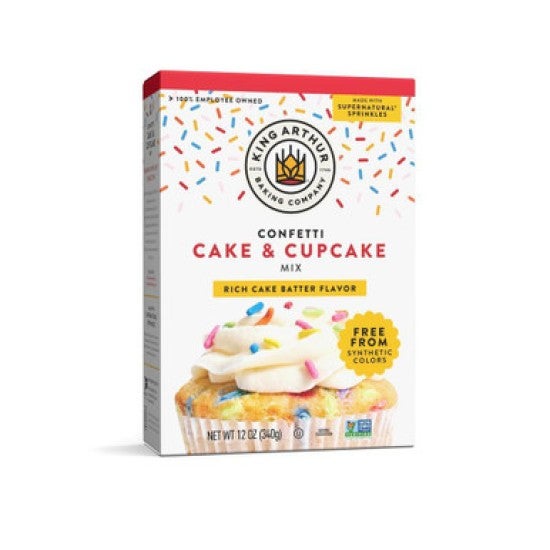
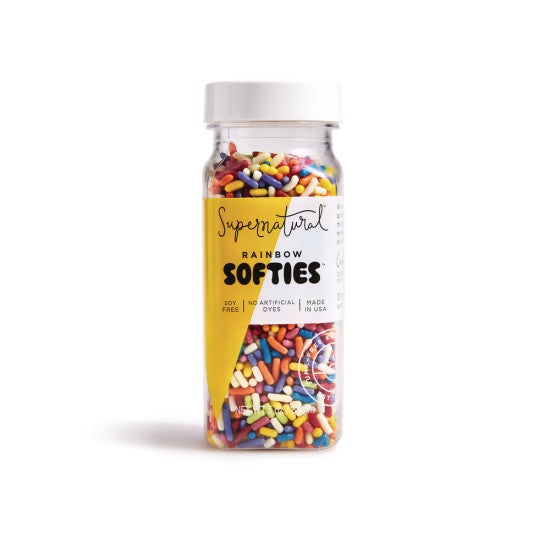
With our Confetti Cake & Cupcake Mix, bakers of any level can make professional-looking cake pops. The mix itself comes together quickly — no mixer needed — to produce a fluffy, birthday cake-flavored base that has just the right amount of cheerful sprinkles (free from synthetic dyes!). Simply crumble up the cake, mix it with a simple frosting, form it into balls, and dip each one into a white chocolate coating. Not only do cake pops make a fun alternative to the usual cupcakes, but they’re also make-ahead friendly: Stash them in the freezer to pull out whenever you need a little celebration.
Prevent your screen from going dark as you follow along.
To make the cake: Preheat the oven to 350°F with a rack in the center. Lightly grease the bottom (but not the sides) of an 8" round pan that’s at least 2" deep.
In a large bowl, whisk together the mix, oil or melted butter, egg, and milk until the batter is smooth, about 20 seconds, scraping the bowl as needed. Pour the batter into the prepared pan.
Bake the cake for 34 to 38 minutes, until a toothpick or thin knife inserted into the center comes out clean.
Remove the cake from the oven and allow it to cool completely in the pan, about 2 hours.
To make the frosting: In a large bowl working with an electric hand mixer or in the bowl of a stand mixer fitted with the flat beater, beat the confectioners’ sugar, butter, and milk together until the mixture is thick and smooth. If using a hand mixer, it may take 3 to 5 minutes for the frosting to come together. The mixture will initially look dry and crumbly, but continue to mix until it comes together. If needed, add additional milk 1/2 teaspoon at a time until the frosting is the consistency of peanut butter.
To assemble the cake pops: In a large bowl or the bowl of a stand mixer fitted with the flat beater attachment, use your hands or the mixer to crumble the cooled cake into fine crumbs.
Add all of the frosting to the crumbs and combine — by hand or with a spatula — until fully incorporated. The mixture should hold together when squeezed.
Divide the mixture into portions about the size of a golf ball, each weighing about 41g (a 2-Tablespoon Scoop works well here). Gently squeeze and roll the mixture in your hands to form smooth balls. Place the balls on a parchment-lined baking sheet and refrigerate, covered, for at least 30 minutes or up to overnight.
To make the coating: If using candy melts, place them in a pint-sized glass measuring cup or deep, heat-proof bowl and melt according to the package directions. If the mixture is too thick, add oil, 1 teaspoon at a time, until it’s the consistency of molasses; when it’s drizzled from a spoon into the cup, the mixture should remain on the surface for half a second before sinking back into the mixture fully.
If using white chocolate, heat it in the microwave in short, 20- to 30-second increments, stirring well between each, until smooth. Alternatively, place the white chocolate in a heat-proof bowl that's sitting on top of a pot of 1" of simmering water (a double-boiler) and heat it until it’s melted and smooth. Depending on the type of white chocolate used, you may need to add additional oil, 1 teaspoon at a time, to thin out the mixture and reach a molasses-like consistency. (White chocolate chips are more likely to need a bit of oil than chocolate from a bar.)
Remove half of the cake balls from the refrigerator and place them on a parchment-lined baking sheet. Dip a lollipop stick about 1" into the melted coating or white chocolate and insert it into the center of a cake ball, pressing about three-fourths of the way through. Return the cake pops to the refrigerator and chill for at least 15 minutes or up to 1 hour. Repeat with the other half of the cake balls.
If you plan to serve the cake pops upright (with the cake balls on top of the sticks, like a lollipop), use an empty cardboard box or foam block as a cake pop stand. Poke 18 small holes into the box or block, spacing them about 2" apart. Alternatively, for cake pops served upside down (sticks facing up), line a baking sheet with parchment and set aside.
Reheat the candy melts or chocolate just until melted and smooth. Avoid overheating, as candy melts can thicken excessively, and white chocolate can easily burn.
Remove half of the cake balls from the refrigerator. Dip one cake ball into the melted coating or chocolate until completely covered. Remove excess by gently tapping the stick on the side of the measuring cup or bowl. Immediately garnish the cake pop with sprinkles, if desired, before the coating starts to set. Place the finished cake pop in the stand or on the prepared baking sheet.
Repeat dipping and decorating the remaining cake balls.
Allow the cake pops to set completely at room temperature before serving, about 10 minutes for the candy melt coating and 1 hour for the white chocolate coating.
Storage information: Cake pops can be stored in an airtight container at room temperature for a couple of days, in the refrigerator for 1 week, or in the freezer for up to 3 months. Defrost the cake pops completely before serving.
Tips from our Bakers
Choosing between candy melts and white chocolate? Cake pops finished with candy melts harden quickly, produce a snappy coating, and have a bright white color, whereas cake pops finished with white chocolate take about 1 hour to set, have an off-white color, and result in a coating with a softer texture. Candy melts are generally more failproof, while melting white chocolate can be tricky. Choose what works best for your needs.
To make a white chocolate shell with a harder, snappier texture temper the white chocolate in steps 9 and 12.
To make non-dairy cake pops, use oil and non-dairy milk in the cake, vegan butter and non-dairy milk in the frosting, and non-dairy candy melts for coating.
We’ve found that the best way to incorporate additional sprinkles is to use them to garnish the outer coating before it sets. While it’s tempting to add more sprinkles directly to the cake pop mixture, it makes it more difficult to form neat balls.
Refrigerate the cake pops as needed during the dipping process. As they warm to room temperature, the pops won’t dip as easily and may slide off the sticks. You can dip about half the cake pops at a time and keep the rest refrigerated until you’re ready for the next batch.