-
In the bowl of a stand mixer, whisk the water, sugar, and yeast to combine. Attach the dough hook to the machine, then add the flour, oil, and salt, and mix on low speed until a shaggy dough forms, 1 to 2 minutes. Increase the speed to medium and knead until the dough is smooth and elastic, about 8 minutes.
-
Transfer the dough to a clean work surface and shape the dough into a taut, smooth ball. Place the dough in a greased bowl, cover tightly, and allow it to proof in a warm spot until doubled in size, about 1 hour.
-
Divide the dough into thirds (about 200g each). Cover the dough portions and let rest for 10 to 15 minutes.
-
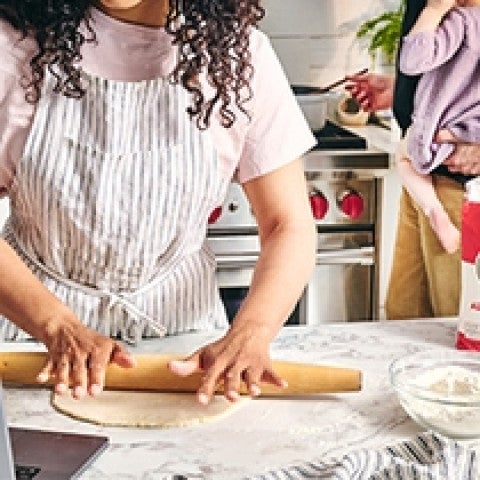
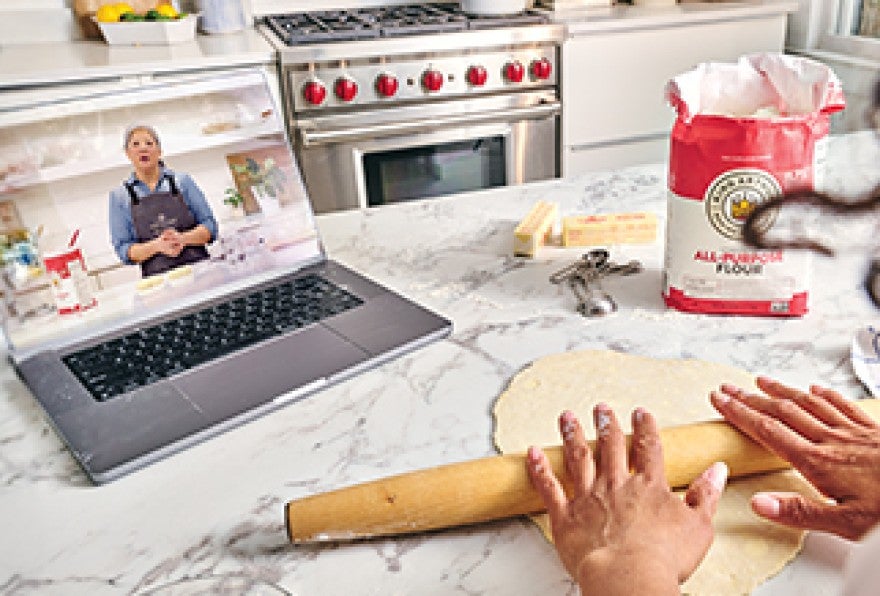
Brush a very large wooden work surface or cutting board with neutral oil. (You’ll need at least an 18" square space to work with.) Working with one portion of dough at a time and keeping the others covered, place a piece onto the center of the board and flatten the dough with the palm of your hand. Roll out the dough until it’s very thin, about 15" x 18" in size. The dough should be nearly translucent; it’s OK if small holes develop toward the edges.
-
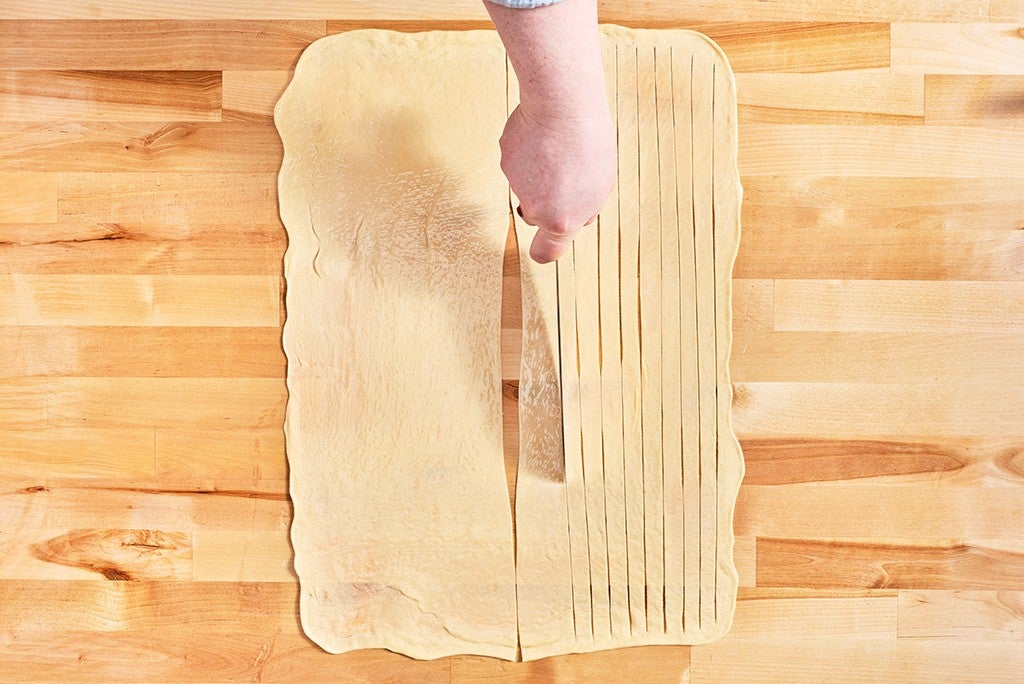
Brush the surface of the dough with about a third (about 1 tablespoon plus 1 teaspoon or 19g) of the melted butter. Cut the dough in half lengthwise to make two long rectangles, each about 7 1/2" x 18".
-
Using a pastry cutter, pizza wheel, or sharp knife, carefully make long cuts about 1/2" apart along the length of each piece of dough, making sure to leave about 1/2" on both of the short ends intact.
-
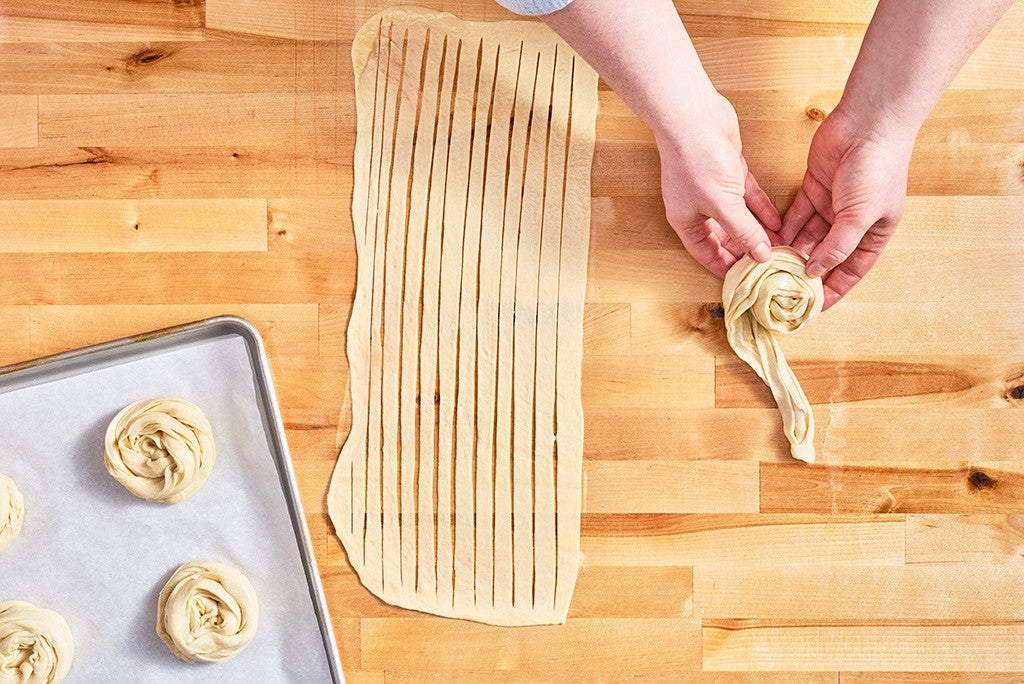
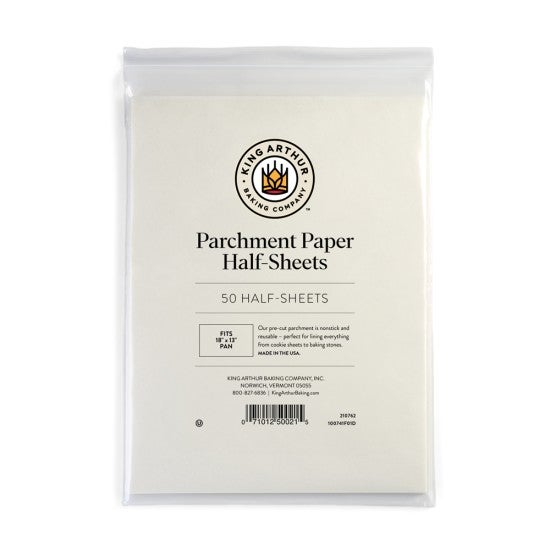
Carefully release one piece of the dough from the board and hold it from the short ends so that it gathers into a long rope. Roll it into a neat coil and place on a parchment-lined baking sheet. Repeat with the other half of rolled-out dough.
-
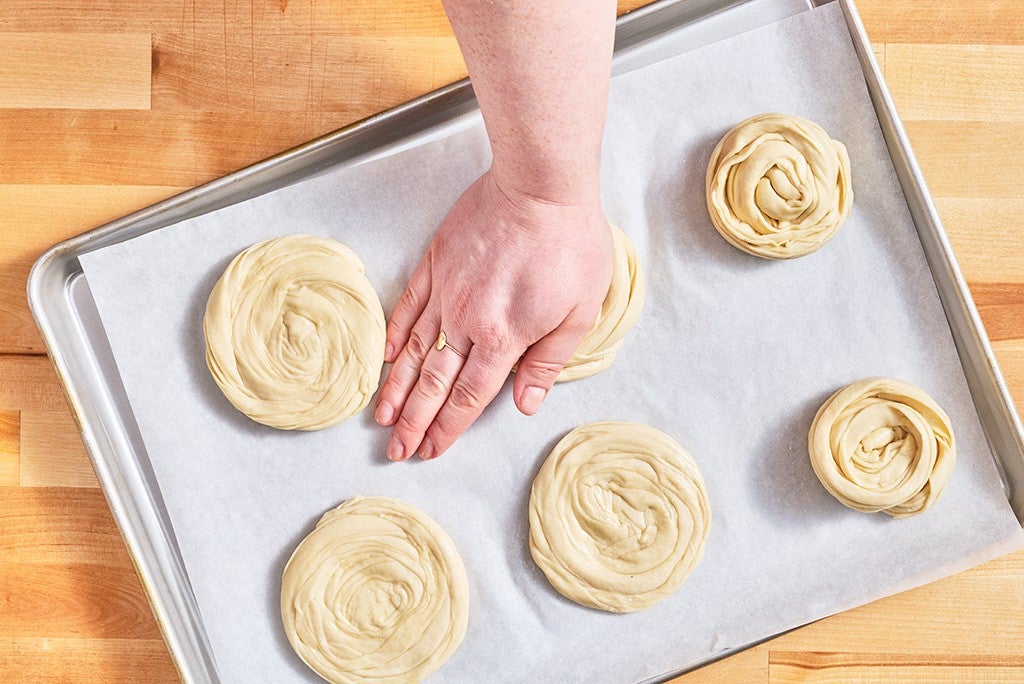
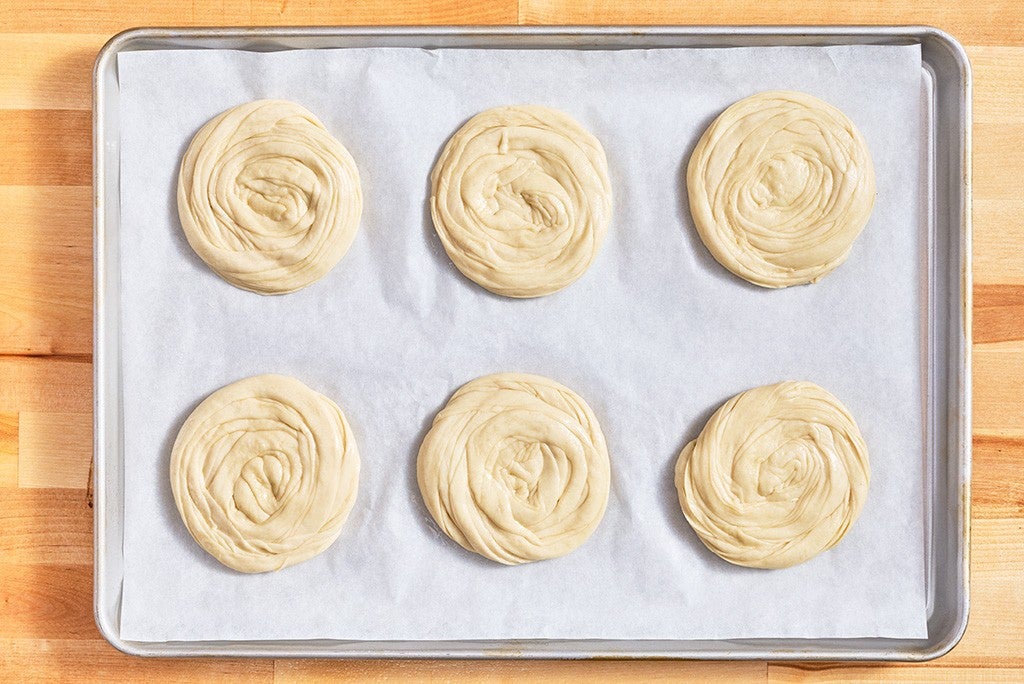
Repeat the rolling and shaping process (steps 4 through 7) with the remaining dough portions, placing the coils at least 3" apart on the baking sheet. Cover the shaped mo and allow the dough to relax for 10 minutes.
-
Press down on the dough rounds with the palm of your hand to flatten into rounds about 4" in diameter; tuck any loose ends underneath the coil to make a neat circle.
-
Cover again and allow the dough to proof until noticeably puffy, 35 to 45 minutes. Near the end of the rise time, preheat the oven to 375°F.
-
Heat a large cast iron skillet over medium-low heat. Add the 2 tablespoons (25g) oil for cooking to the pan and once hot, carefully place two or three of the shaped mo into the pan (the number you can cook at once will depend on the size of your pan). The dough should immediately sizzle; if it doesn’t, increase the heat slightly.
-
Cook until the bottom of the dough is crisp and golden brown, 1 to 2 minutes. Use a spatula to flip the mo and cook the other side until crisp and golden brown, 1 to 2 minutes. Return the cooked mo to the baking sheet.
-
Repeat the cooking process with the remaining portions, adding a little more oil between batches if the pan looks dry.
-
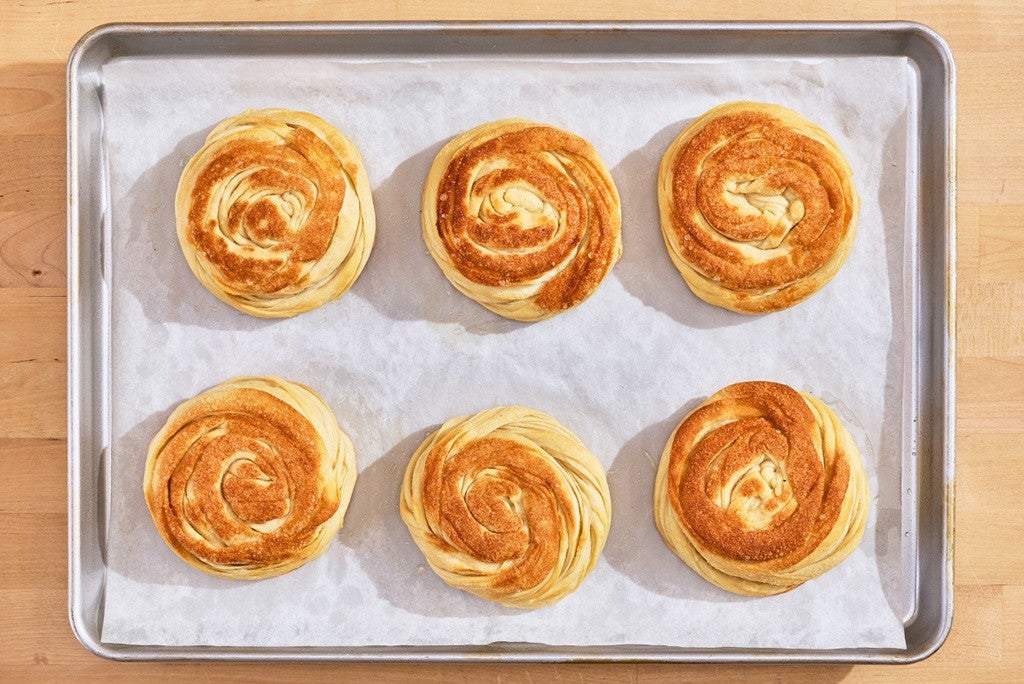
Once all the mo are cooked, transfer the baking sheet to the oven and bake for 10 to 12 minutes, until the mo are evenly golden brown.
-
Remove from the oven and allow the mo to cool for a few minutes before serving warm.
-
Store leftover mo in an airtight container for up to 3 days or in the freezer for up to 3 months.