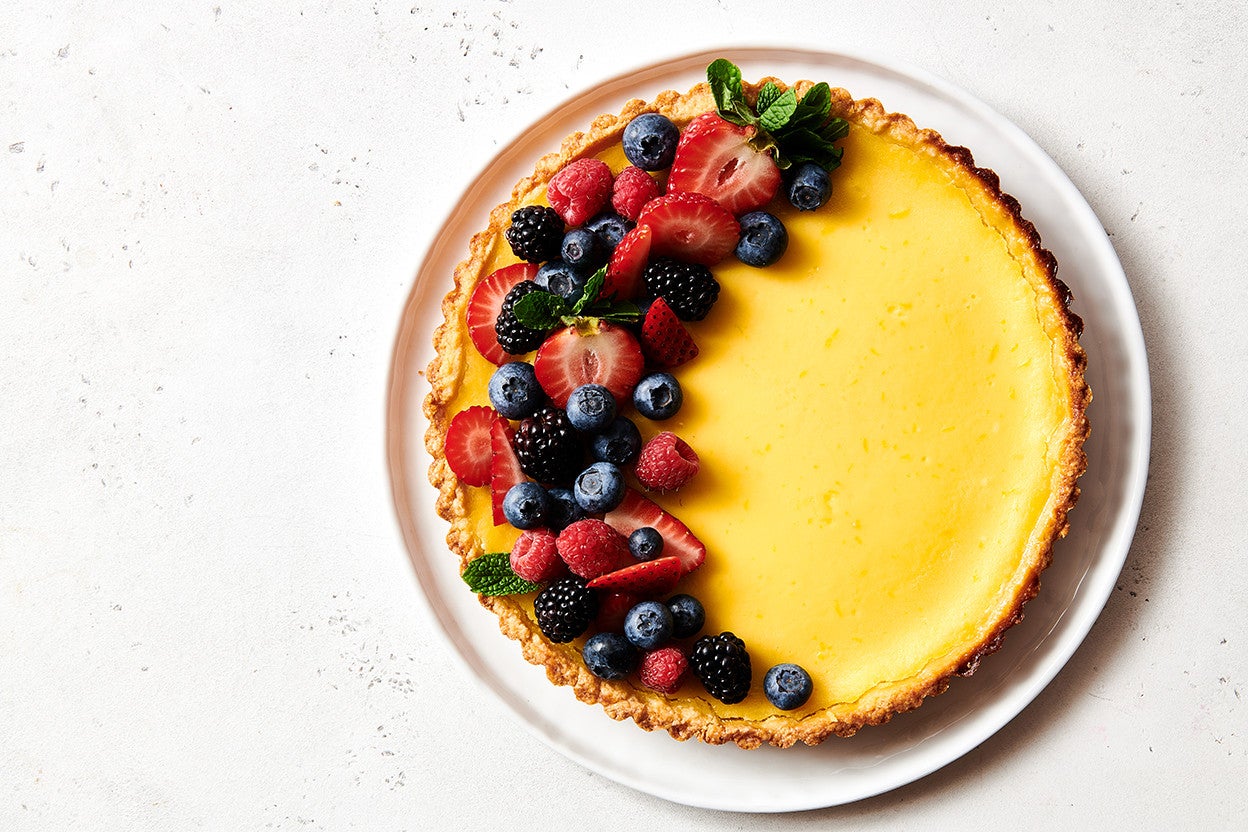
Traditionally used as the base of fruit or jam tarts, pâte sucrée (a French pastry closely related to the Italian pasta frolla) is a sweetened, enriched, short-flake crust that falls somewhere between a classic pie crust and a cookie. This buttery pastry is enriched with egg, butter, vanilla, and sugar to make a tender crust that’s more like shortbread than flaky pastry. The dough can be pressed straight into the pan or rolled out; while the first option is faster (and doesn’t require a rolling pin), we prefer the second, as it yields a thinner, more even, professional-quality crust.
As a result of reader feedback, we’ve retested this recipe and made some changes from the original; see “tips” (below) for details.
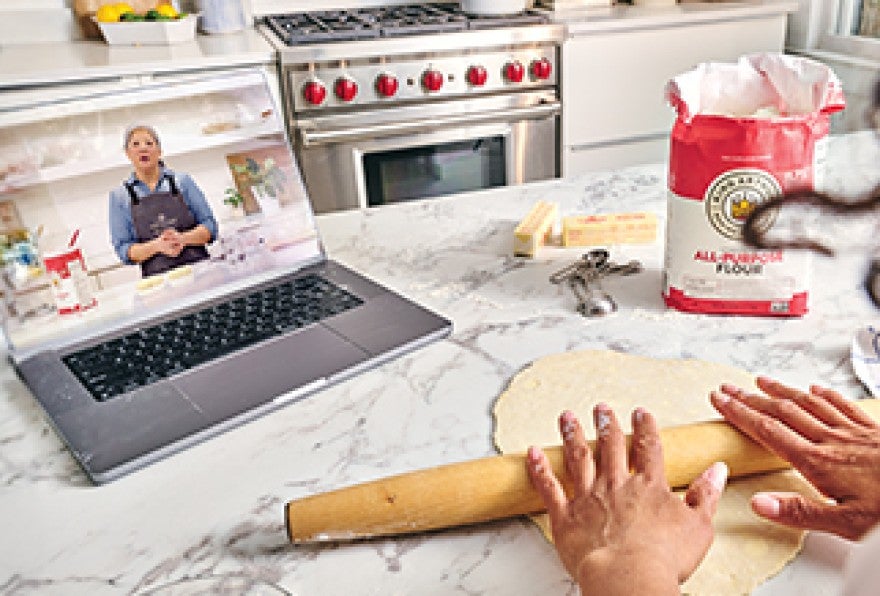
Prevent your screen from going dark as you follow along.
To make the dough: In the bowl of a stand mixer fitted with the flat beater attachment or working in a large bowl with an electric hand mixer, combine the butter, sugar, and salt on medium speed until smooth, about 1 minute.
Scrape down the bowl, then add the egg yolk, vanilla, and water and mix until well combined, about 1 minute.
Scrape down the bowl, add the flour, and mix on low speed until large clumps of dough form (not necessarily one mass), about 1 more minute.
Once the dough is mixed, you can either press it into the pan directly, or you can roll it out, chill it, then transfer it to the pan. Pressing it into the pan is an easier method and will yield a thicker, sturdier, more cookie-like crust. Rolling will give you a thinner, more even, and slightly more professional-looking crust.
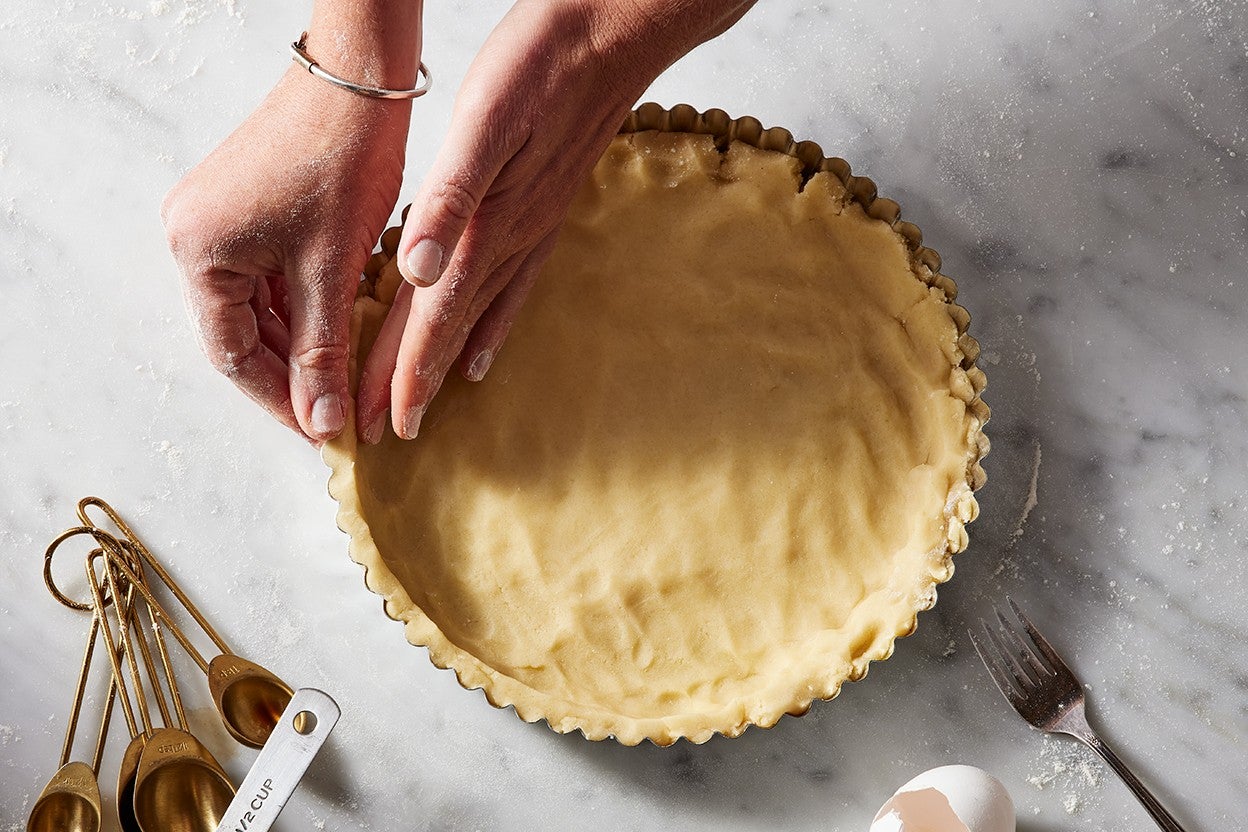
To press in the dough: Transfer the dough to a 9" or 10" tart pan with a removable bottom. Gently press the dough into an even layer around the rim of the pan, then use the pads of your fingers to press it into an even layer across the bottom. (For a thinner crust, set some dough aside and use only what you need to cover the sides and bottom of the pan.)
Use a lightly floured measuring cup (a 1/3-cup measure works especially well) to smooth and even out the bottom. Prick the dough all over with a fork, then lightly cover and transfer to the freezer for 30 minutes. Proceed to baking (step 10).
To roll out the dough: Transfer the dough to a lightly floured piece of parchment and use your hands to bring it together into a neat disk about 1" thick, gently kneading the dough to bring it together as necessary. Flour the surface of the dough, then place a second piece of parchment on top. Roll the dough into a 12" round about 1/8" thick. As you roll, occasionally lift the parchment and lightly flour the surface of the dough. Transfer the dough, still sandwiched between the parchment, onto a baking sheet and refrigerate for 2 hours, until very firm. (At this point, the dough can be well-wrapped and refrigerated for up to 48 hours.)
When ready to bake, remove the dough from the cold baking sheet and transfer it to the counter. Peel back each piece of parchment to release it from the dough, then slide the bottom of the tart pan underneath the dough. Let the dough temper for 5 to 10 minutes, until it’s pliable enough to bend without breaking. Meanwhile, set the rim of the tart pan back on the lined baking sheet.
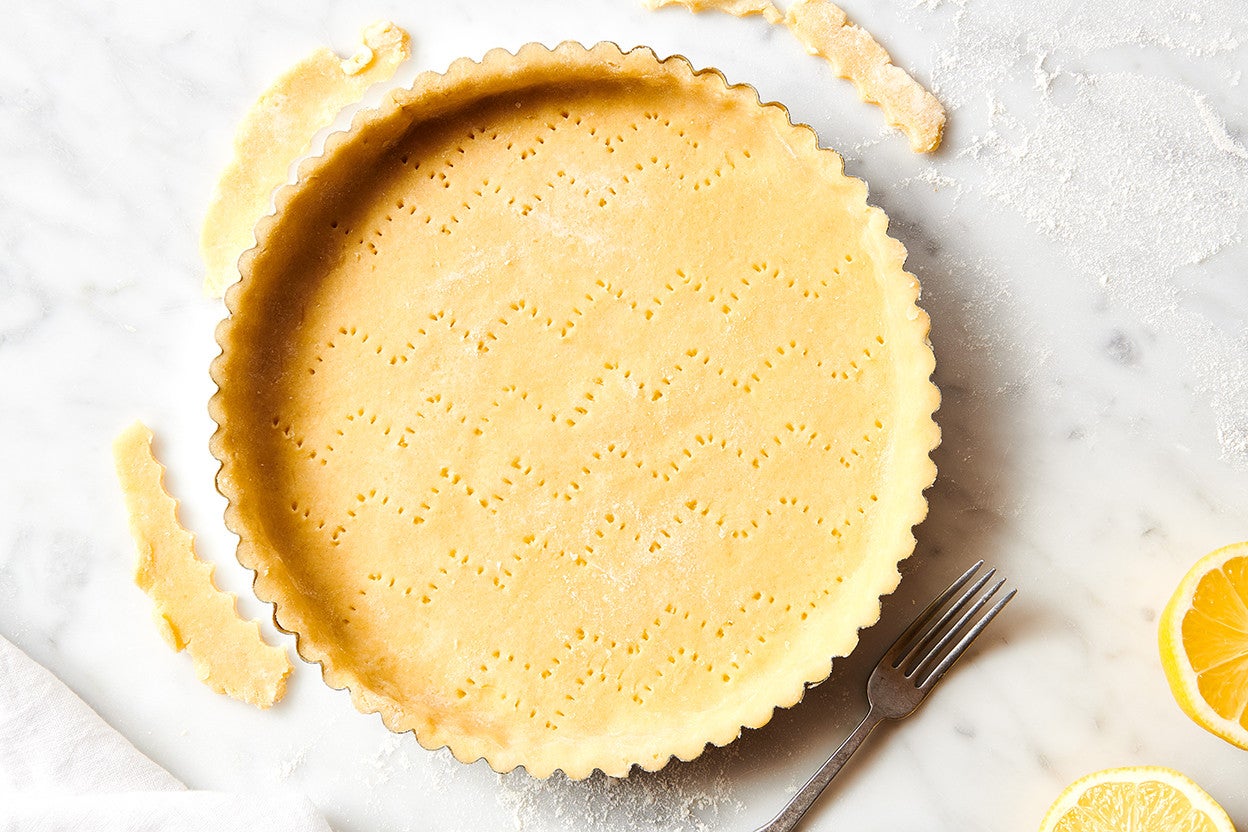
When the dough has tempered, use the bottom of the tart pan to drop it into the rim of the pan. Gently press the dough into an even layer on the bottom and sides of the pan, repairing any cracks or gaps. Use a paring knife to trim excess dough (save the trimmings in case of future cracks). Prick ("dock") the dough all over with a fork, then lightly cover and transfer to the freezer for 30 minutes.
To bake the dough: While the dough freezes, preheat the oven to 375°F with a rack in the center.
Spray a large piece of aluminum foil with nonstick spray. Place the foil, sprayed-side down, into the pan with the frozen tart dough, then fill the pan to the brim with pie weights, dried beans, or granulated sugar.
Transfer to the oven and bake the tart dough, still on the baking sheet, for 23 to 26 minutes, until the sides are golden and the foil comes off cleanly, without peeling away the bottom crust. Remove the baking sheet from the oven and carefully remove the foil and weights. If any parts of the crust need to be repaired, use the trimmings to patch it. The tart crust is now partially baked; fill, bake, and finish as directed in your recipe.
To fully bake the dough: Return the tart to the oven, without the weights and foil, for 6 to 9 minutes, until the crust is firm, matte, and golden all over. Remove from the oven and let cool for at least 20 minutes before using as directed in your recipe.
Tips from our Bakers
In April 2026, we revised the ingredients and instructions of this recipe to create a dough that’s easier to work with (neither crumbly nor sticky) and to provide instructions for rolling it out or pressing it into the pan.
For a more tender and delicate crust, replace the 1 1/2 cups (30g) all-purpose flour with 1/4 cup (24g) almond flour (sifted if lumpy) plus 1 1/3 cups (150g) all-purpose flour. Omit the 1 teaspoon water or milk; prepare the dough as otherwise directed.