-
To make the crust: In a medium bowl, whisk together the flour and salt.
-
Add the cubed butter and toss so that the cubes are evenly coated with flour. Using your hands or a pastry cutter, work the butter into the flour until it's well-distributed but not fully incorporated. Larger, pea-sized pieces of butter will be scattered throughout the mixture.
-
Drizzle in the ice water, tossing the mixture with a fork or your fingers as you go. Stop adding water when the dough starts to come together. To see if it’s properly hydrated, squeeze a clump in your hand: If it holds together easily, without crumbling, it's ready. If it has dry spots or pieces break off easily, add a bit more water until it's totally cohesive.
-
Gather the dough into a single mass and divide it in half (about 175g per piece). Shape each half into a 1"-thick rectangle, wrap tightly, and chill for at least 30 minutes and up to 2 days before rolling. If the dough has been refrigerated for longer than 30 minutes, you may need to let it warm at room temperature for 10 to 15 minutes before rolling.
-
When ready to bake, preheat oven to 375°F with a rack in the bottom third. Lightly grease a mini muffin pan with nonstick spray.
-
To prepare the crust: Working on a lightly floured surface, roll one disk of prepared crust into a 10" square, a scant 1/8" thick (aim to make it slightly thinner than traditional pie or quiche crust, which will ensure the crust bakes through and there’s enough room for the filling and custard).
-
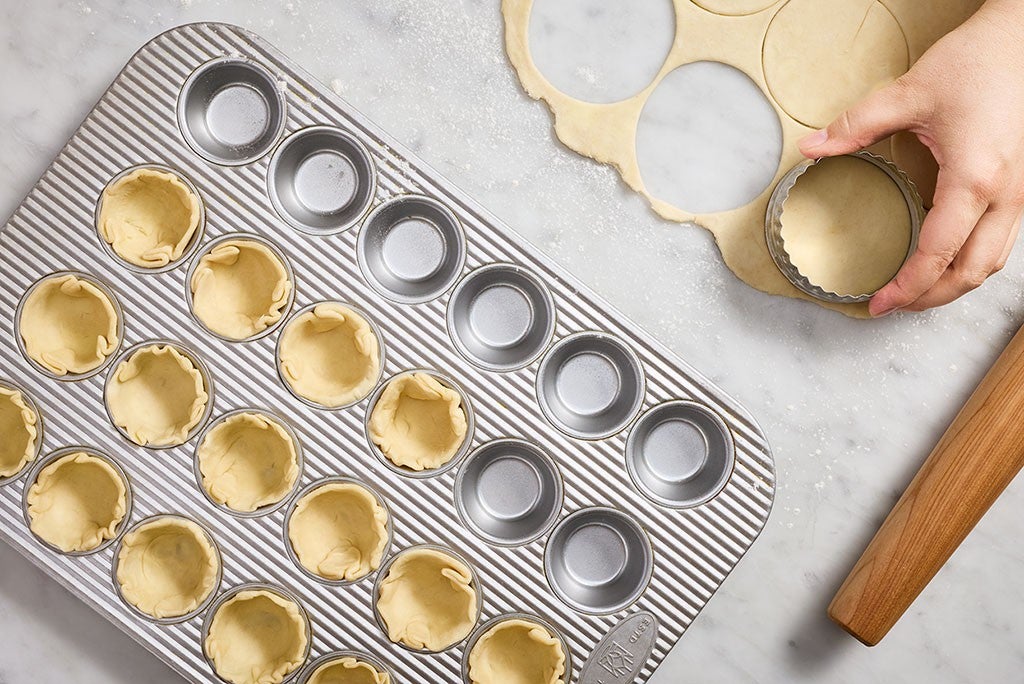
Use a 3" round cutter to cut out rounds as close together as possible (you should be able to get about eight rounds from one piece of dough).
-
Gather the scraps into a disk, rewrap, and return to the refrigerator.
-
Fit the dough rounds into the cups of the prepared muffin pan, pressing the dough into the bottom and up the sides of each well. (The edges will fold a bit and create a rustic look; that’s OK.)
-
Roll out and cut the remaining piece of pie pastry to make eight more rounds; wrap and chill the scraps. Finally, roll out each set of dough scraps, starting with the chilled piece first, to get four more rounds from each.
-
Once all of the wells are lined, transfer the pan to the refrigerator while you make the filling. (The pan can also be covered and refrigerated overnight at this point or frozen for up to 3 months. If freezing, thaw in the refrigerator overnight before using.)
-
To prepare the filling: In a small bowl, mix together all of the filling ingredients except for the cheese. Place the cheese in a separate small bowl or container and set both components aside.
-
To make the custard: In a medium bowl or liquid measuring cup, whisk together the egg, egg yolk, pepper, and salt. Whisk in the cream and milk until well combined.
-
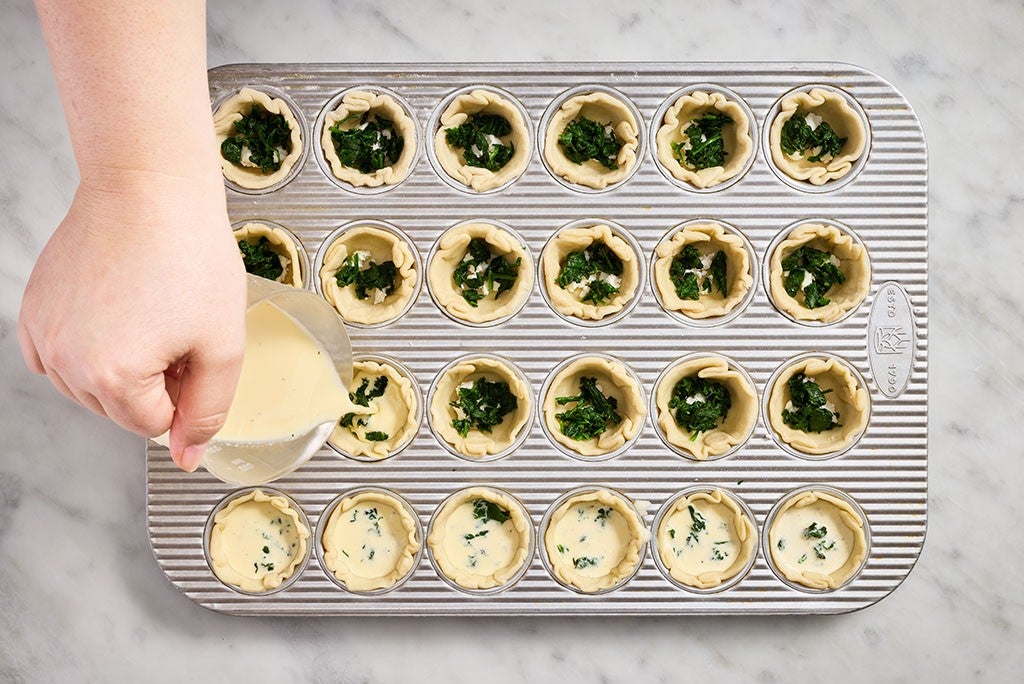
Divide the cheese between the crust-lined cups (about a generous 1/2 teaspoon per cup) then top with the filling, dividing it evenly (about 1 teaspoon per cup). Carefully pour the custard over the top, filling almost to the rim of the dough (2 to 3 teaspoons per crust).
-
Place the pan in the oven and reduce the oven temperature to 350°F. Bake for 20 to 25 minutes, until the custard is set and the crust is golden brown.
-
Remove the mini quiches from the oven and place them on a wire rack until just cool enough to handle, about 5 minutes. Carefully remove the quiches from the pan and then serve warm or at room temperature.
-
Storage information: Mini quiches are best the day they are baked, but they can be refrigerated in an airtight container for up to 2 days. To reheat, place in a 300°F oven for 10 to 15 minutes before serving. Mini quiches can also be frozen for up to 3 months. To serve, thaw in the refrigerator overnight and then reheat as directed.